Concept development
Concept development translates commercial goals into a coherent wellness concept—defining the programme mix, guest journey, zoning logic, and design direction for gyms, spas and recovery facilities. The outcome is a concept that is brand-aligned, operationally credible, and ready to develop into layouts and specifications.
PREVIOUS CLIENTS SANI-IKOS RESORTS
FUSION STUDENTS
CARNEGIE MELLON UNIVERSITY
MELIA HOTELS INTERNATIONAL
Why concept development matters
Create a clear decision framework before the team commits to detailed layouts, interiors and procurement.
Align experience and operations so the concept works in practice—not just visually.
Accelerate approvals by presenting a coherent narrative and planning logic that stakeholders can sign off.
-
New gyms, spas or recovery concepts in hotels and resorts
-
Residential and mixed-use amenities where wellness is a value driver
-
Repositioning or upgrading an existing wellness facility
-
Projects needing clarity on spa vs recovery vs fitness balance
-
Teams seeking a concept package that an appointed ID team can execute
Choose the engagement model that best fits your project scale and delivery teamFull Scope (Including Interior Design)
Best when you want a single point of responsibility. We deliver planning through interior design and documentation, coordinating experience, specification and buildability from concept to handover.
Specialist Advisory (Sub-Consultant)
Best when an interior design team is already appointed. We provide specialist wellness planning, layouts, specification and design-integration reviews—ensuring functional requirements are embedded early and executed cleanly by the wider team.
example wellness club concept development
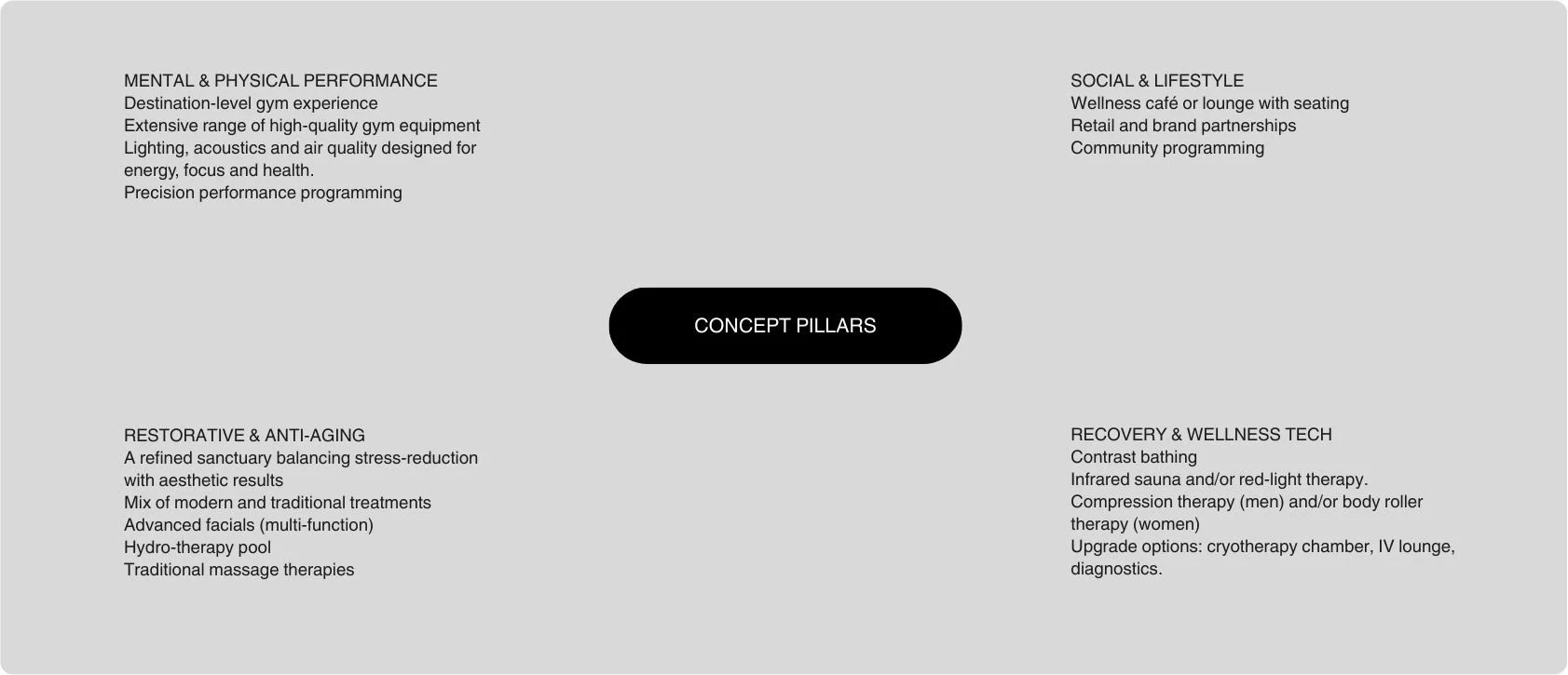
What we do as pre-design planning consultants for spas, gyms, wellness clubs
We define the facility’s concept at the level where decisions become stable: what the offer is, how it works, and how it should feel. This includes positioning and programme mix, guest journey and sequencing, and the planning principles that guide interior design direction. Biofit can then proceed into interior design and technical documentation, or support your appointed design team as a specialist advisor.
wellness club spa hydrothermal zone - design direction
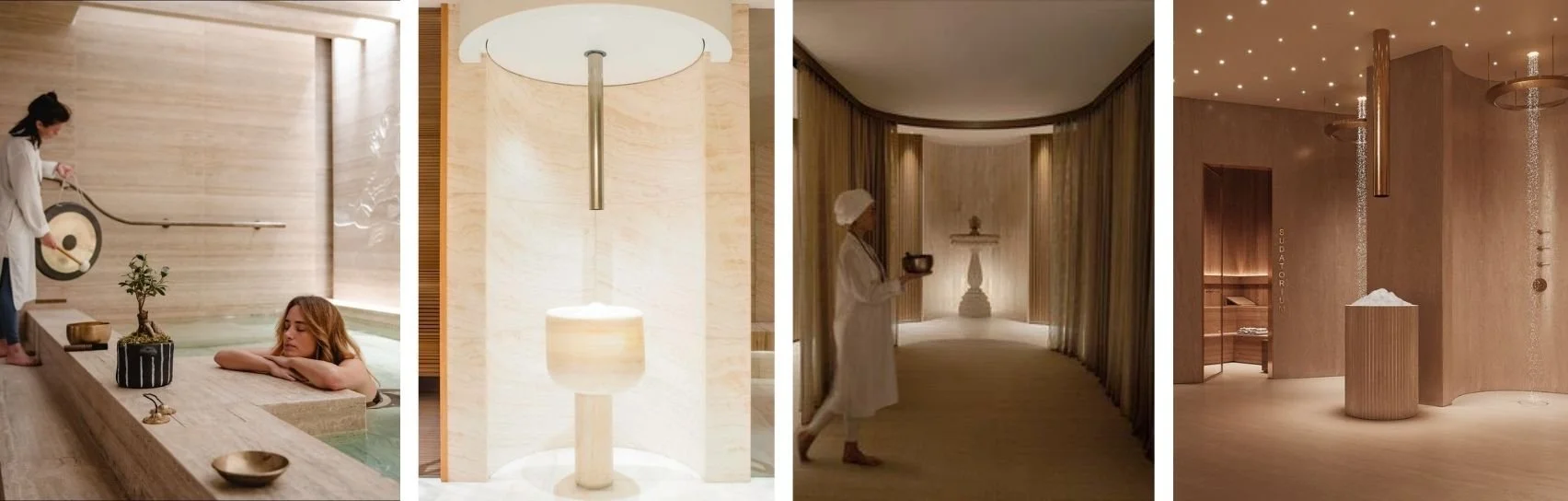
Concept development activities
(what we do for you)
Define positioning and success criteria (who it’s for, service level, commercial intent)
Confirm the programme mix across traditional spa, hydrothermal, recovery/longevity, and fitness as relevant
Map the guest journey and sequencing (arrival → changing → experiences → relaxation → departure)
Establish planning principles (privacy, wet/dry logic, adjacencies, dwell time assumptions)
Develop concept zoning logic and headline spatial intent
Set design direction: mood, atmosphere, materials intent, and key moments (concept-level)
Provide early coordination considerations (technical implications and dependencies)
wellness club performance zone - design direction
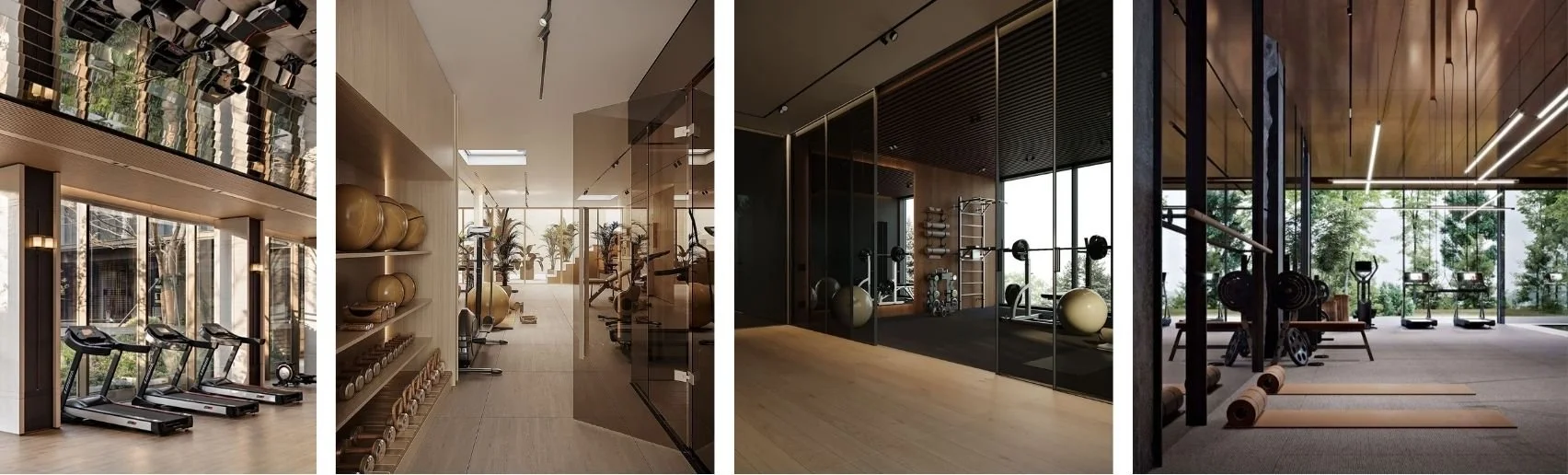
Concept development deliverables
(what you receive)
Concept deck (narrative, positioning, references, experience principles)
Programme schedule (components, priorities, assumptions)
Guest journey / sequencing diagrams
Concept zoning diagrams (adjacencies and planning logic)
Design direction boards (mood/atmosphere and material intent)
Recommendations + next-step roadmap into space planning, interiors and specification
wellness club spa zone - design direction
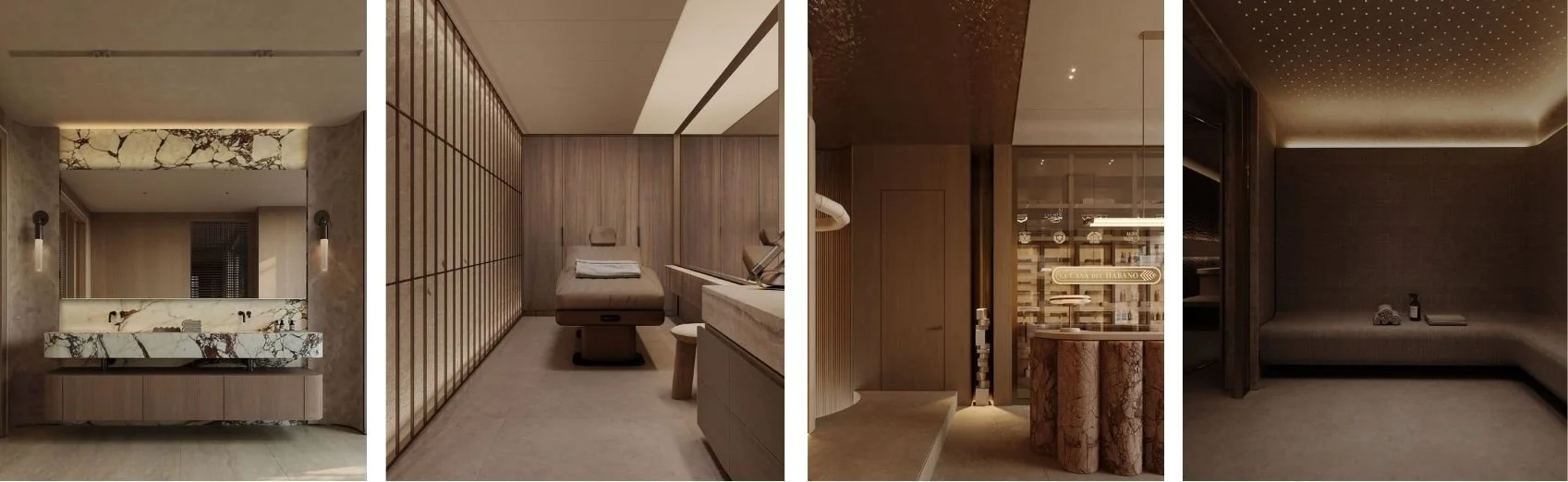
pre-design planning
equipment specification
interior design
pre-opening support
FAQs
How is concept development different from pre-design planning?
1
Pre-design planning validates programme, capacity and zoning fundamentals. Concept development builds on that foundation to define the facility’s experience direction, guest journey, and the concept package that guides interiors and specification.
Does concept development include spa and recovery/longevity concepts?
2
Yes. We develop concepts that balance traditional spa offers with modern recovery and longevity programming, ensuring the facility mix and sequencing are coherent and operationally credible.
Can you deliver concept development without delivering interior design?
3
Yes. Biofit can deliver a complete concept package for your appointed interior design team to implement, with optional review support during subsequent stages.
What happens after the concept is approved?
4
Typically we progress into space planning refinement, equipment and technical specification, interior design (where appointed), and pre-opening support.
Concept development glossary
-
Wellness concept development defines the strategic direction for a gym, spa or recovery facility—clarifying the offer, service level and experience intent before detailed design begins. It aligns programme mix, guest journey, zoning logic and interior design direction, creating a concept package the wider team can approve and implement.
-
Positioning explains who the facility is for and why it is distinctive—hotel guest versus members, luxury versus lifestyle, restorative versus performance-led. Service level defines expectations around privacy, staffing, materials and ambience. Clear positioning drives the right programme mix, layout decisions, and the interior quality benchmark.
-
Programme mix is the balance of components within the wellness facility—such as traditional spa treatments, hydrothermal experiences, recovery/longevity offerings and fitness. A strong programme mix matches the target user profile and operating model, while ensuring space is allocated efficiently and supports a coherent guest journey.
-
The guest journey maps the sequence of experiences from arrival to departure—arrival and consultation, changing, treatments or recovery sessions, thermal experiences, relaxation, and exit. A well-designed guest journey improves comfort, privacy and perceived quality, while also supporting efficient staffing, turnover and operational flow.
-
Sequencing is the planned order of spaces and experiences—particularly important in spas and recovery facilities that combine wet/dry areas, thermal suites and quiet zones. Good sequencing reduces bottlenecks, supports hygiene and privacy, and helps the facility feel intuitive and premium without excessive signage or staffing.
-
Zoning defines how spaces are grouped (front-of-house, wet areas, dry areas, treatment, recovery, back-of-house). Adjacencies describe which spaces need to sit near each other for operational efficiency and guest comfort. Strong zoning logic prevents noise conflicts, improves privacy, and reduces wasted circulation.
-
Experience principles are the design and service “rules” that guide decision-making—privacy, sensory pacing, material robustness, lighting atmosphere, acoustics and maintenance logic. Defining experience principles early helps interior design and technical choices remain consistent as the project moves from concept into detailed design.
-
Benchmarking uses relevant reference projects to set expectations for layout standards, guest experience and service level. Precedent references help align stakeholders, speed up approvals, and provide a practical quality benchmark—especially useful when teams are deciding between traditional spa, recovery-focused, or hybrid concepts.
Need a wellness concept your team can actually deliver?Share your plans and a short brief. We’ll outline a concept development scope that clarifies the offer, the guest journey and the design direction—ready for detailed planning and implementation.