Wellness & fitness interior design
Biofit designs interiors for gyms, spas, recovery and longevity facilities—creating premium environments that balance atmosphere with durability, hygiene and operational performance. We deliver interior design from concept through technical documentation and coordination support, ensuring the wellness experience is both compelling and buildable.
PREVIOUS CLIENTS SANI-IKOS RESORTS
FUSION STUDENTS
CARNEGIE MELLON UNIVERSITY
MELIA HOTELS INTERNATIONAL
Why wellness interior design is different
High-use + high-expectation: wellness interiors must feel calm and premium while standing up to intensive daily use and cleaning regimes.
Technical conditions: wet zones, humidity control, acoustics and lighting control materially impact comfort and longevity.
Operational flow: guest privacy, staff workflow and back-of-house practicality are part of the design, not afterthoughts.
-
Boutique hotels, resorts and branded residences with spa or recovery amenities
-
Residential developers using wellness as a leasing/value driver
-
Private clubs and hospitality-led fitness concepts
-
Refurbishments requiring practical phasing and durability planning
-
Projects where a single team should own experience + interiors + specification
Choose the engagement model that best fits your project scale and delivery teamWellness Lead Consultant (including Interior Design)
Best when you want a single point of responsibility. We deliver planning through interior design and documentation, coordinating experience, specification and buildability from concept to handover.
Specialist Wellness Sub-Consultant
Best when an interior design team is already appointed. We provide specialist wellness planning, layouts, specification and design-integration reviews—ensuring functional requirements are embedded early and executed cleanly by the wider team.
example wellness design moodboard
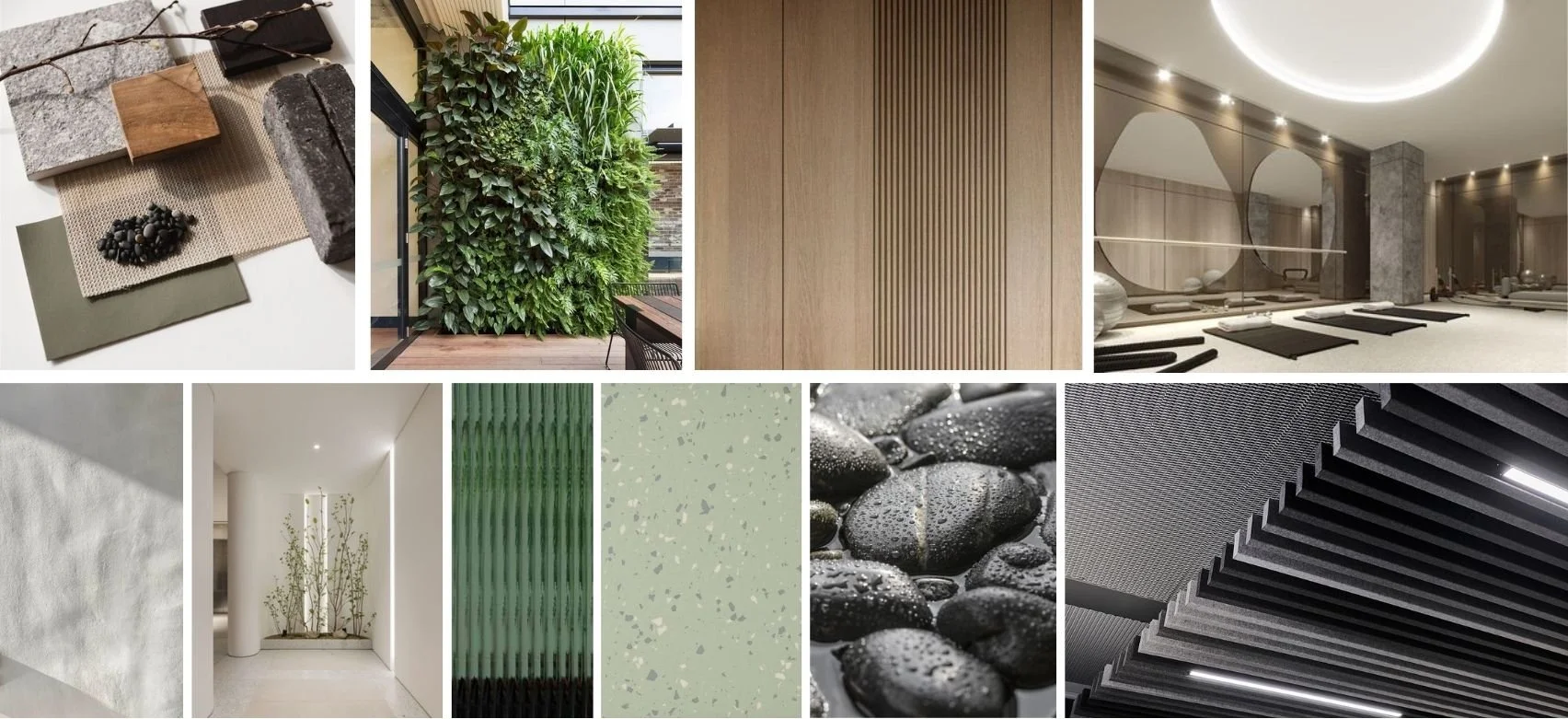
What we do as wellness interior design consultants for spas, gyms, wellness clubs
We translate the wellness concept into a coherent interior language—then develop a coordinated package that can be priced, procured and built. Our interior design approach integrates experience, operations and buildability, ensuring the finished environment looks premium, functions efficiently, and performs reliably over time.
gym interior design for Fusion Students Nottingham, UK
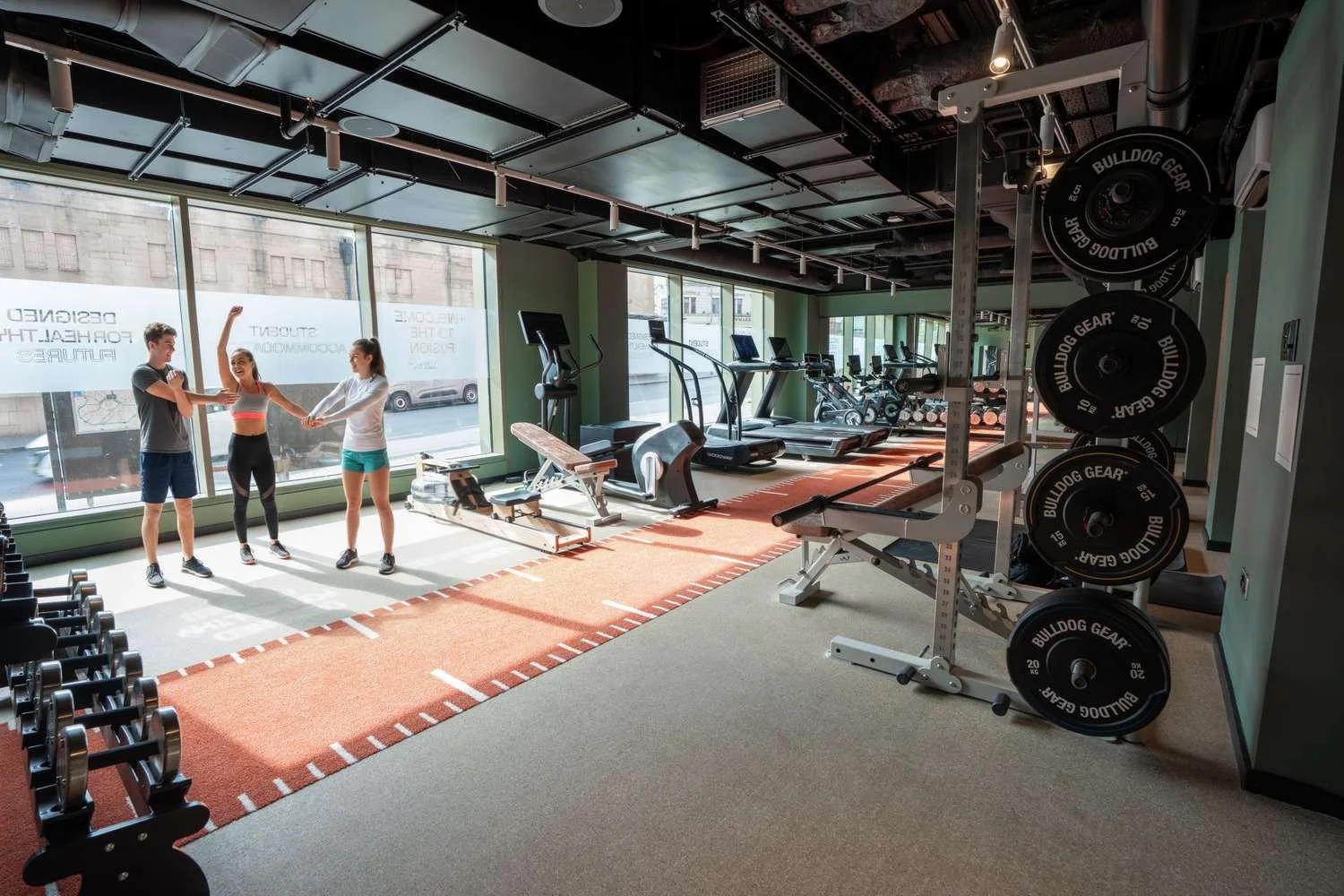
Wellness interior design activities
(what we do for you)
Concept interior design: narrative, mood direction, key moments and atmosphere intent
Space planning refinement aligned to guest journey, privacy and operational flow
Finishes strategy suitable for wet and high-use environments (as applicable)
Lighting intent for atmosphere, wayfinding and task requirements (coordination-ready)
FF&E selection and scheduling (front-of-house, lounges, studios, treatment and recovery areas)
Feature elements and joinery intent where required by the concept
Coordination support with architect, MEP, specialist suppliers and contractor
Tender / delivery support inputs as agreed in scope
gym interior design for Fusion Students BXT, London, UK
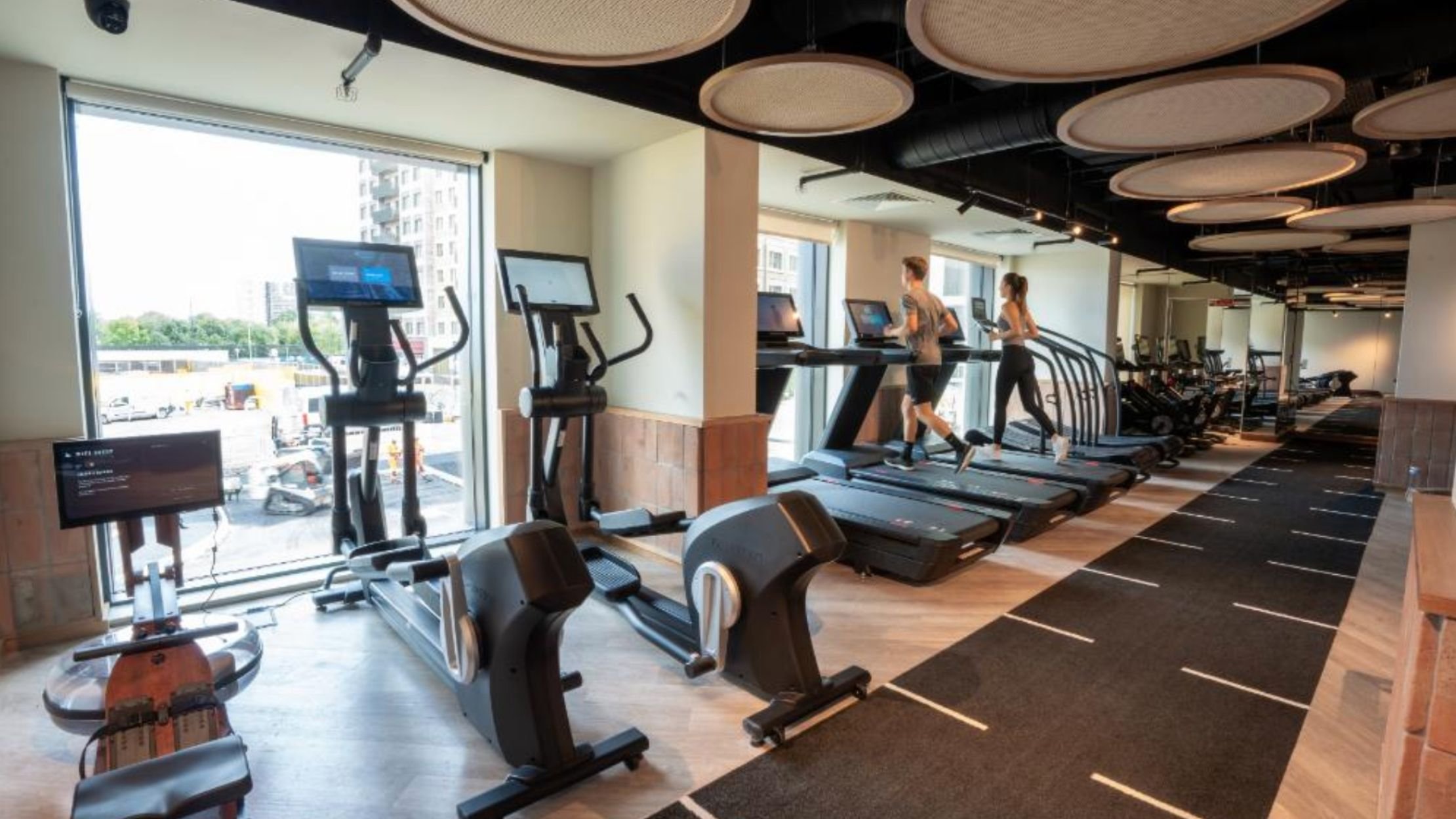
Wellness design deliverables
(what you receive)
Concept boards and interior narrative
Updated space plans (as required by project stage)
Finishes plans and outline specification notes
FF&E schedules and key product selections
Lighting intent notes / coordination brief
Key elevations and details for feature moments (where required)
Coordination comments and clarification log
Tender review inputs / delivery-stage support notes (as scoped)
yoga studio interior design for Fusion Students Leeds, UK
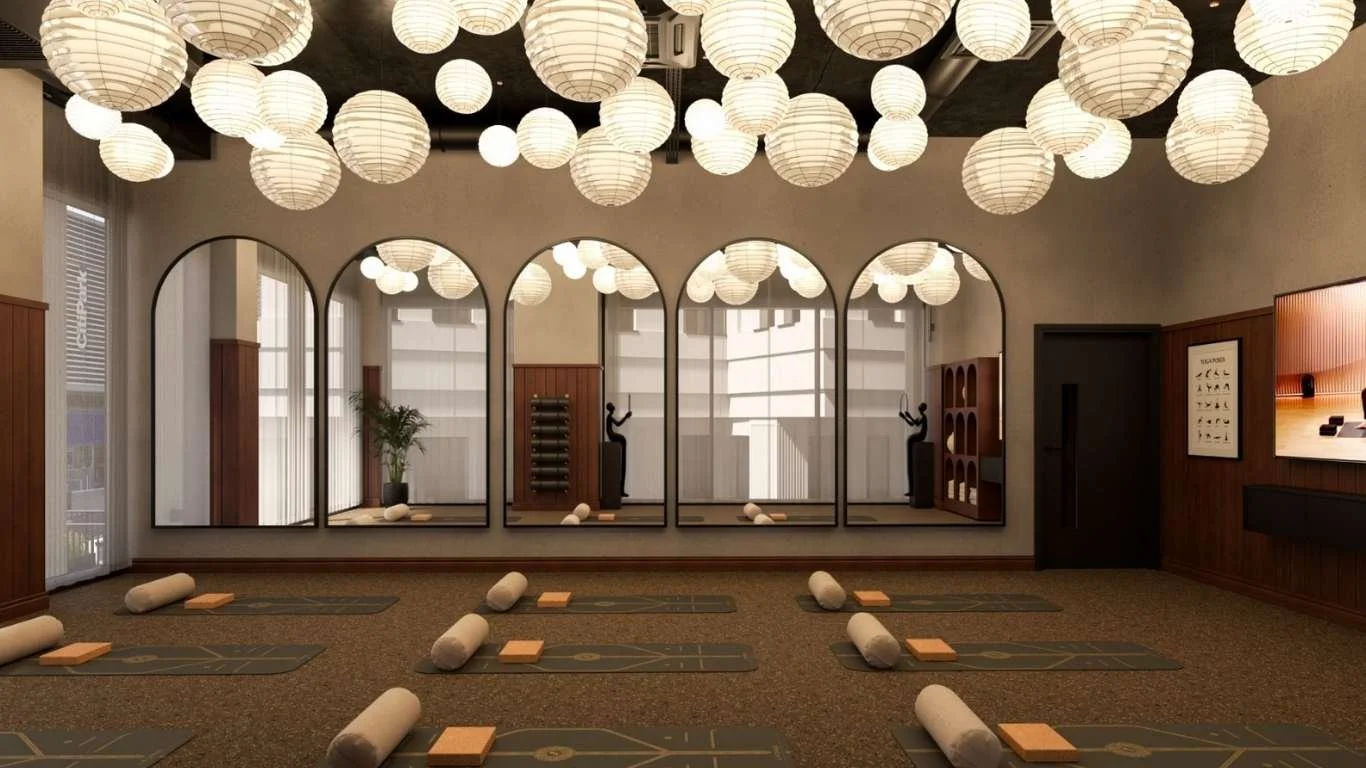
What we need from you
Latest General Arrangement (GA) plans and current layouts (if available), failing that site photos and a floor plan
Target positioning and user profile (hotel guest, members, residents, mixed); if these do not exist we can develop them together
Timeline milestones (design freeze, tender, start on site, opening)
Programme priorities (spa vs recovery vs fitness emphasis), often aligned with a business plan or wider strategic goals
Any operator standards / brand guidelines (where applicable) that we will need to align with
Budget parameters (high-level indications are helpful) and procurement preferences (will you purchase yourself or require us to coordinate?)
wellness pre-design planning
wellness concept development
wellness equipment selection
wellness pre-opening support
FAQs
Do you design for both traditional spas and modern recovery / longevity concepts?
1
Yes. We design interiors for treatment-led spa environments and modern recovery/longevity programmes, ensuring the space supports privacy, flow, durability and operational practicality.
Can you provide interior design without equipment specification?
2
Yes, but most clients benefit from integrating interiors with equipment and technical requirements to avoid late changes and coordination issues. We can scope this to suit your project team.
Do you support refurbishments and phased upgrades?
3
Yes. Refurbishments often require careful phasing, robust finishes strategies and practical coordination to minimise disruption and protect guest experience.
How do you coordinate with architects and MEP teams?
4
We provide coordination-ready documentation and review support so finishes, lighting intent, equipment interfaces and technical constraints are resolved early and delivered consistently.
Gym + spa equipment specification glossary
-
Wellness interior design combines atmosphere and brand expression with operational performance—durability, hygiene, acoustic comfort, privacy and maintenance logic. It addresses the technical realities of spas, recovery zones and gyms so the facility feels premium and continues to perform under intensive daily use.
-
Design intent captures the essential ideas that must be preserved from concept to construction—mood, material direction, lighting atmosphere, privacy principles and key experiential moments. Clear intent helps teams coordinate and procure without diluting the experience as decisions move into technical design.
-
A finishes strategy defines materials suited to the environment: wet zones, high-traffic areas, cleaning regimes and durability requirements. In wellness spaces, finishes must balance tactile quality with moisture tolerance, slip resistance, acoustic performance and maintainability for long-term value.
-
Lighting intent sets atmosphere and functional requirements for each zone—calm ambient lighting for relaxation, stronger task lighting where needed, and appropriate control approaches. Strong lighting intent supports sensory pacing, privacy and wayfinding, and provides a clear brief for technical coordination.
-
FF&E schedules document furniture, fixtures and equipment selections that support the guest journey—reception seating, loungers, benches, storage and accessories. In wellness environments, FF&E must be comfortable, durable, cleanable and aligned with operational flow and brand positioning.
-
Acoustic privacy supports discretion and calm—especially in spa consultation, treatment and relaxation areas. It is influenced by adjacency planning, partition build-ups, doors, soft finishes and background sound strategy. Good acoustic planning materially improves perceived quality.
Need a wellness interior that feels premium and performs reliably?Share your plans and a short brief. We’ll recommend a practical interior design scope and outline the next steps toward a coordinated, buildable wellness environment.