Alpine Start Development, Texas, USA
Fitness amenity consultancy for multi-family residential developments in Celina and January Lane
Biofit was appointed by Alpine Start Development in Texas to advise on the gym design, planning and equipment strategy for two multi-family residential developments, one in Celina, Texas and another referred to internally as January Lane.
The brief was to help shape fitness amenities that felt commercially credible, space-efficient and attractive to prospective residents, while also being practical to build, procure and operate within a residential development context. Under the Celina consultant agreement, Biofit’s scope included recommendations on gym floor plans, interior architecture, space planning, storage, landscaping, acoustics, supplier research, zoning, equipment layouts, flooring research, detailed equipment lists, budgeting support and site visit availability.
For Biofit, this project is a useful case study in residential amenity gym consultancy: combining floor plan logic, equipment zoning, procurement planning and launch-stage coordination for developer-led apartment communities.

Project overview
Client: Alpine Start Development
Location: Texas, USA
Sector: Multi-family residential / build-to-rent / lifestyle amenities
Project type: Residential gym consultancy
Projects covered: The District at Celina, Texas and January Lane, Grand Prairie Village, Texas
Scope: Gym planning, zoning, layout development, supplier research, equipment strategy, flooring guidance, budgeting and procurement coordination
The Brief
Alpine Start Development wanted well-planned fitness amenities that could strengthen the amenity offer within new residential communities.
These gyms were not intended to feel like afterthoughts or token leasing-office add-ons. They needed to work as genuine resident amenities: visually appealing, commercially sensible and broad enough in offer to support cardio, strength and functional training within relatively compact footprints.
Biofit’s role was therefore not limited to equipment selection. It covered the wider planning logic behind the gym spaces, including:
how to allocate and zone the available area
how to balance cardio and strength across split-level or double-height spaces
what storage, flooring and electrical considerations were required
how to align the final equipment mix with budget and procurement realities
Biofit supported Alpine Start as a specialist consultant on the gym component of the projects.
The agreed services for Celina included:
recommendations on gym floor plans, electrical plan, interior architecture, space planning, equipment storage, landscaping and acoustics
ongoing collaboration with architects, engineering and interiors teams
gym equipment supplier and product research
gym flooring supplier and product research
space allocation, zoning and gym equipment layout including technical files / 2D CAD
detailed equipment lists with specifications, pricing, supplier information and delivery timelines
recommendations on virtual training software for cardio machines
budget coordination with procurement teams and suppliers
one 3D render before procurement
availability for site visits during kick-off and installation / pre-launch
That scope reflects a fairly complete developer-side amenity gym consultancy role rather than a narrow procurement exercise.
Design approach
Our approach to these residential gyms was guided by four priorities:
1. Make the gym feel like a real amenity
In multi-family residential, the fitness space often plays an outsized role in leasing and resident perception. The gym needs to photograph well, function well and feel generous relative to the building’s positioning.
2. Separate the training offer into clear zones
Rather than creating a visually cluttered room with too many mixed-use functions, Biofit developed a clearer zoning strategy to support intuitive use.
3. Protect flexibility while controlling budget
Equipment selection was developed in stages, with the initial lists clearly marked as subject to budget review and supplier availability.
4. Coordinate the technical implications early
Electrical points, floor boxes, flooring build-up and access between levels all had to be considered early enough to avoid problems later in the process. The MEP coordination drawing and DAC layout make that clear.
Celina, Texas: zoning a two-level residential gym
The strongest documented example from the Alpine Start relationship is the Celina, Texas project.
The Biofit update deck issued in May 2022 shows a two-part gym arrangement with a ground floor and a mezzanine level, using the upper level primarily for cardio and the lower level for strength, functional training and mobility. On the “Training Zones” page, Biofit explicitly separated the programme into Strength, Movement & Mobility, Functional, and Cardio zones.
This was a smart response to the available space. The mezzanine was used for a denser cardio line-up, while the ground floor retained more openness for strength and movement-based training.
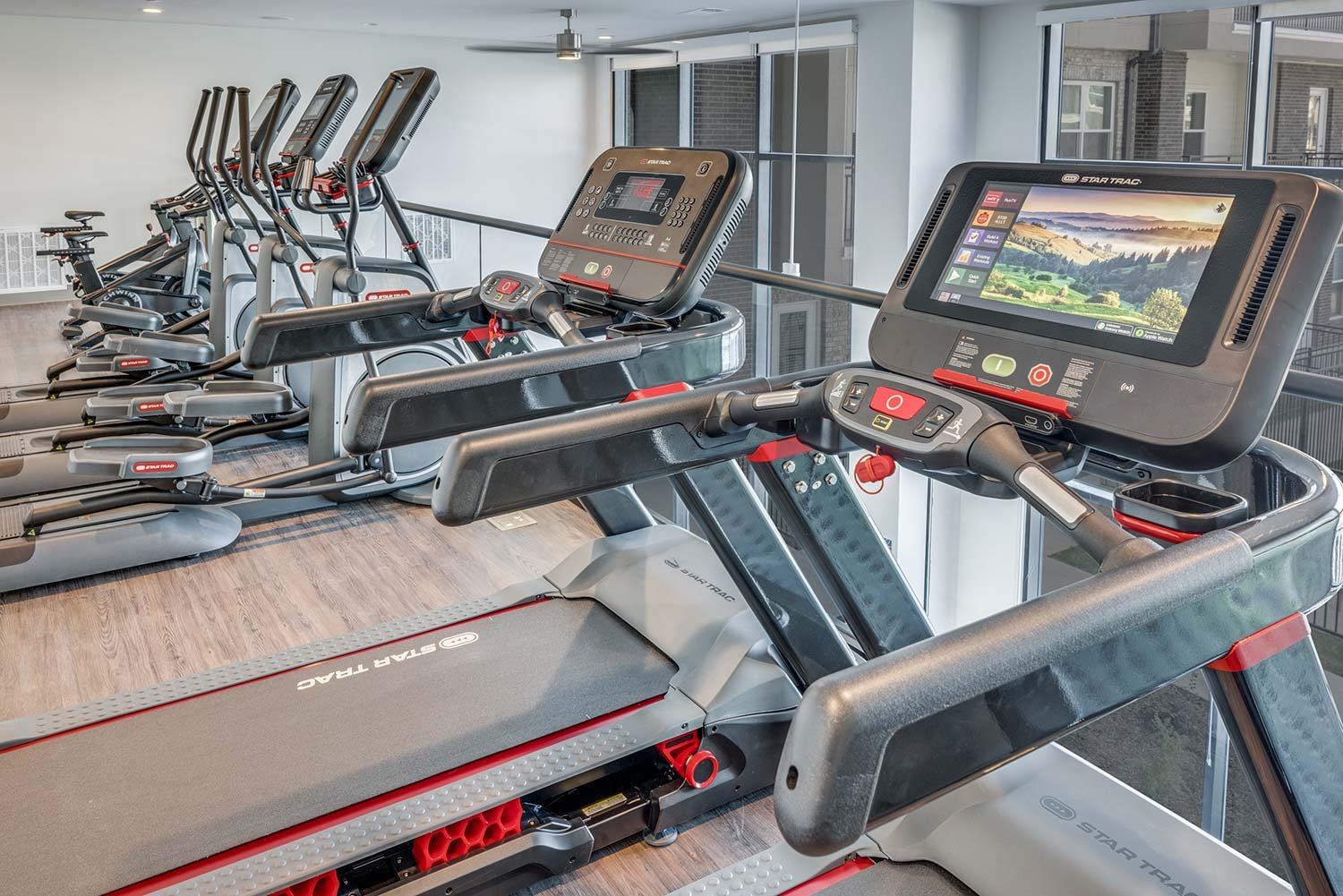
The accompanying DAC layout also shows how this was translated into a practical arrangement, with treadmills, ellipticals and bikes on the mezzanine, and strength / free weights / functional pieces below.
Cardio on the mezzanine
For the mezzanine level, Biofit proposed a straightforward cardio-focused programme.
The initial equipment list included:
treadmills
ellipticals
spin bikes
with allowance for up to three of each, subject to budget and final specification decisions.
This upper-level cardio strategy made efficient use of the long, linear balcony-like area and helped keep the more equipment-intensive machines away from the more flexible ground-floor training zone.
The completed photography appears to show this strategy carried through, with the upper level used for a row of cardio machines overlooking the main gym volume below.
Ground floor: strength, functional training and mobility
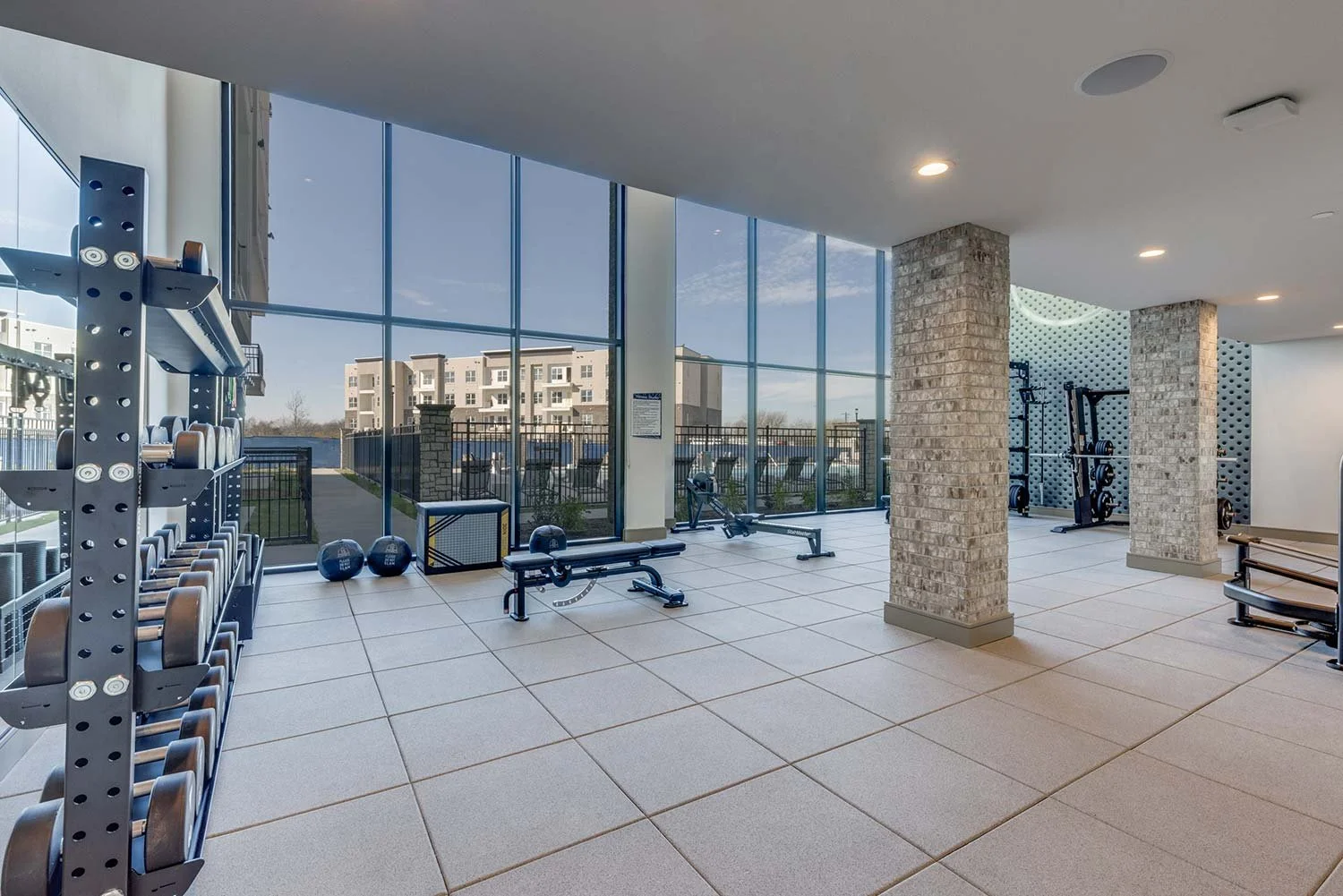
The ground floor was planned as the more versatile training zone.
The initial equipment list for this area included:
dual stack cable pulley
power rack with plate storage and pull-up section
bench press set-up
seated leg press
single-stack leg extension / leg curl
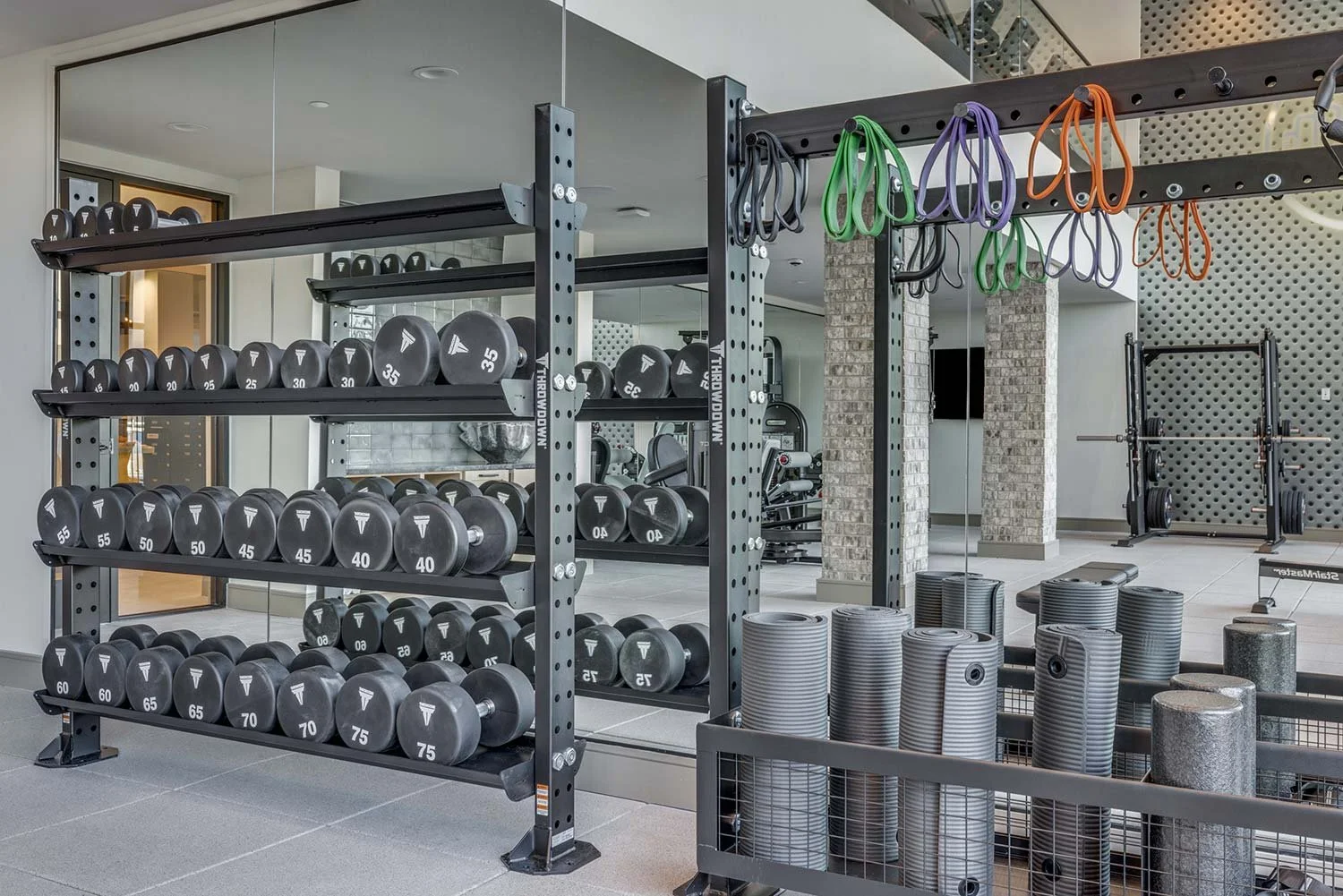
dumbbell and kettlebell rack
adjustable benches
plyo box
yoga mats
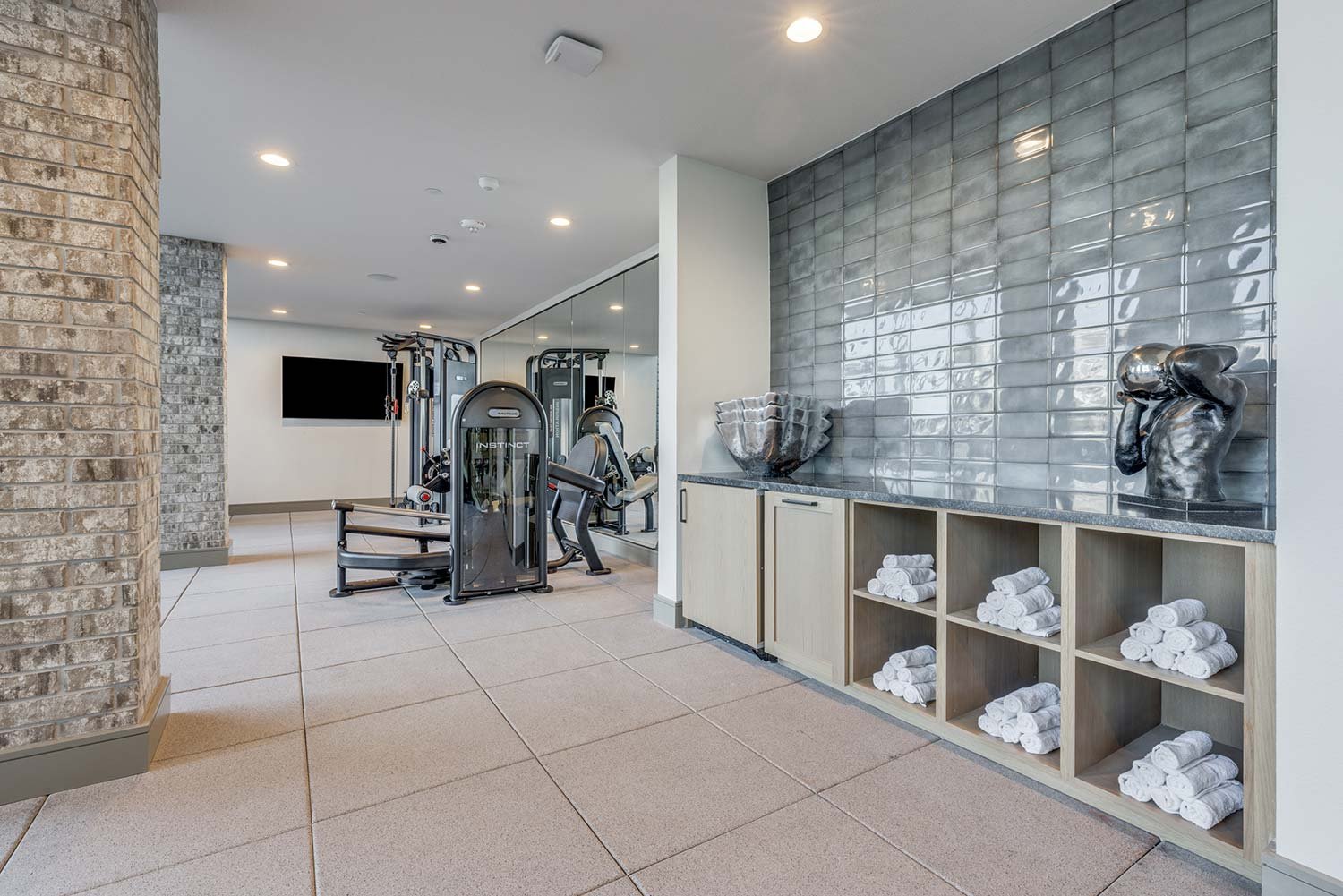
storage baskets / side table for personal belongings
This gave the gym a balanced offer for a residential setting: enough strength training capability to feel serious, but not so much density that the space lost openness or broad usability.
Technical coordination and MEP planning
A useful part of this case study is the evidence of practical coordination behind the scenes.
The Biofit update pack included a page specifically for MEP requirements, while the final DAC layout drawing identified floor box positions, dedicated plugs, standard plugs and data points.
That drawing also notes that the positions of floor boxes were not yet coordinated with the structural beams and that the electrical engineer needed to advise on final floor box sizing.
This is precisely the kind of detail that often gets missed when developers or architects treat the gym as a late-stage equipment package rather than a designed amenity space.

Procurement and phased delivery logic
The project was structured across four stages:
Concept Development
Design Development
Procurement & Programming
Fit-out & Launch
This is useful from a portfolio perspective because it shows Biofit’s work was not limited to an initial concept sketch. It extended into procurement logic, fit-out coordination, snagging, staff induction and even photo / video support for promotion of the completed facility.

Why this matters for residential developers
This project demonstrates a common issue in residential development: the gym is often treated as a standard amenity box, even though it can materially influence leasing appeal and resident satisfaction.
Biofit’s contribution here was to help turn the fitness space into a more structured, market-ready offer by addressing:
zoning and spatial hierarchy
equipment breadth versus available area
technical coordination
supplier and budget reality
the end-user experience of the finished gym
That combination is especially relevant for multi-family and build-to-rent developers looking to create stronger common amenities without overbuilding or overspending.

Outcome
The Alpine Start Development work is a strong example of Biofit’s ability to support developer-led residential projects through practical gym consultancy.
Rather than approaching the gym as a simple FF&E package, Biofit helped structure the amenity through:
clear zoning logic
split-level cardio / strength planning
equipment research and specification
technical and electrical coordination
procurement-stage support
launch-stage thinking

Services provided by Biofit
gym floor plan recommendations
space planning and zoning
interior architecture guidance for the gym component
gym equipment research and specification
gym flooring research and recommendations
technical / electrical coordination inputs
budget and procurement coordination
CAD layouts and 3D visual support
fit-out and launch-stage advisory
Alpine start developments already had their interior designers on board, where they needed specialist input from us was on the gym component and the residential fitness component in particular. – Matt Aspiotis Morley
Frequently Asked Questions
-
This was a multi-family residential amenity gym consultancy for Alpine Start Development in Texas, covering two separate development projects.
-
No. Biofit’s role focused specifically on the gym and fitness amenity component, working alongside the wider project team and interior designers.
-
The scheme used a mezzanine for cardio and a ground floor for strength, functional training and mobility, with equipment including treadmills, ellipticals, spin bikes, cable stations, power rack, leg press, benches and free weights.
-
Because it shows how a gym can be planned as a serious resident amenity, with better zoning, stronger technical coordination and a clearer balance between user experience and budget.
-
Yes. The agreed scope included supplier research, pricing, delivery timelines, procurement coordination and support through fit-out and launch.
Biofit works with architects, engineering teams and project managers to deliver specialist sports, gym, spa and wellness advisory services.
Get In Touch
If you're interested in working with us, complete the form with a few details about your project. We'll review your message and get back to you within 48 hours.