Karolinska Institutet Nature Gym, Stockholm, Sweden
A biophilic micro-gym for movement breaks, stress reduction and light exercise
Biofit designed this compact indoor nature gym for Karolinska Institutet in Stockholm, creating a small but distinctive wellness space within the university’s Health Promotion Unit.
Officially opened in January 2018, the project transformed an under-used office room of approximately 25 m² into a biophilic fitness and wellbeing space for students and staff. Rather than competing with the university’s main fitness centre, the brief was to create a smaller complementary room where users could take a quick movement break, stretch, reset mentally, or join a short bodyweight class during the day.
The result was a highly compact mindfulness and movement facility designed around natural materials, sensory wellbeing and sustainability-led specification.
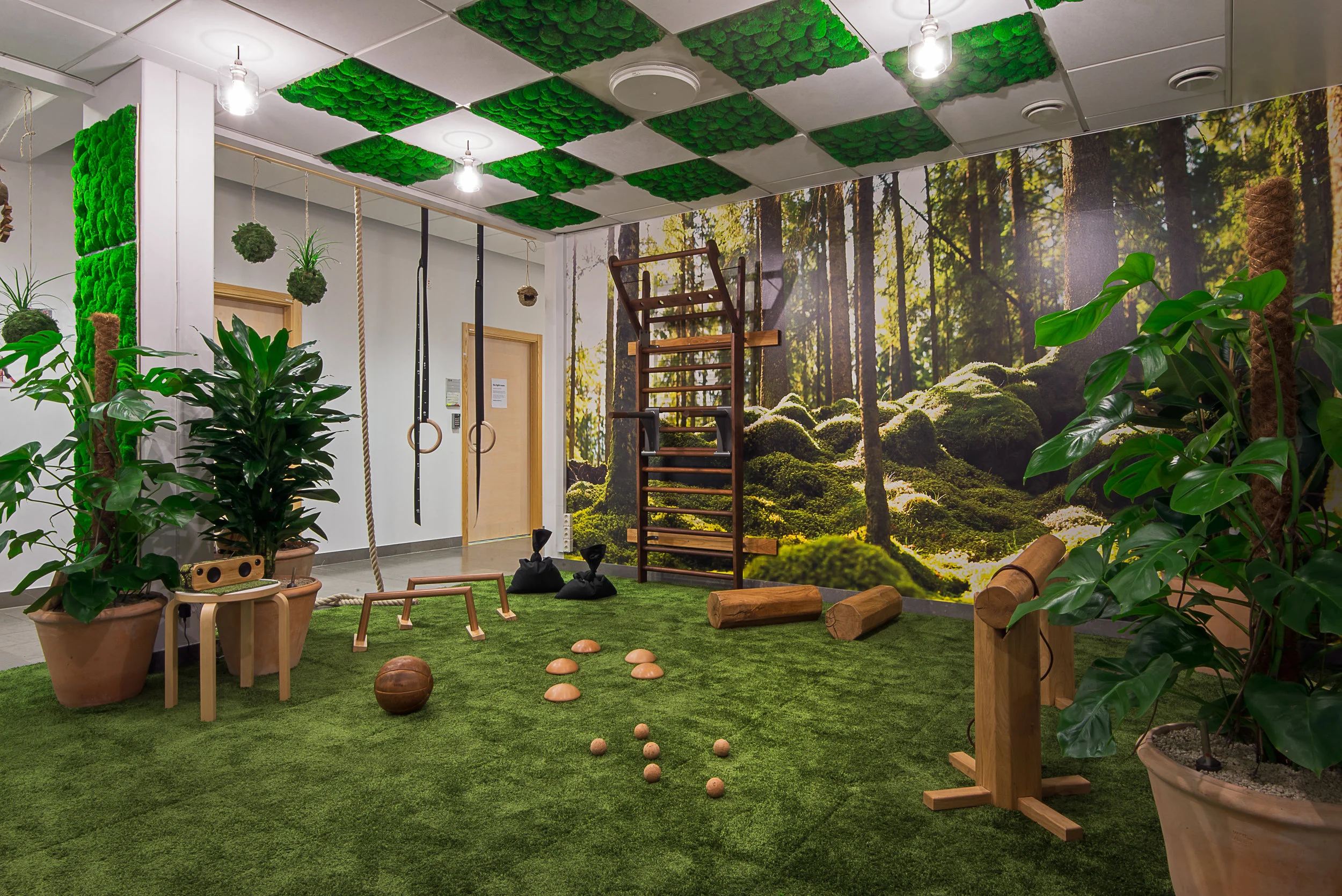
Karolinska Institutet sustainable gym design by Biofit
PROJECT OVERVIEW
Client: Karolinska Institutet
Location: Stockholm, Sweden
Sector: University / Higher Education
Type: Indoor nature gym / micro-gym / wellness room
Size: Approx. 25 m²
Design phase: 2017
Opening: January 2018
Scope: Concept design, space planning, sustainable materials strategy, equipment selection, procurement support, fit-out coordination
The Brief
Karolinska Institutet wanted to repurpose a small under-utilised room within its Health Promotion Unit offices into a wellness-focused facility that could help students and staff stay active and de-stress throughout the year.
The room was intended for short, informal use rather than full workouts: a place for movement snacks, stretching, light rowing, balance exercises, mobility work and short bursts of restorative activity between lectures, teaching sessions and long study hours.
Its position within a wider wellbeing cluster was also important. Adjacent spaces included an ergonomics room for furniture testing and a bright white-light room used by students working late. This gave the project a broader health-promotion context and reinforced the need for a room that felt calming, restorative and accessible.
Our response
Biofit approached the room as a biophilic micro-gym shaped by nature-based design cues and a deliberately non-commercial fitness language.
The design concept drew on the local Swedish landscape, especially moss-covered forest terrain, with the aim of making the room feel more like a small indoor clearing than a conventional gym. Within the tight footprint, every element needed to contribute both visually and functionally.
Instead of filling the room with standard gym equipment, we curated a capsule collection of simple, tactile movement tools that encouraged exploration, mobility, coordination and low-pressure activity. The room was designed to support quick individual use as well as occasional guided bodyweight strength sessions.
Scope of services
concept design
space planning
sustainable materials policy
training equipment specification
procurement support
branding and communications inputs
fit-out coordination with the on-site team
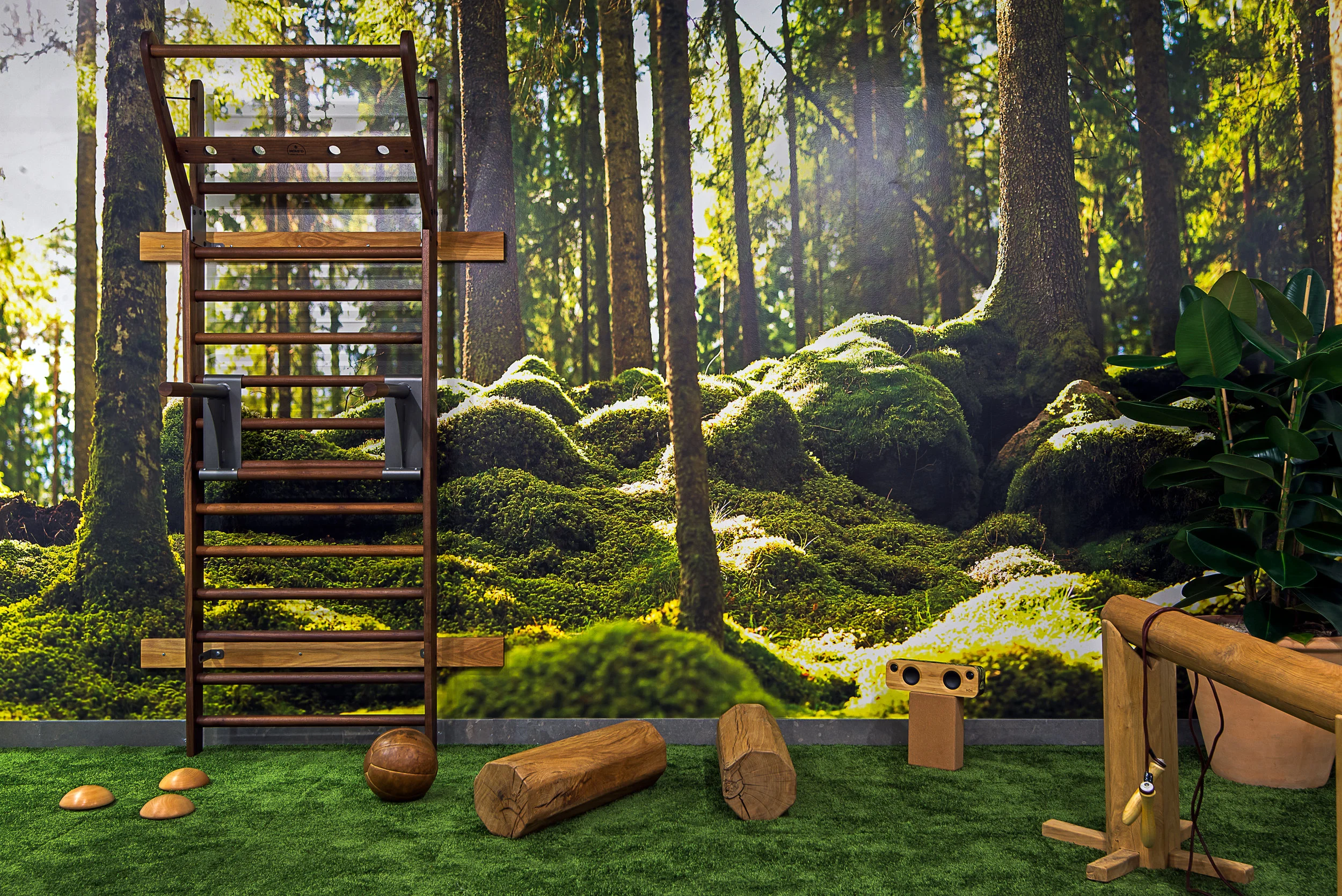
Design features
Forest wall mural
A large-scale Swedish forest mural created instant visual immersion and gave the room a strong identity. The design proposal considered several mural options, with the final concept using a woodland scene to bring depth and atmosphere to the space.
Moss-inspired flooring
The room featured grass-green Interface carpet tiles, selected both for the visual link to forest undergrowth and for their sustainability credentials. The original design proposal references 100% recycled nylon carpet tiles with third-party verified carbon neutrality.
Moss ceiling panels
Acoustic moss ceiling panels added softness, greenery and a stronger biophilic character overhead. These were a major visual move in such a small room and helped distinguish the project from a standard office conversion. The proposal explored cut-to-fit moss panels within the existing ceiling grid, while the budget sheet confirms installed moss ceiling elements.
Kokedama moss balls
Japanese-style kokedama moss balls were suspended in the space to deepen the natural atmosphere. A separate contractor note shows the positioning strategy, calling for 10 small hooks at 15 cm intervals across 1.5 metres to suspend the moss balls between the forest wall and the central pillar.
Planting
Air-purifying plants such as Monstera and Ficus Elastica were used to soften the room and strengthen the connection to nature. The design deck also proposed Dracaena palm and Broadleaf lady palm as low-maintenance planting options.
Wellness lighting
The project incorporated circadian lighting using Philips Hue wellness bulbs, intended to support alertness by day while avoiding an overly harsh atmosphere later in the day. The lighting concept also used pendant shades and rope electrical wire to soften the ceiling visually.
Sensory wellbeing layer
Beyond the visual design, the room included a subtle sensory layer through forest aromatherapy, a proposed air purifier, and bamboo / earth-friendly speakers for birdsong, nature sounds or playlists during use. This moved the room beyond a simple gym fit-out and into a broader wellness experience.
Equipment strategy
The equipment was deliberately non-standard. Rather than using a typical commercial gym package, Biofit specified a capsule collection of eco-friendly, movement-based training tools that aligned with both the design concept and the sustainability brief.
These included sustainably sourced or wood-based items such as:
wall bars, including a NOHrD walnut unit
handmade push-up bars
wood balance tools and balance stones
lifting logs and carved wood trunks
vintage leather medicine ball
natural fibre climbing rope
wood gymnastics rings
sandbags
resistance bands
cork massage balls
wood-handle skipping rope
The design proposal also made clear that equipment should remain largely unfixed and stored by the walls when not in use, helping the room remain flexible and safe within its small footprint.
Sustainability principles
Sustainability was not treated as a marketing afterthought. It was embedded into the project brief and specification strategy from the start.
Key moves included:
prioritising sustainably sourced timber and longer-life equipment
specifying recycled or lower-impact finishes where possible
favouring tactile, natural-looking materials over conventional fitness fit-out standards
using planting and biophilic design to improve the emotional quality of the room
communicating the material story through signage and a printed leaflet on recycled paper
There were also pragmatic compromises. The moss elements delivered strong visual and atmospheric value, but preserved moss is not fully “raw natural” material in the strictest sense because it is treated for durability. Even so, it played an important role in delivering the intended calming biophilic effect.
Space planning in 25 m²
A key challenge was making such a small room feel usable, not cramped.
The layout preserved a central open zone for stretching, mobility work, bodyweight exercises and informal group use. Larger items sat around the edges so that the room could be reset quickly between different uses. This made the space suitable for both spontaneous individual activity and short programmed sessions.
That approach was central to the project’s success. In a room of this size, flexibility matters more than quantity of equipment.
Budget-conscious wellness design
This project is also a good example of what can be achieved on a limited budget when the brief is clear and the concept is disciplined.
The original showroom proposal set out a total target cost of around EUR 10,000 / SEK 100,000, with allocations for interiors, equipment, tech, communications, Biofit’s concept/design/project management fee and local labour. A later budget sheet shows a final working total of SEK 103,428, slightly above the original ceiling.
That modest budget makes the project particularly relevant for universities, offices and other institutions looking to create a wellness amenity without the footprint or capital cost of a full fitness centre.
Outcome
The finished Karolinska Institutet nature gym showed how an under-used room inside a university building could become a meaningful health-promotion asset.
It gave students and staff an alternative to the main fitness centre: a place for short movement breaks, bodyweight training, stretching and mental decompression in a calm, nature-inspired setting. It also demonstrated an approach that remains highly relevant today: small-footprint wellness rooms that support everyday wellbeing rather than only formal exercise.
For Biofit, it remains an early and clear example of how biophilic design, sustainable specification and wellness-led space planning can come together in a very compact format.
as one of our very first gym design projects, the trust placed in us by patrick, anna and the health promotion unit team at karolinska institutet meant a lot. in return, we delivered a small but meaningful, innovative movement space inspired by biophilic design principles– Matt Aspiotis Morley
Frequently Asked Questions
-
An indoor nature gym is a small exercise and wellness space designed using biophilic principles, natural materials and sensory wellbeing features to create a calmer alternative to a conventional gym.
-
The room was approximately 25 m², making it a true micro-gym rather than a full fitness facility.
-
No. It was designed to complement the main university gym by giving students and staff a smaller room for short movement breaks, stretching and light activity closer to their daily work and study environment.
-
The project used sustainably sourced wood equipment, recycled-content carpet tiles, planting, lower-impact finishes and a strong sustainability-led procurement approach.
-
The room featured wood wall bars, balance tools, ropes, rings, sandbags, medicine balls, resistance bands and other movement-based equipment rather than standard commercial gym machines
-
Because many universities, offices and residential developers now want compact, flexible wellness spaces that promote movement, stress reduction and mental reset without requiring the area or budget of a large gym.
If you’re planning a gym, spa, or wellness club and want a delivery strategy that protects design intent through construction, contact us via email here or the form below.
Get In Touch
If you're interested in working with us, complete the form with a few details about your project. We'll review your message and get back to you within 48 hours.