Porto Montenegro Beach Gym, Montenegro
Designing an 800 m² outdoor beach gym for the Porto Montenegro Yacht Club
In 2018, Biofit designed an 800 m² beach gym for the Porto Montenegro Yacht Club on the Adriatic Coast, creating an outdoor fitness space as part of the wider Beach Club concept within Porto Montenegro.
Although positioned just 50 metres from the water’s edge, the site was not a natural beach. It sat within a non-tidal bay with no actual beach in place and occupied what was effectively a large concrete slab bordered on three sides by marina-related infrastructure and parking.
The challenge was therefore not simply to add equipment outdoors, but to transform a hard, exposed and visually compromised site into a usable and attractive open-air training environment.
This project remains an important early case study for Biofit because it demonstrated how much specialist thinking is required to design an outdoor gym properly, especially in a hospitality context where user experience, visual quality, durability and operational logic all matter.

Project overview
Client: Porto Montenegro Yacht Club
Location: Porto Montenegro, Tivat, Montenegro
Sector: Hospitality / Beach Club / Leisure
Project type: Outdoor gym / beach gym design
Size: 800 m²
Year: 2018
Scope: Concept development, outdoor fitness strategy, beach gym design, layout planning, bespoke equipment design, material selection, supplier coordination
The brief
The aim was to create a distinctive outdoor gym as part of the Porto Montenegro Yacht Club Beach Club concept.
The site needed to function as a credible training environment, but it also had to sit comfortably within a premium waterfront leisure setting. That meant addressing a number of challenges at once:
lack of an actual natural beach
exposure to sun, wind and rain
limited privacy
a hard existing concrete base
the need for a secure perimeter
operational constraints linked to nearby marina uses and yacht guests
the visual expectations of a premium destination
This was not a case of dropping standard outdoor fitness equipment into an empty plot. The project required a full reconsideration of what a beach gym should be in this particular context.
Our design approach
Biofit approached the project as a purpose-built outdoor beach gym, not simply an open-air version of an indoor gym.
That distinction shaped every decision. The project had to respond to:
coastal conditions
seasonal use
noise management
shade and heat exposure
sand performance underfoot
weather resistance of equipment
privacy without full enclosure
the aesthetics of a luxury leisure destination
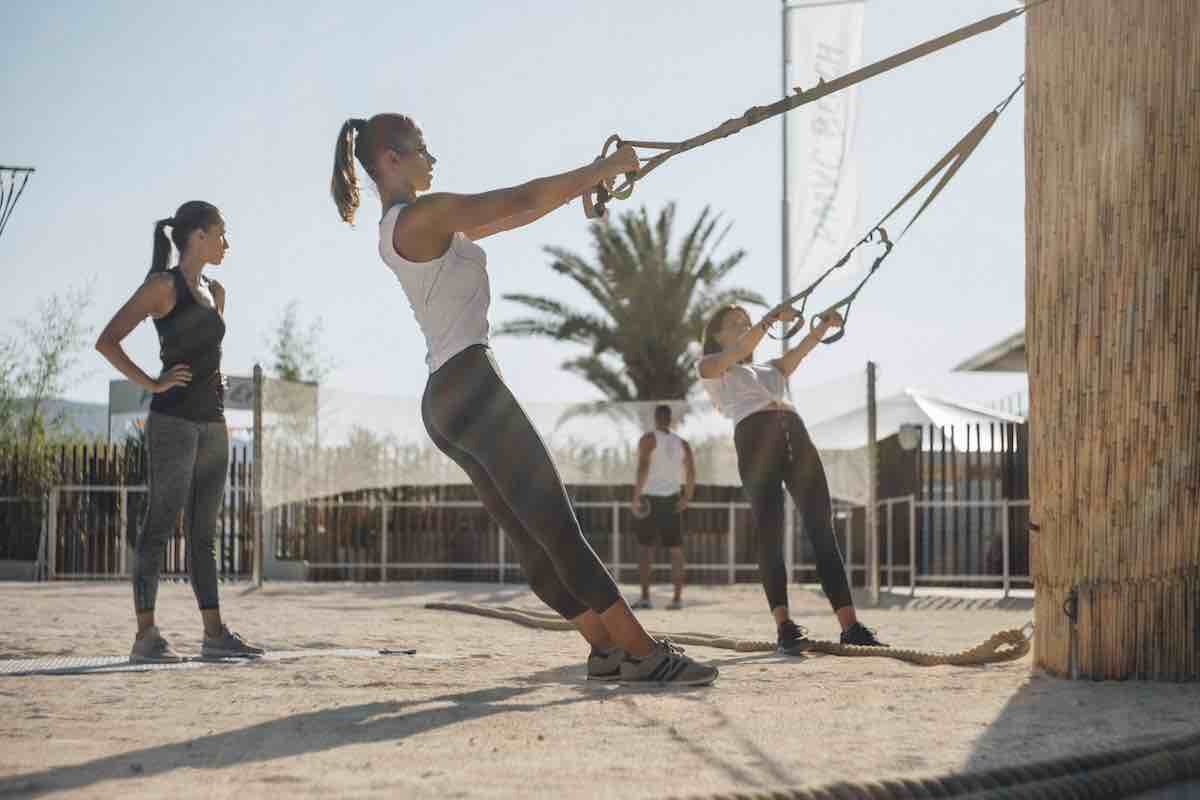
The result was a gym that blended bespoke timber equipment, sand surfaces, shaded perimeter zones, local fabrication and simple but robust detailing to create a more immersive outdoor training environment.
Reimagining the site
One of the first challenges was the site itself.
Although close to the water, the gym plot was not naturally beach-like. It was essentially a large concrete slab, bordered on three sides by what was effectively a car park. In its raw state, it offered little sense of seclusion or fitness identity.
Biofit’s role was therefore partly spatial and architectural: to create a perimeter, define an internal world and make the site feel more like a destination within the wider Beach Club offer.
This is a useful lesson in outdoor gym design generally. Often the key challenge is not the equipment, but the transformation of the site into a place that people actually want to use.
Perimeter fencing and privacy
A major early design problem was how to create security and privacy without making the gym feel enclosed or heavy.
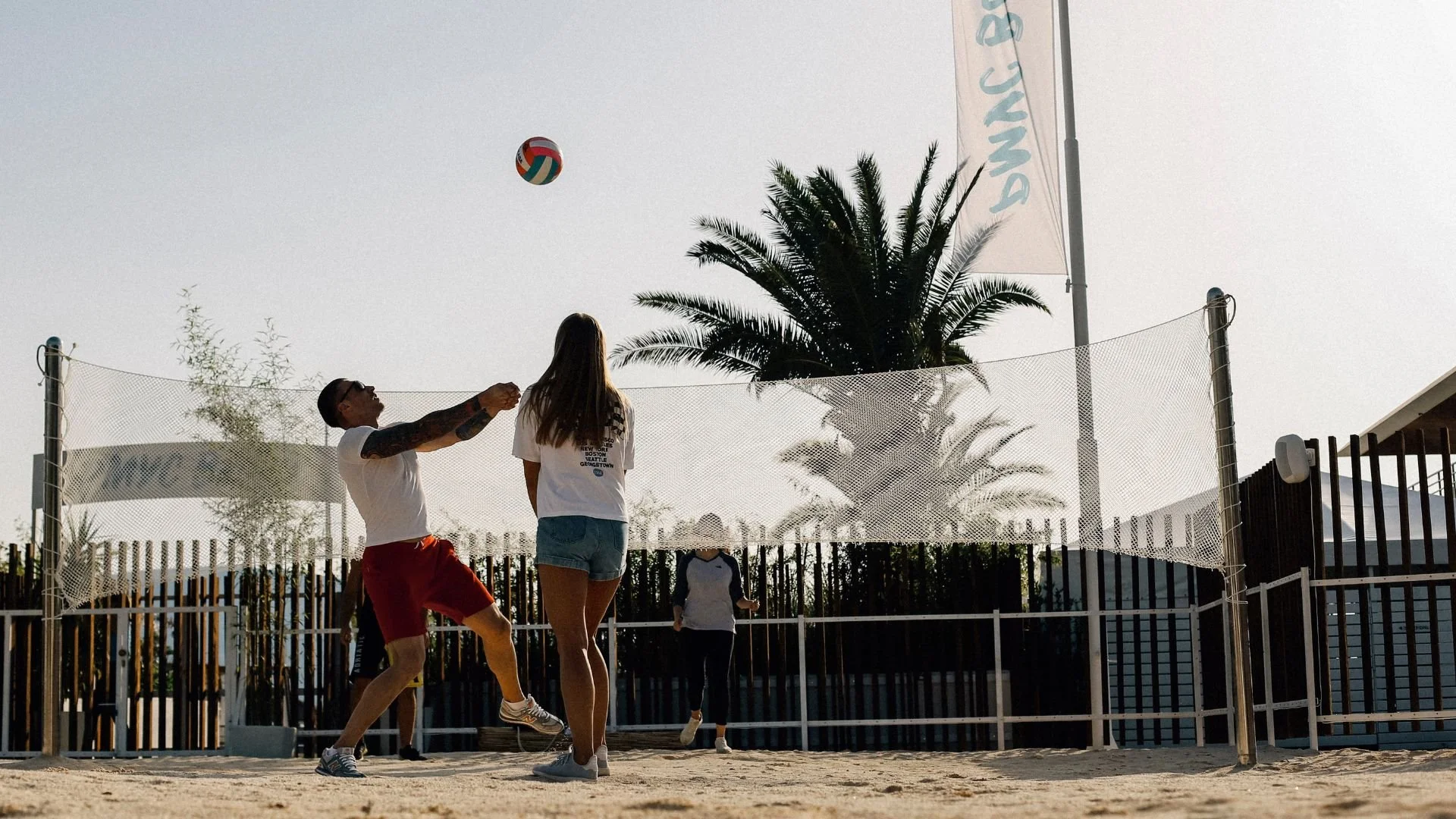
The chosen solution was a perimeter fence formed from 4x4 timber planks, finished in a deep varnish and set at 10 cm intervals around the site. The timber sat in a solid trough embedded beneath the concrete and rose to just above head height.
This solution achieved several things at once:
created a secure perimeter
screened the gym from its immediate surroundings
still allowed light to enter from all sides
preserved partial visual permeability rather than forming a fully closed wall
created a stronger sense of separation between the gym and the outside world
It also became a significant part of the project budget, underlining a key point: in outdoor gym design, enclosure and edge conditions can cost more and matter more than clients initially expect.
Creating the beach: sand selection and flooring lessons
Because the site was an existing concrete slab, the “beach” had to be created from scratch.
The original decision was between:
importing large volumes of sand
building a soil bed and laying turf
briefly, considering artificial turf
Since the concept was always intended to be a beach gym, sand remained the preferred solution.
In practice, sand selection turned out to be one of the most important and underestimated parts of the project. Different sands vary significantly in:
colour
texture
comfort underfoot
drainage behaviour
visual quality
price
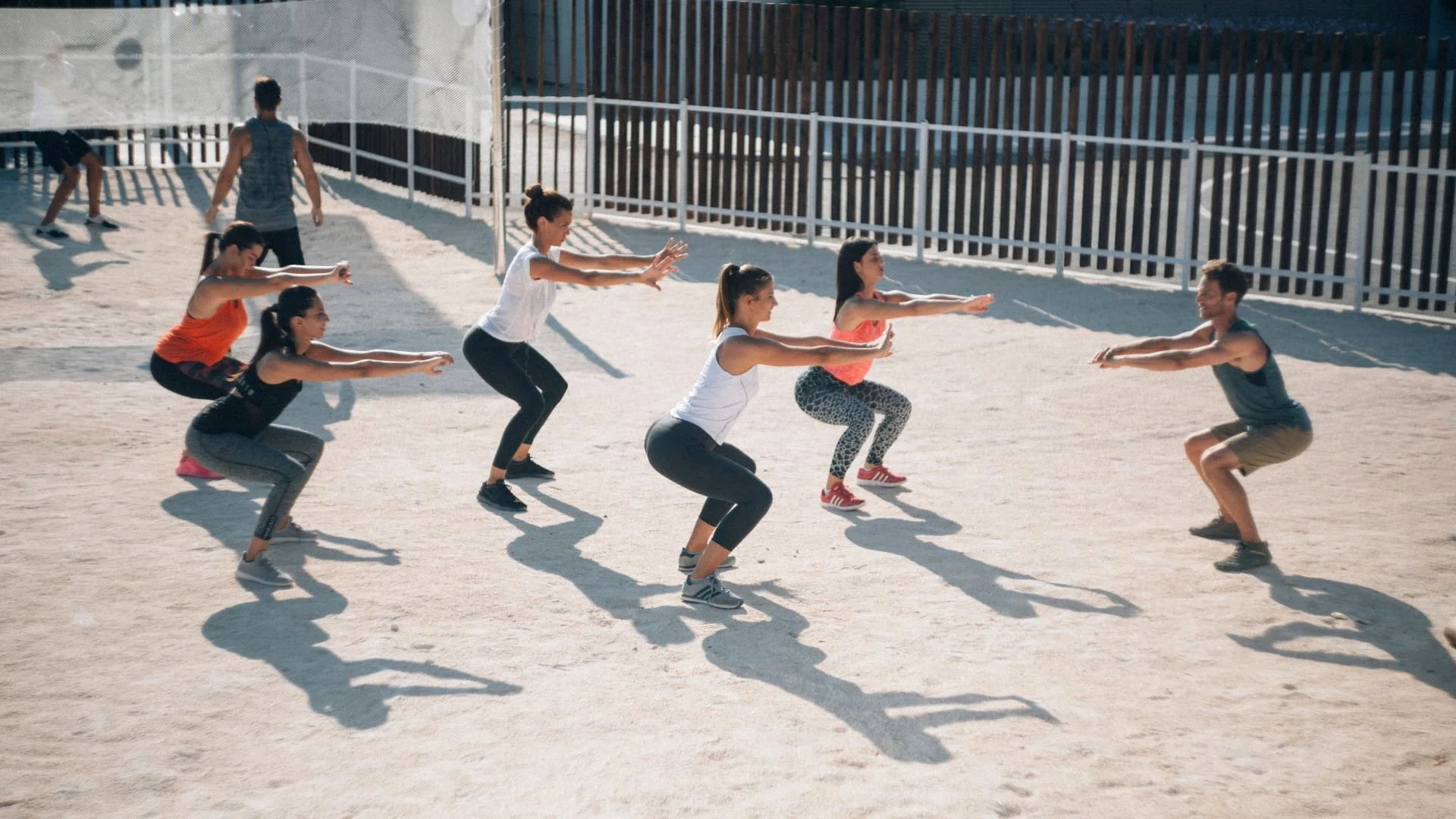
The first sand brought in was darker and finer than desired, and was immediately considered visually unsatisfactory. That material then became the base layer, while a lighter-coloured, thicker-grain sand was brought in as a second layer, dramatically improving the aesthetics of the gym.
This also changed the physical experience underfoot. After heavy rain, the thicker sand retained more moisture and felt heavier to move through. It was a valuable reminder that outdoor gym flooring is not only a visual decision, but also a performance and maintenance decision.
Shade and comfort
Shade was another critical design factor.
Any outdoor gym or beach gym needs to account for the fact that not everyone wants to train in direct sun, especially during peak heat hours. Without adequate shade, a facility risks losing usability for a large part of the day.
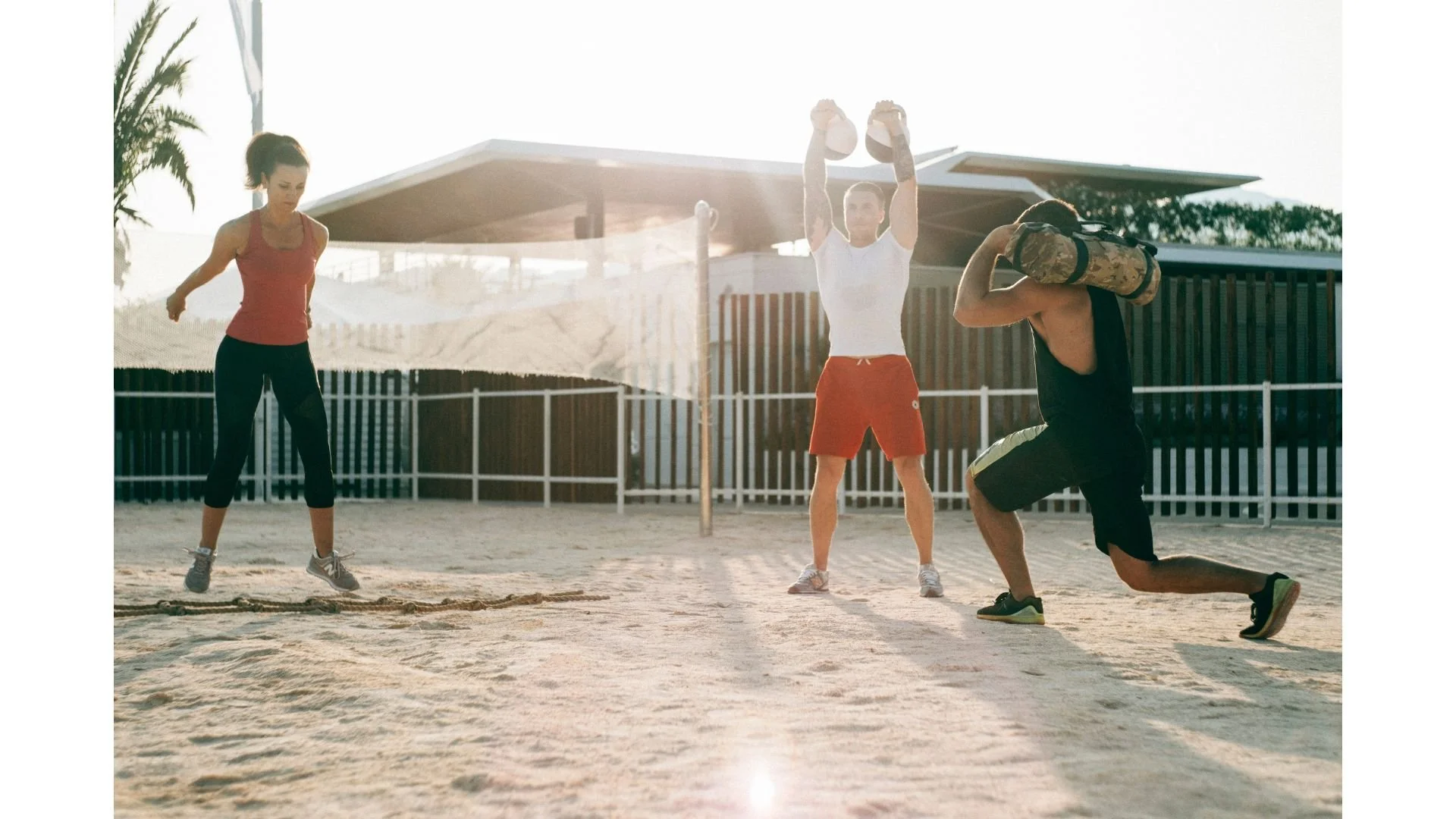
Biofit’s recommendation was to create a shaded perimeter zone approximately 2 metres deep, using a simple net-based shading system. This approach offered several advantages:
lower cost than more complex canopies
less structural load and wind resistance
a lighter visual effect
a cooler training edge around the perimeter
better usability at midday
This was a practical and cost-effective solution that improved comfort without overcomplicating the project.

Outdoor music and operational constraints
The project also required thought around sound and operational etiquette.
Biofit installed a set of six outdoor speakers mounted on the perimeter fencing, all connected to a central amplifier and iPod. Because the gym sat close to marina-related buildings, yachts and guest areas, the sound system needed to be managed carefully to avoid noise pollution.
Music had to be turned off after 7 pm due to the proximity of yachts and their guests. This is a good example of how hospitality fitness projects often require a more operationally nuanced approach than a standard standalone gym.

Bespoke equipment strategy
For the equipment, Biofit combined in-house designs, local carpentry, local metalwork and selected functional training accessories.
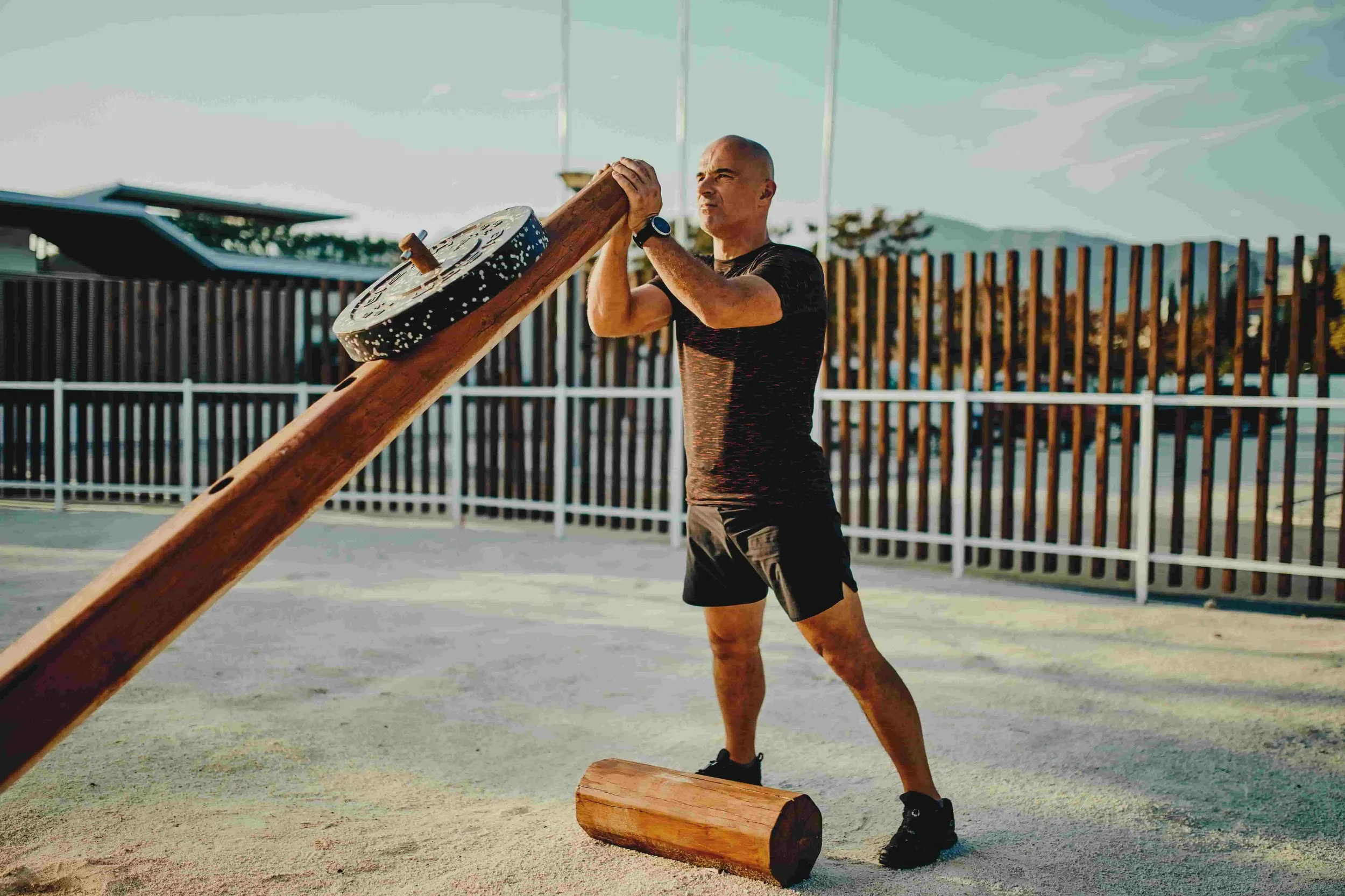
Timber pieces designed by Biofit and produced by a carpenter included:
solid oak balance beam
push-up bars
A-frame pull-up beam
squat log
fixed timber pull-up and squat elements
In parallel, a local metalworker produced:
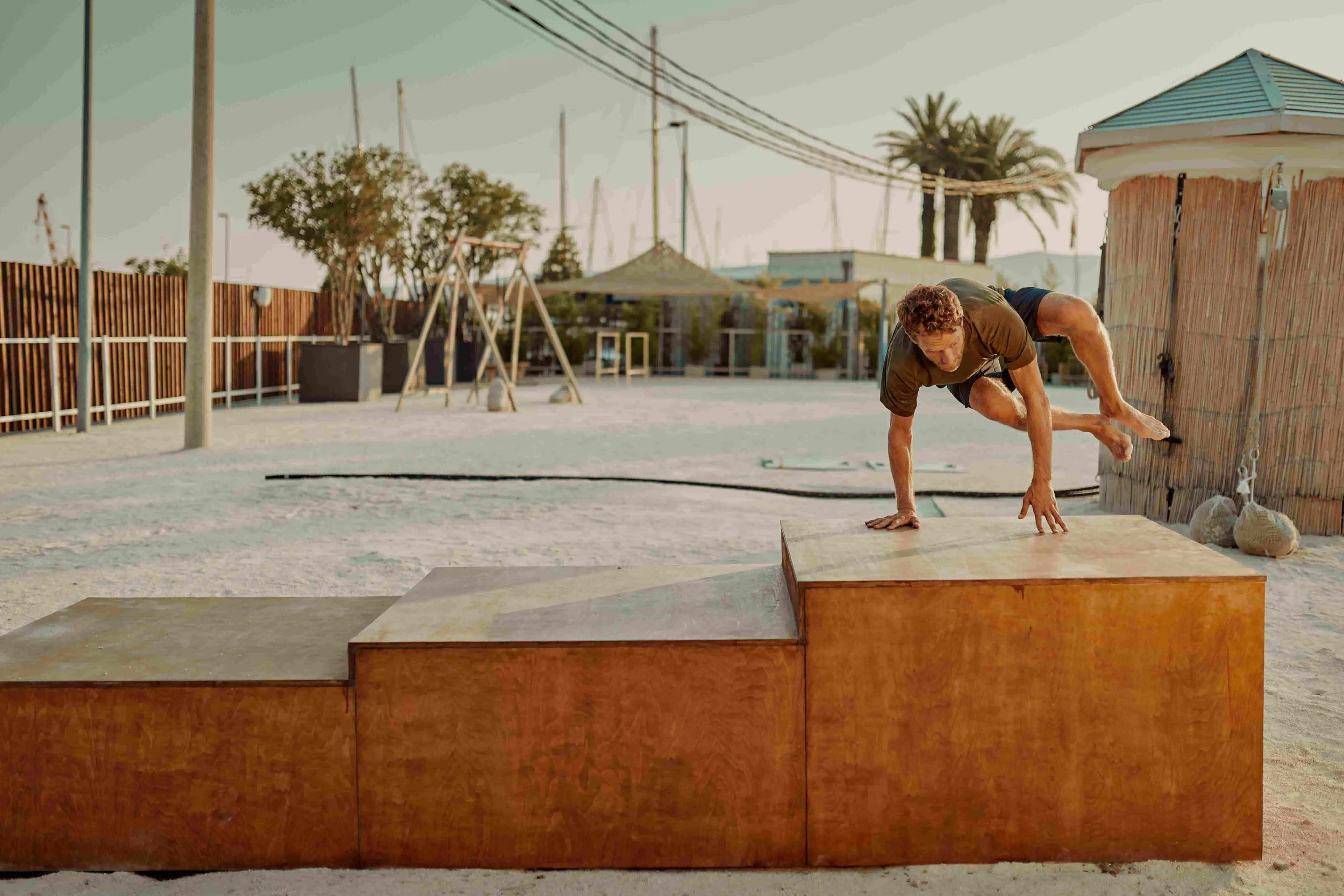
three jump boxes / plyometric boxes
two parallettes bars
storage shelving for kettlebells and accessories
This combination of custom timber and simple locally made steelwork proved both practical and cost-effective.
The project also reinforced a lesson that remains relevant today: for bulky bespoke items, it is usually more efficient to fabricate locally on site where possible rather than transporting everything internationally.

Weather protection and durability
Outdoor fitness equipment requires a different level of durability thinking than indoor products.
For the Porto Montenegro Beach Gym:
the oak equipment received three layers of heavy-duty varnish
kettlebells were coated in boat hull paint
branding was integrated through the yacht club’s white and navy flag colours
This use of marine-grade finishing techniques was a logical response to the coastal environment and helped tie the gym visually back to the broader yacht club context.
At the same time, the project also produced a very practical lesson: some lower-quality eco-rubber plates left out in strong midday sun deformed badly in the first year. That experience reinforced an obvious but important point for outdoor gyms — it is usually better to invest in more robust equipment from the start than to compromise on durability.
Training offer and user experience
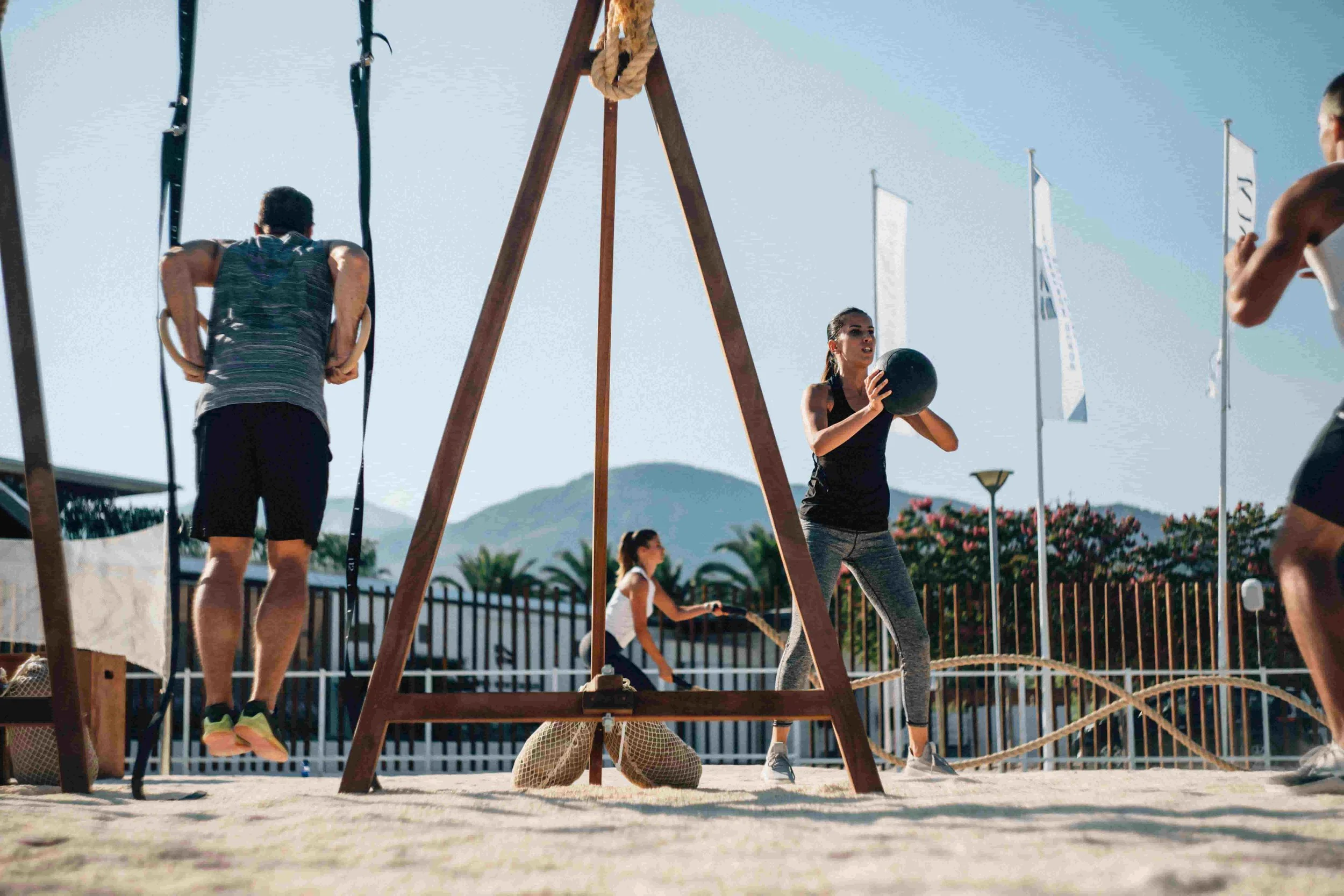
The gym combined bespoke equipment with functional training accessories to create a broad outdoor training offer.
It supported:
bodyweight training
strength work
balance and coordination
rope work
functional conditioning
open-air movement sessions
The intention was not to replicate a full indoor gym outdoors, but to create a more site-specific training environment that felt natural, playful and physically engaging.
Exercising in the fresh air was also part of the value proposition. The gym allowed users to train outdoors in a setting more connected to the natural environment than a conventional indoor facility, while still offering structure and equipment.
Outcome
The Porto Montenegro Beach Gym transformed an exposed and unremarkable concrete site into a distinct outdoor fitness destination within the Porto Montenegro Yacht Club Beach Club concept.
For Biofit, the project remains a useful case study because it demonstrates several core capabilities:
transforming difficult outdoor sites
designing fitness spaces in hospitality settings
solving practical issues around privacy, flooring, shade and sound
using bespoke and locally fabricated equipment intelligently
understanding that outdoor gyms require their own logic rather than being simplified indoor gyms
It also offered a number of real-world lessons around sand selection, weatherproofing, budgeting and equipment durability that continue to inform Biofit’s outdoor gym thinking today.
Services provided by Biofit
Biofit’s role included:
outdoor gym strategy
beach gym design
perimeter and privacy planning
flooring and sand strategy
bespoke equipment design
local supplier and fabricator coordination
operational input on sound and shaded training zones
having lived and worked at porto montenegro for many years, i knew the challenges of this site, namely the harsh weather in winter (strong winds, heavy rainfall) and summer (intense heat, salt exposure) but i also saw the opportunity to create a unique beach gym concept drawing on local craftsmen and boat-building culture to protect the equipment from the elements. – Matt Aspiotis Morley
Frequently Asked Questions
-
The project was designed specifically as part of a beach club concept, using sand underfoot, open-air training and a stronger connection to the waterfront leisure setting.
-
No. The gym sat on a large concrete slab near the water, so the beach environment had to be created artificially through imported sand and perimeter design.
-
The main challenges included privacy, site transformation, sand selection, shade, durability of equipment, sound control and creating a premium user experience in a coastal outdoor setting.
-
Yes. Biofit designed a series of custom timber pieces, with additional locally fabricated metal items and selected functional training accessories.
-
One major lesson was that outdoor gym design requires much more attention to materials, climate exposure and operational detail than many clients initially expect.
Biofit works with architects, engineering teams and project managers to deliver specialist sports, gym, spa and wellness design services.
Get In Touch
If you're interested in working with us, complete the form with a few details about your project. We'll review your message and get back to you within 48 hours.