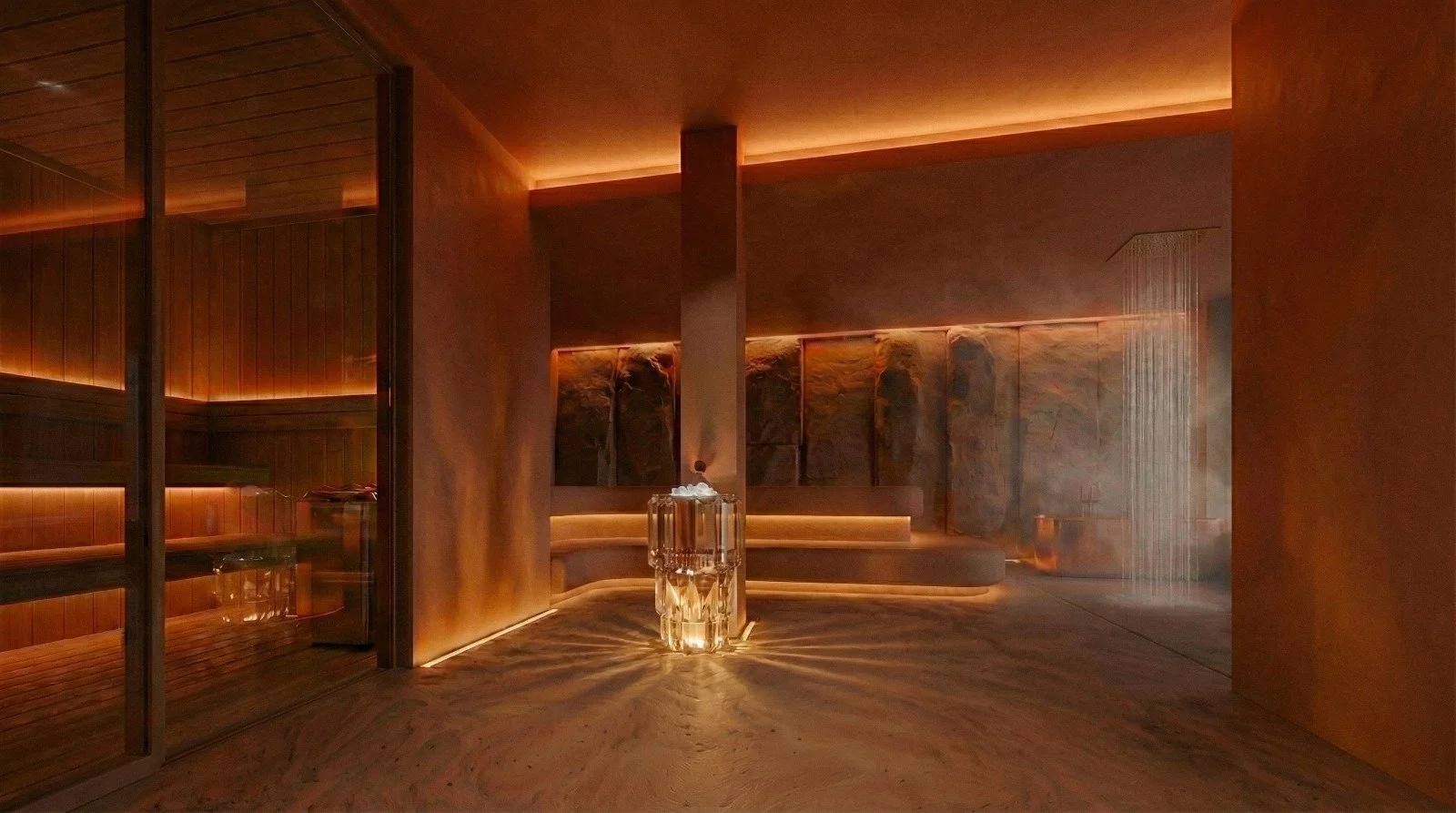
Red light therapy has become an increasingly familiar feature of longevity clinics, recovery studios and premium gyms. Full-body panels and cabins now sit relatively comfortably alongside cryotherapy, compression, infrared saunas and other recovery technologies, to the point where they are beginning to feel like an established part of the contemporary wellness toolkit. What is more interesting from a design perspective, however, is what comes next.
A new generation of products is making it possible to work with different wavelengths and intensities of light in much more deliberate ways. Red and near-infrared photobiomodulation remain the obvious starting point, but controlled UVB exposure, bright-white-light therapy and increasingly sophisticated circadian lighting systems are expanding the possibilities.
For wellness designers, the opportunity is not simply to specify more equipment, but to consider how different forms of light might be integrated into the customer journey, sometimes as standalone treatments and sometimes almost invisibly within spaces that are already performing another function.
Beyond the red light room
Red and near-infrared photobiomodulation is currently the most accessible of these technologies. Depending on the equipment and wavelength, applications range from skin health and collagen production to tissue recovery and selected pain-management protocols. In commercial wellness environments, we are now seeing everything from large full-body cabins to compact movable panels designed for localized treatment.
That range of formats is useful. A full-body system might justify its own dedicated treatment space within a longevity clinic, while a smaller facial panel could be positioned alongside a recovery lounger and offered during compression, PEMF or another passive treatment. In both cases, there is an opportunity to think beyond the equipment itself. Red light creates a distinctive atmosphere, and with appropriate material choices and lighting control the treatment room can become a recognisable part of the overall wellness experience rather than simply somewhere to accommodate another machine.
UVB presents a different but potentially complementary opportunity. Controlled UVB exposure stimulates the body’s natural production of vitamin D and, while UV equipment has traditionally been associated with dermatology or tanning, newer products are beginning to reposition it within preventative health and longevity. Emerging systems can incorporate individual skin assessment, calibrated exposure and automated dosing, making the experience very different from the UV treatments consumers may remember from the past.
From a planning perspective, some of these newer devices are particularly interesting because they are compact, wall-mounted and designed around treatments lasting only a few minutes. Subject to the appropriate regulatory approvals and operating protocols, this raises the possibility of combining UVB with red and near-infrared photobiomodulation within a single Light Room, offering different interventions from the same relatively small footprint.
Rediscovering bright light
Bright-white-light therapy introduces another possibility, particularly for wellness clubs in northern climates, urban environments or buildings where people spend much of their day removed from strong natural daylight. Unlike red light or UVB, the relevant biological pathway is through the eyes rather than the skin, with bright-light exposure most firmly established in relation to seasonal affective disorder and circadian rhythm regulation.
The practical challenge is that many products currently marketed for this purpose are domestic SAD lamps rather than equipment designed for a premium commercial wellness environment. Yale School of Medicine’s Winter Depression Research Clinic highlights an important issue here: a light may advertise an output of 10,000 lux, but that figure is only meaningful when considered alongside the distance at which it is achieved. A small device that requires someone to sit extremely close to it is very different from a professionally designed installation where the correct illumination reaches the customer’s eyes while they remain comfortably seated or reclined.
For wellness clubs and longevity clinics, this is where the concept becomes much more interesting. Bright-light exposure does not necessarily need another dedicated treatment room. If someone is already spending twenty or thirty minutes on a recovery lounger using compression boots or PEMF, for example, a professionally specified white-light source could potentially become an optional addition to that session. The same position might offer localized red-light therapy at another time, allowing one relatively simple recovery room to support several combinations of treatments and price points.
This approach also addresses one of the recurring challenges with new wellness technologies: a treatment can make perfect sense scientifically but fail commercially because the customer experience is dull, inconvenient or difficult to understand. Sitting alone in a brightly illuminated white room for half an hour may have a rationale, but that does not automatically make it something people will pay to repeat. Integrating the exposure into an activity they are already doing can make considerably more sense.
From equipment to environment
There are already signs of this broader thinking appearing in contemporary fitness and wellness concepts. LUMÉ in Denmark is one useful example, combining exercise with a wider range of recovery and environmental interventions, including red-light and UVB technologies. What is interesting about concepts like this is less the individual pieces of equipment than the changing definition of what a gym or wellness club can contain. Training, recovery, sleep, energy and longer-term health are increasingly being brought together within the same ecosystem.
Light can operate at several levels within that ecosystem. At one end of the scale there are clearly defined treatments such as full-body photobiomodulation or controlled UVB exposure. In the middle are interventions such as bright-white-light exposure that can potentially be layered onto another treatment. Beyond the treatment rooms, there is then the lighting of the facility itself.
Modern tunable-white and smart lighting systems make it relatively straightforward to adjust the character and intensity of an interior throughout the day. A wellness club no longer needs to operate under essentially identical artificial lighting at 7am and 9pm. Morning spaces can be brighter and more stimulating, daytime lighting can reinforce available natural daylight, while evening environments can progressively become warmer and less stimulating. Individual treatment rooms can override that programme whenever a specific protocol requires different conditions.
The important point is that this should not feel theatrical. Circadian-responsive lighting is not about creating an obvious colour-changing light show. At its best, customers may barely notice the transition; the environment simply feels appropriate to the time of day and the activity taking place within it.
Developing a light strategy
As the available technologies expand, the more useful question for developers and operators is therefore no longer simply whether they should purchase a red-light therapy machine. It is how they intend to use light across the facility as a whole.
For one project, that might mean circadian-responsive architectural lighting throughout the club, bright-light exposure incorporated into a multifunctional recovery room and a dedicated red/NIR treatment cabin. A more specialist longevity clinic might add personalized UVB, while a conventional gym may decide that intelligently programmed architectural lighting and a single recovery-focused photobiomodulation installation are sufficient.
Climate, customer profile, opening hours, treatment mix and available floor area all influence the answer. Not every facility needs every technology, and adding equipment simply because it is currently fashionable rarely produces a convincing wellness proposition.
What has changed is that designers now have a much broader palette available. Professional photobiomodulation equipment continues to evolve, personalized UVB products are beginning to emerge, bright-light therapy can increasingly be considered as part of a designed commercial environment, and sophisticated lighting controls allow circadian principles to influence the entire facility rather than a single treatment room.
For wellness clubs, longevity clinics and the next generation of gyms, this creates an opportunity to think about light in much the same way we increasingly think about air quality, acoustics, thermal comfort and access to nature: not as a decorative layer applied towards the end of the design process, but as one of the environmental variables capable of shaping the wellness experience from the outset.
The most interesting projects will therefore not necessarily be those containing the greatest number of light-therapy devices. They will be the ones that understand where light can genuinely contribute to the customer experience, and then integrate it into the design in a way that feels natural, useful and commercially viable.
This article was written by Matt Morley, Founder of Biofit, a specialist gym, spa and wellness design consultancy working internationally across fitness, recovery and longevity environments.
Biofit designs gyms, spas, recovery facilities and longevity studios internationally, combining specialist wellness equipment consultancy with interior design, customer experience and operational planning.