Wellness Amenities That Add Value to Residential Developments

wellness spa room for Fusion Students London co-living
The expectations of luxury homebuyers and residents alike appear to be changing in line with societal trends.
While location, architecture and interior finishes remain important, today's premium and luxury residential developments are increasingly judged by the quality of the lifestyle they provide.
As a result, wellness amenities like those we design have become a key differentiator for developers seeking to attract residents, increase occupancy and enhance long-term asset value.
The most successful projects are moving beyond traditional swimming pools and fitness rooms to create integrated wellness environments that support healthier, more active and more connected lifestyles.
For developers, the challenge is now in determining which amenities genuinely add value and which simply consume valuable floor area and capital expenditure.
Why Wellness Amenities Matter
Arguably, the pandemic simply accelerated many existing trends around health, wellbeing and lifestyle.
Today, premium residents increasingly expect access to amenities that support:
Physical activity
Mental wellbeing
Recovery and relaxation
Social connection
Work-life balance
Healthy ageing
Yes, that is a lot, but these expectations are influencing purchasing decisions across a wide range of residential typologies, from luxury developments and branded residences to build-to-rent and multifamily housing, especially in the upper end of the market.
Well-planned wellness amenities can therefore help developers on a number of different levels:
Differentiate their projects
Enhance marketability
Support premium pricing
Improve resident satisfaction
Increase retention
Strengthen long-term asset performance
The key however, is selecting amenities that align with resident needs and the overall positioning of the development. So there is no ‘one size fits all’ solution and that cold plunge may end up unused in the corner (too darn cold for most people), or an infrared sauna may not deliver what guests expect of it (not hot enough).
Fitness Facilities Remain a Core Amenity
No surprises here but fitness spaces continue to be among the most valued residential amenities as we see it.
That said, expectations have evolved significantly even just in the pat few years.
Residents increasingly expect:
Functional training areas (free floor space and loose equipment to play with)
Free weights (for following a workout video, for example)
Strength training equipment (not necessarily all pin-loaded either)
Stretching and mobility zones (again, empty floor space required)
Flexible workout spaces (less prescriptive, let the gym user decide for themselves)
Rather than filling a room with equipment therefore, successful fitness facilities now focus on creating welcoming and adaptable environments that encourage regular use in the medium to long-term. And that means, offering as wide a range of training styles as possible, rather than packing in as many cardio and strength machines as possible.
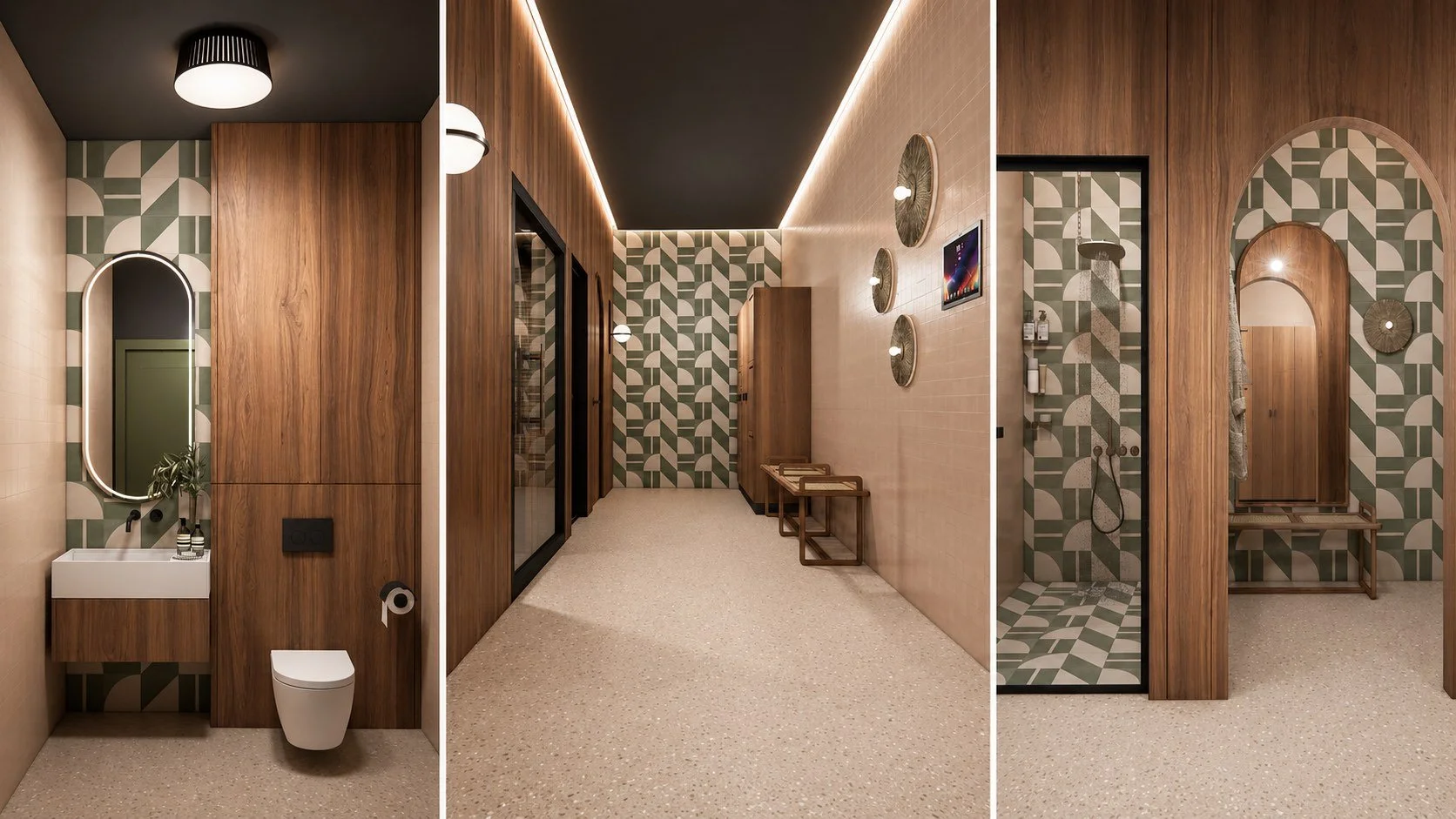
wellness spa room for Fusion Students London co-living
Recovery Spaces Are Growing in Popularity
Recovery-focused wellness amenities are becoming increasingly common within premium residential developments.
Examples include:
Saunas (traditional, Finnish style)
Steam rooms (operationally not the simplest to maintain but still a popular choice)
Cold plunge pools (no need for icy cold temperatures, anything from 5-degrees to 15-degrees centigrade will do)
Recovery lounges (think compression boots, PEMF chairs, red light therapy beds)
Relaxation areas (this can include massage chairs with in-built software for streaming audio content)
These facilities complement fitness spaces while supporting broader wellbeing objectives.
As awareness of recovery, longevity and stress management continues to grow, these amenities are becoming increasingly attractive to residents seeking healthier lifestyles.
Wellness Pools Beyond Traditional Swimming Pools
Swimming pools remain popular amenities, but developers are increasingly exploring water-based wellness experiences that support relaxation and recovery.
Examples include:
Hydrotherapy pools
Vitality pools
Spa pools
Wellness pools
Contrast bathing experiences
These amenities can help create a more distinctive wellness offering while supporting the overall positioning of a development.
In some cases, a carefully designed wellness pool may provide greater perceived value than a conventional lap pool.
Outdoor Fitness and Active Landscapes
One of the most underutilised opportunities within residential developments is the integration of movement into outdoor spaces. These are, in our opinion, relatively cost-effective to create and add a lot of ‘bang for the buck’, especially in sunny climates.
Examples include:
Walking circuits
Running routes
Outdoor fitness stations
Nature gyms
Wellness gardens
Recreational activity zones
These amenities encourage everyday movement while enhancing the usability of outdoor areas.
They can also provide significant value without the operational complexity associated with indoor facilities.
Sports Amenities and Community Building
Wellness is not limited to fitness and recovery.
Sports and recreational amenities can play an important role in creating vibrant residential communities.
Examples include:
Multi-use sports courts
Padel courts
Pickleball courts
Basketball courts
Table tennis areas
Recreational lawns
Beyond their physical benefits, these facilities help encourage social interaction and foster a sense of community among residents.
Designing for Healthy Ageing
An increasing proportion of residential buyers are seeking environments that support long-term health and wellbeing.
Developers can respond by creating amenities that encourage movement and healthy behaviours across all age groups.
This may include:
Accessible fitness facilities
Walking routes
Mobility and stretching spaces
Recovery amenities
Social wellness environments
Rather than focusing solely on fitness enthusiasts, successful developments create wellness opportunities that appeal to a broad range of residents.
The Importance of an Integrated Wellness Strategy
If there is one take away from this entire article, let it be this - one of the most common mistakes is treating wellness amenities as a collection of unrelated facilities.
The most successful projects begin with a clear understanding of the resident experience and then develop a coordinated wellness strategy around that vision.
Fitness, recovery, outdoor activity, sports and social wellbeing should work together as part of a coherent amenity ecosystem.
This approach helps maximise both resident value and return on investment.
Looking Ahead
Wellness amenities are becoming a defining feature of successful residential developments.
As resident expectations continue to evolve, developers who invest in thoughtfully planned wellness environments will be better positioned to attract buyers, retain residents and create communities that support healthier lifestyles.
The future of residential amenity design is not simply about providing more facilities. It is about creating environments that encourage movement, recovery, wellbeing and social connection as part of everyday life.
Planning Wellness Amenities for a Residential Development?
Biofit works with developers, architects and project teams to create wellness strategies and amenity programmes for residential communities, branded residences, build-to-rent developments and private residential projects.
From fitness facilities and recovery spaces to wellness pools, outdoor fitness environments and sports amenities, we help clients create wellness experiences that add long-term value to their developments.