Cultural Considerations in Gym, Spa and Wellness Design for the Gulf Region
Designing wellness spaces for the Gulf requires more than a global template
The Gulf has become one of the most active markets in the world for premium gyms, hotel wellness clubs, residential amenities and integrated spa concepts. It is also one of the most poorly served by imported design thinking.
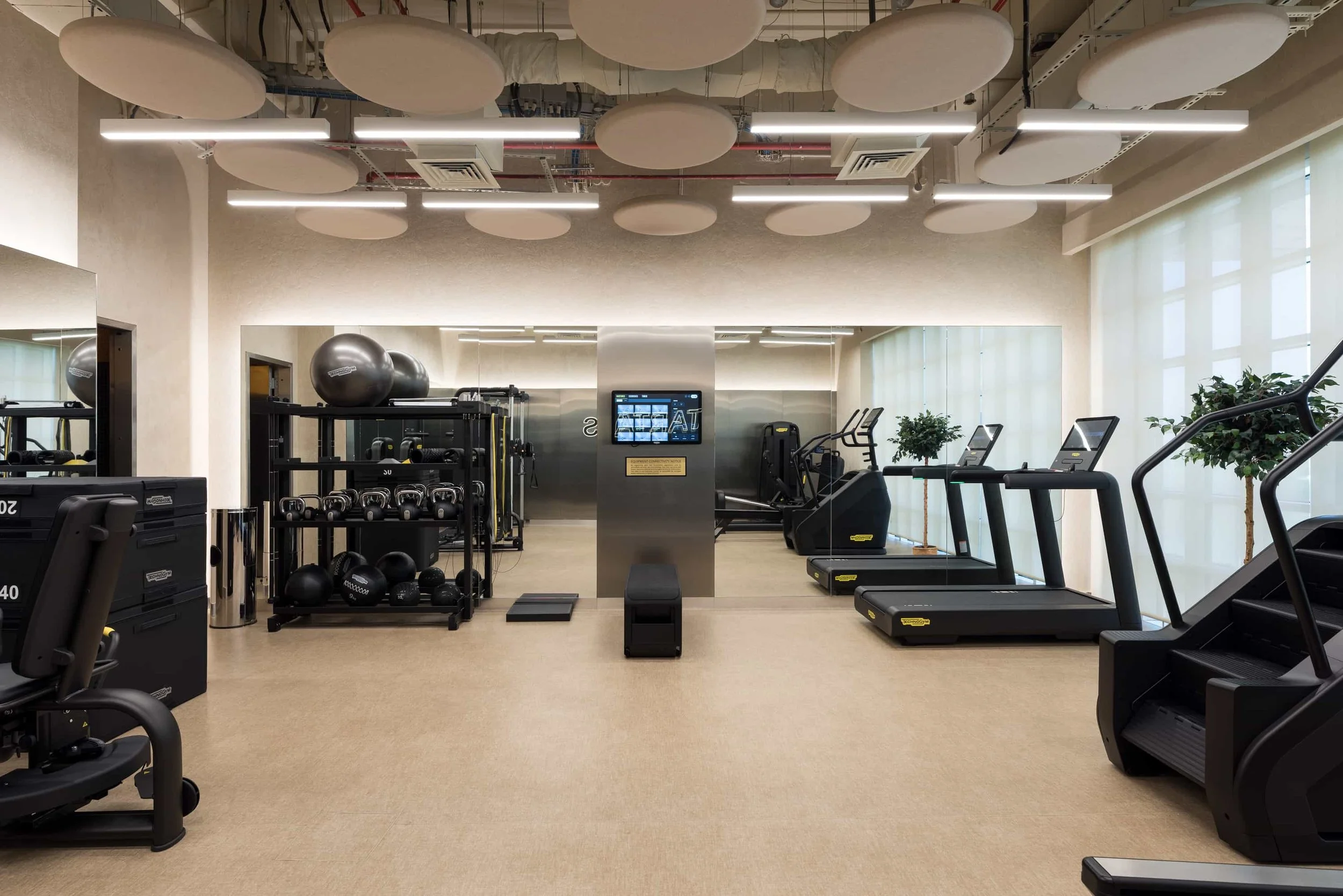
For Biofit, Gulf-region work has included student gym facilities for Carnegie Mellon University Qatar and wellness club design input for the REFAD / Conrad Hilton hotel in Al Khobar, Saudi Arabia. Two very different briefs — higher education and luxury hospitality — but with one consistent lesson: a gym, spa or wellness club cannot be lifted from London, New York or Bali and expected to perform in the same way. The spatial logic, privacy expectations, gender considerations and operational protocols are different.
Good design in this context is not about regional styling. It is about creating wellness environments that are premium, comfortable and operationally viable for the people who will actually use them.
1. Privacy is a primary design driver
In many Western wellness environments, visibility is treated as a virtue. Open gyms, glass-fronted studios, co-ed thermal suites — these are used to generate energy and a sense of community.
In the Gulf, privacy often carries more weight.
This shapes design decisions from the earliest space planning stage: the positioning of entrances and reception desks, sightlines into training areas, the separation between public and private zones, the relationship between changing rooms and wet areas, the degree of visual exposure from hotel lobbies or residential corridors.
The challenge is achieving discretion without losing atmosphere. In a premium gym or spa, that typically means layered thresholds, indirect views, controlled lighting and managed circulation. The result should feel elegant and intuitive — not defensive.
2. Gender-sensitive planning needs to be resolved at concept stage
Depending on the project type, location and operator model, this can mean fully separate male and female facilities, shared spaces with separate changing areas, women-only zones or time slots, private family wellness suites, or separate spa journeys within a single facility.
The important point is that these decisions cannot be retrofitted. Adding gender separation to a plan that was not designed around it tends to compromise circulation, reduce usable training area, duplicate expensive wet infrastructure and create operational inefficiencies that are difficult to resolve later.
In student gym environments, the priority tends to be inclusive access, modesty and daily usability. In luxury hospitality, both male and female facilities need to feel complete in their own right. The risk of creating one "main" facility and one compromised secondary version is real, and in a premium Gulf context it is rarely acceptable.
3. Modesty is a spatial issue, not only a clothing issue
In gym design, it influences how users move between reception, changing, training zones and studios. In spa design, it becomes more complex because guests are moving between changing, showering, thermal bathing, treatment and relaxation spaces — often in a single visit.
This has implications for direct views into exercise areas, glazed façades and internal windows, shower and locker layouts, robe circulation, treatment room access and how staff move through guest areas. Designers need to think carefully about where users may feel exposed at any point in that sequence.
A successful Gulf wellness facility often benefits from a more intentional spatial sequence: arrival, transition, preparation, activity, recovery, exit. Each stage requires the right degree of privacy.
4. Prayer routines and daily rhythm should inform operational planning
In the Gulf, wellness facilities do not operate in isolation from the rhythm of daily prayer. This does not mean every gym or spa requires a dedicated prayer room on site — in hotels, universities and mixed-use developments, prayer facilities typically exist elsewhere in the building.
What it does mean is that the design team should understand how prayer routines influence peak usage patterns, staff scheduling, treatment bookings, class timetables and guest flow. This is particularly relevant in larger wellness clubs, hotel spas and campus recreation facilities.
The design response is often subtle: clear wayfinding, adequate waiting space, calm transition zones. But it requires active acknowledgement during the briefing and planning process, not an afterthought.
5. The user profile is not uniform across the Gulf
A campus wellness facility has different cultural and operational requirements from a hotel spa, a private residential club or a commercial wellness destination.
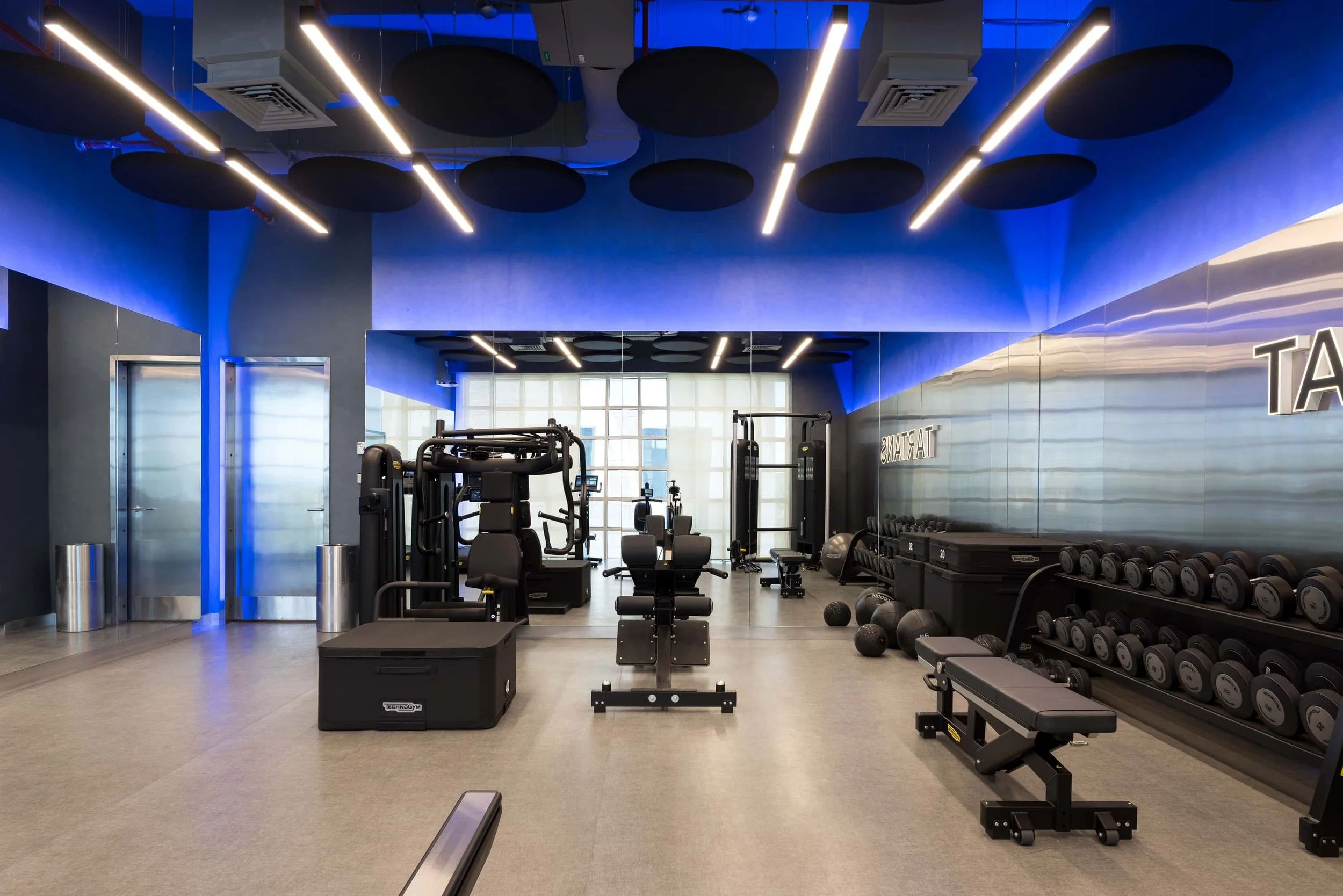
In student gym environments — as in our Carnegie Mellon University Qatar work — the focus is on access, comfort, inclusivity and how students actually use a fitness facility across an academic day. In a hotel wellness club such as the REFAD / Conrad Hilton in Al Khobar, the design logic shifts towards hospitality-led circulation, spa sequencing, recovery and the guest experience of luxury.
A residential amenity may need to account for families, visiting guests, children, domestic staff and private trainers at different times of day. A commercial wellness club may need to balance membership exclusivity with revenue-generating services — personal training, spa treatments, diagnostics, recovery.
The cultural layer sits on top of the business model. Both need to be resolved together.
6. Thermal spa areas require particular care
Saunas, steam rooms, hammams, plunge pools and relaxation lounges are among the most culturally sensitive elements in any Gulf wellness project. They also carry significant technical complexity.
Key questions: Are thermal areas segregated by gender, duplicated or time-scheduled? What attire is expected in wet areas? Are wet and dry relaxation zones visually separated? Can staff service and clean the area discreetly? Are shower, locker and grooming facilities adequate for local expectations?
The wet zone should not be treated as a secondary element. In Gulf spa projects, it is frequently the most demanding area — technically and culturally — and the one where underinvestment or late-stage decision-making creates the most visible problems.
7. In the Gulf, luxury often means discretion rather than spectacle
International wellness projects frequently communicate luxury through scale and visibility: dramatic pools, open-plan fitness theatres, social recovery lounges. In the Gulf, luxury tends to have a different expression.
That does not mean less design ambition. It means a different set of tools: controlled arrival sequences, private consultation rooms, generous changing areas, calm acoustic conditions, well-resolved service routes, a sense of personal space. The user should feel protected and guided, not on display.
8. Local materiality should be interpreted, not applied superficially
There is a recurring temptation to make Gulf wellness interiors feel "regional" through decorative motifs — mashrabiya screens, arched geometry, desert palettes. These devices can work when handled with skill. They can also become superficial quickly.
A more considered approach looks at the underlying principles of regional design traditions: filtered light, layered privacy, courtyard logic, thermal comfort, ritualised bathing, the separation of public and private life. These principles can inform a contemporary wellness interior without relying on surface references.
The strongest projects tend to combine international wellness expertise with a sensitive reading of local context. The result should feel modern, premium and appropriate — not pastiche.
9. Operational culture matters as much as spatial design
A wellness facility is not only a floor plan. It is an operating environment.
Staffing, service etiquette, gender protocols and maintenance standards all influence whether a design works in practice. Design decisions should be tested against operational questions: who greets the guest, who escorts them to the changing area, whether staff are male, female or mixed, how towels and amenities are replenished, how cleaning routes interact with guest circulation. These questions may sound like operational details, but they have direct spatial consequences.
A plan that ignores them may look resolved on paper and create consistent problems on the ground.
10. The Gulf wellness market is becoming more sophisticated — and more demanding
The region is no longer asking only for hotel gyms, basic spas or standard residential fitness rooms. Clients are commissioning integrated wellness clubs, recovery and longevity facilities, diagnostics, performance training, family wellness, female fitness destinations and hospitality-led member experiences.
The opportunity is significant. So is the bar. A successful Gulf wellness project needs cultural intelligence, hospitality-level service thinking, technical spa and gym planning expertise, privacy-conscious spatial design and commercial realism — delivered as an integrated package, not as separate workstreams.
The best projects do not treat culture as a constraint to be managed. They use it as a design framework.
Biofit's approach to Gulf wellness design
Biofit works with developers, hotel operators, architects and institutional clients to create gyms, spas and wellness amenities that are commercially viable, operationally practical and culturally appropriate.
Our scope typically includes wellness concept development, gym and spa space planning, fitness equipment planning, hydrothermal and recovery zone advisory, interior design direction and technical coordination with architects, MEP teams and specialist suppliers.
Gulf-region experience includes student gym facilities for Carnegie Mellon University Qatar and wellness club design input for the REFAD / Conrad Hilton in Al Khobar, Saudi Arabia.
The objective is not to design attractive wellness spaces. It is to create environments that work for the specific people, culture, operator and commercial model behind each project.