The Role of Specialist Suppliers in Spa Design
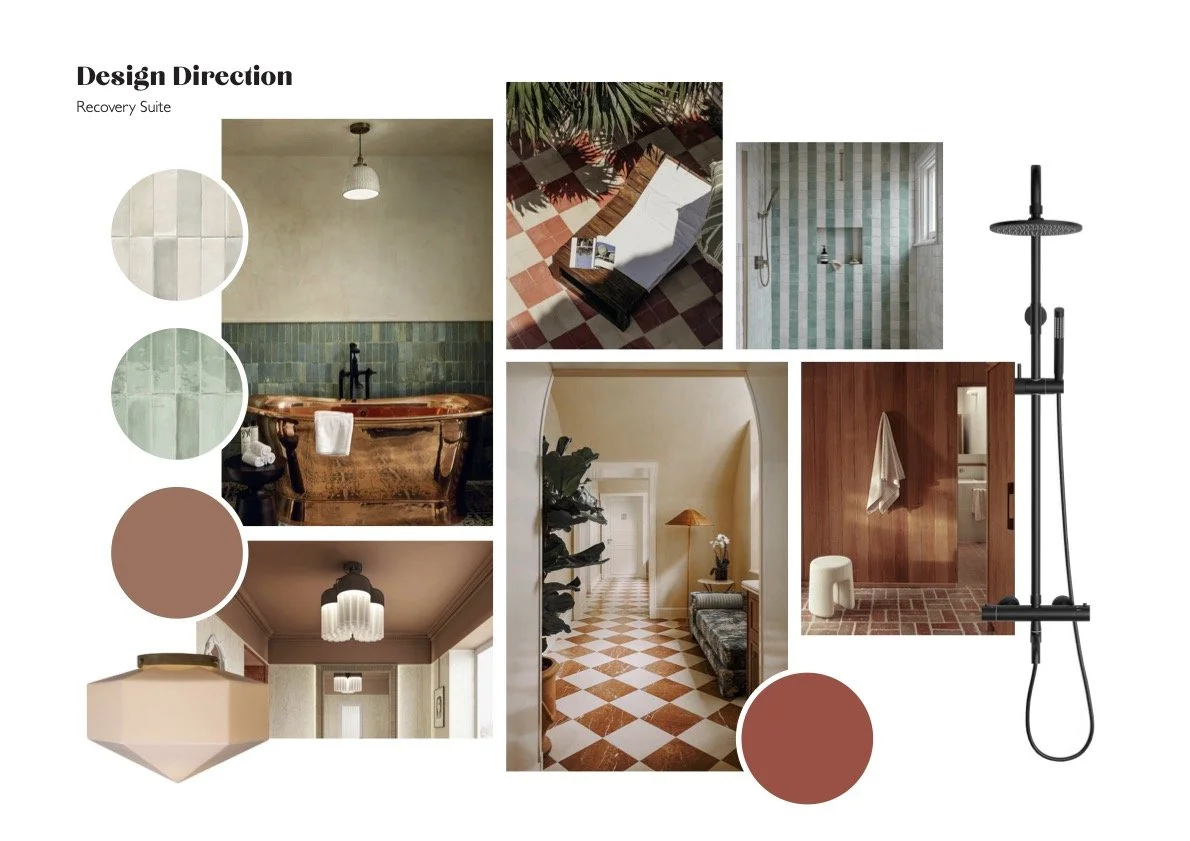
reery suite moodboard by Biofit for Fusion Students co-living, UK
Specialist suppliers play a critical role in successful spa, pool and wellness projects.
A well-designed spa is not simply a collection of attractive rooms. It depends on equipment, technical infrastructure, servicing access, water treatment, ventilation, drainage, controls, commissioning and long-term maintenance. These elements all need to be considered before the design is too far advanced.
For hotels, wellness retreats, residential amenities and private wellness clubs, the right suppliers can provide essential technical input. The key is knowing when to involve them, what to ask them, and how to interpret their recommendations within the wider project strategy.
Why Specialist Suppliers Matter in Spa Projects
Spa and wellness facilities often include equipment that has significant architectural and engineering implications.
This may include:
Saunas
Hammams and steam rooms
Cold plunge pools
Ice baths
Indoor pools
Hydrotherapy pools
Jacuzzis
Experience showers
Water treatment systems
Recovery equipment
Wellness technology
Pool and spa plant equipment
Each of these elements can affect the layout, MEP strategy, drainage, plant room sizing, access, maintenance and operational flow of the project.
Specialist suppliers understand the technical requirements behind these systems. Their input can help the design team avoid assumptions that may later prove expensive or difficult to resolve.
When Should Suppliers Be Involved?
Many projects only involve specialist suppliers once the design has already been developed and the client is ready to request quotations.
This is often too late.
By that stage, the layout, plant rooms, service routes and technical assumptions may already be fixed. If the supplier then identifies a problem, the project team may need to revisit decisions that could have been resolved earlier.
In many spa projects, suppliers should be consulted before detailed design begins.
Early supplier input can help validate:
Whether the proposed equipment can fit
Whether the plant room is large enough
Whether servicing access is adequate
Whether installation routes are realistic
Whether water, power and drainage requirements have been considered
Whether the selected equipment is appropriate for the intended usage level
Whether alternative solutions may be more efficient or easier to maintain
This does not mean committing to a supplier too early. It means using specialist knowledge to improve the design before key decisions become difficult to change.
What Suppliers Can Help Validate
The best supplier conversations are not simply about price.
At concept or pre-detailed design stage, supplier input can help clarify the technical requirements that sit behind the spa experience.
Useful areas to review include:
Equipment dimensions and clearances
Plant room requirements
Utility loads
Drainage requirements
Ventilation and humidity control
Controls and automation
Waterproofing implications
Installation sequencing
Maintenance access
Commissioning requirements
Warranty conditions
Servicing agreements
Replacement parts and aftercare
This information gives architects, engineers and clients a more realistic picture of what the project requires before drawings are developed in detail.
The Risk of Supplier-Led Design
Specialist suppliers are essential technical partners, but they are not neutral advisors.
A supplier will naturally recommend solutions based on their own product range, preferred systems and commercial priorities. This is not necessarily a problem, but it does mean their advice needs to be interpreted in context.
If a supplier is allowed to lead the design process without independent oversight, the project can become shaped around a specific product package rather than the wider wellness concept, guest experience, operational model and long-term value.
This can create issues such as:
Over-specification
Under-specification
Poor alignment with the interior design
Higher maintenance demands
Limited supplier flexibility
Incomplete comparison between technical options
Procurement decisions based mainly on commercial pressure
Supplier expertise is valuable, but it needs to be coordinated within the overall project strategy.
The Role of the Independent Wellness Consultant (us!)
An independent wellness consultant helps bridge the gap between the client, architect, MEP engineer and specialist suppliers.
At Biofit, our role is to help clients use supplier input intelligently without allowing the project to become driven by isolated product decisions.
This may include:
Identifying which suppliers should be consulted
Preparing the right technical questions
Reviewing supplier feedback
Comparing different technical approaches
Highlighting missing scope
Assessing operational implications
Coordinating supplier input with the design team
Supporting procurement decisions
Protecting the overall wellness concept and guest experience
The objective is to ensure that supplier advice supports the project rather than steering it too narrowly.
How Supplier Input Improves Procurement
Early supplier engagement also improves procurement.
When suppliers are involved before formal tender, the project team can better understand the technical assumptions behind each proposal. This makes it easier to compare options fairly and avoid choosing a supplier based on price alone.
Two suppliers may propose very different solutions for the same brief. One may include installation, controls, commissioning and aftercare. Another may exclude these items or assume they will be handled by others.
Without a coordinated review, the lowest quote may not represent the best value.
A structured supplier review helps clients compare:
Scope
Technical suitability
Installation requirements
Capital cost
Running cost
Maintenance
Warranty
Supplier support
Compatibility with the design
Long-term operational value
This creates a more informed procurement process and reduces the risk of unexpected costs later.
A Better Model for Spa Design Coordination
The best spa projects are developed through collaboration.
The client defines the commercial and operational objectives. The architect shapes the building and spatial experience. The MEP engineer coordinates the technical systems. Specialist suppliers validate equipment requirements. The wellness consultant helps align these inputs into a coherent strategy.
This collaborative model is especially valuable for complex projects involving pools, hydrothermal areas, recovery spaces and specialist wellness equipment.
Rather than treating suppliers as vendors who simply respond to a finished design, they become technical contributors at the right moment in the process.
The result is a spa or wellness facility that is more buildable, easier to maintain and better aligned with the long-term goals of the owner or operator.
Planning a Spa or Wellness Project?
Biofit helps developers, architects and project teams coordinate specialist supplier input before key design and procurement decisions are finalised.
Whether you are developing a hotel spa, wellness retreat, residential amenity or private wellness club, we can help you identify the right technical questions, compare supplier approaches and create a clearer route from concept to delivery.