The Adjacency Problem: Engineering the Boundary Between Gym and Spa
Case Study Insight: Biofit is currently advising REFAD Real Estate on the new-build Conrad Hilton in Al Khobar, Saudi Arabia, ensuring these technical adjacencies are optimized for a world-class guest experience.
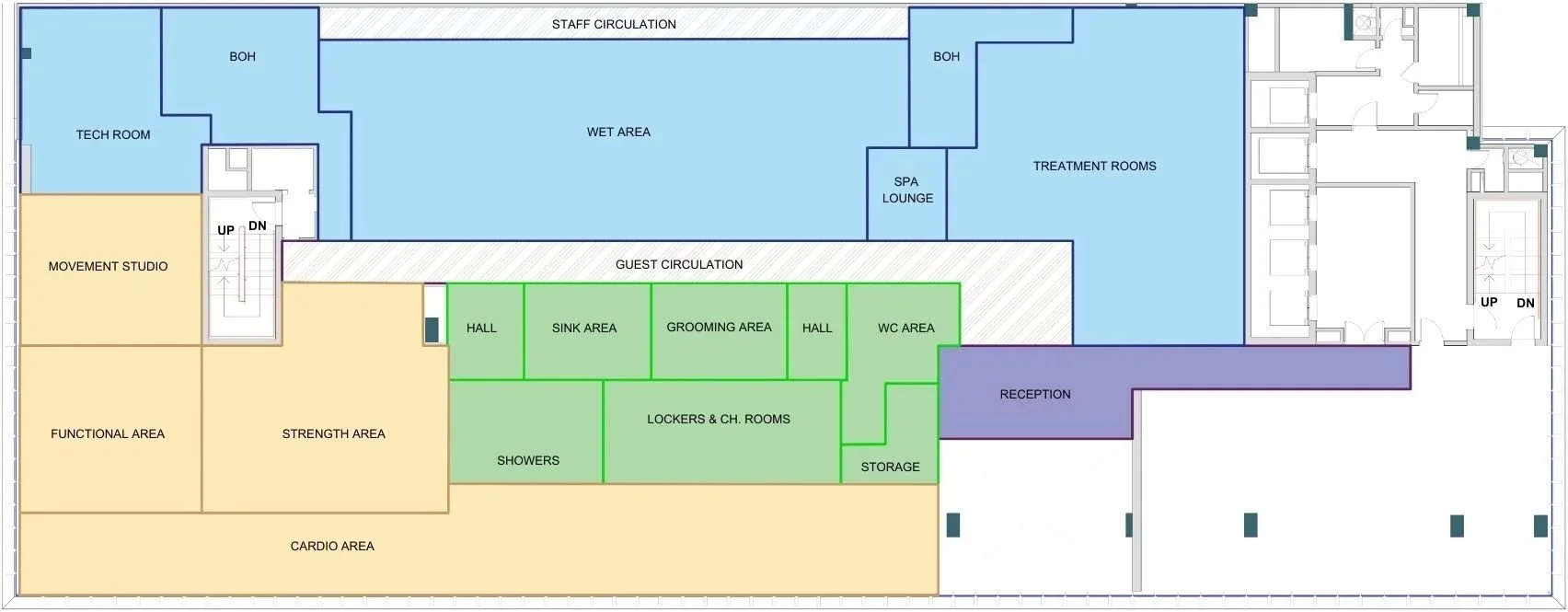
social wellness club zoning and space plan by Biofit for Refad, Saudi Arabia
In luxury hospitality and high-end residential developments, the "wellness club" is no longer a collection of isolated rooms. It is a complex, integrated ecosystem. However, from an architectural and engineering perspective, putting a high-impact HIIT studio next to a silent, tranquil spa is a paradox.
We’re often tasked with combining such high energy and low energy spaces within one container, whether it be an athletic health club or a social wellness club. At Biofit, we call this The Adjacency Problem.
Whether we are advising on a new-build project like the Conrad Hilton in Al Khobar (for our clients REFAD) or retrofitting a boutique asset, the success of the facility depends on how we manage the "friction zones" where fitness meets relaxation.
1. Acoustic Decoupling: Managing Vibration vs. Silence
The most common failure in wellness design is structure-borne noise. A guest in a relaxation suite or a massage room should never hear the "thud" of a 20kg dumbbell or the vibration of a treadmill from the gym next door.
The Technical Solution: Acoustic Decoupling
Airborne sound (music and voices) is relatively easy to manage with high-STC (Sound Transmission Class) partitions. The real challenge is structure-borne vibration.
For projects like the Conrad Hilton, we specify a "Box-in-Box" construction method. This involves:
Floating Floors: Utilizing high-density rubber isolators to support a secondary concrete slab or a high-performance dry-screed system, creating a physical "break" between the gym floor and the building’s structural slab.
Resilient Channels: Ensuring that the walls of the spa treatment rooms are not rigidly connected to the structural columns shared with the gym.
2. Hygrothermal Strategy: Preventing Humidity Migration
A spa is a high-humidity (hygro), high-heat (thermal) environment. A gym is a cool, dry environment. When these two sit side-by-side, humidity migration becomes a primary threat to the longevity of the asset.
The Technical Solution: Vapor Barriers and Pressure Differentials
If moisture from a steam room or hydrotherapy pool migrates into a gym, it leads to equipment corrosion, mold growth, and the warping of expensive timber flooring.
To prevent this, our consultancy focus remains on:
Negative Air Pressure: Engineering the HVAC system so that the spa zones maintain lower air pressure than the gym. This ensures that air (and moisture) flows into the spa, rather than leaking out into the dry fitness zones.
Vapor Retarders: Specifying high-performance membranes within the boundary walls to create an impermeable thermal break.
What is a ‘hygrothermal strategy’? In this case, we refer specifically to the science of managing how heat and moisture move between the (moist) humid spa and the (dry) air-conditioned gym—to protect the building's fabric.
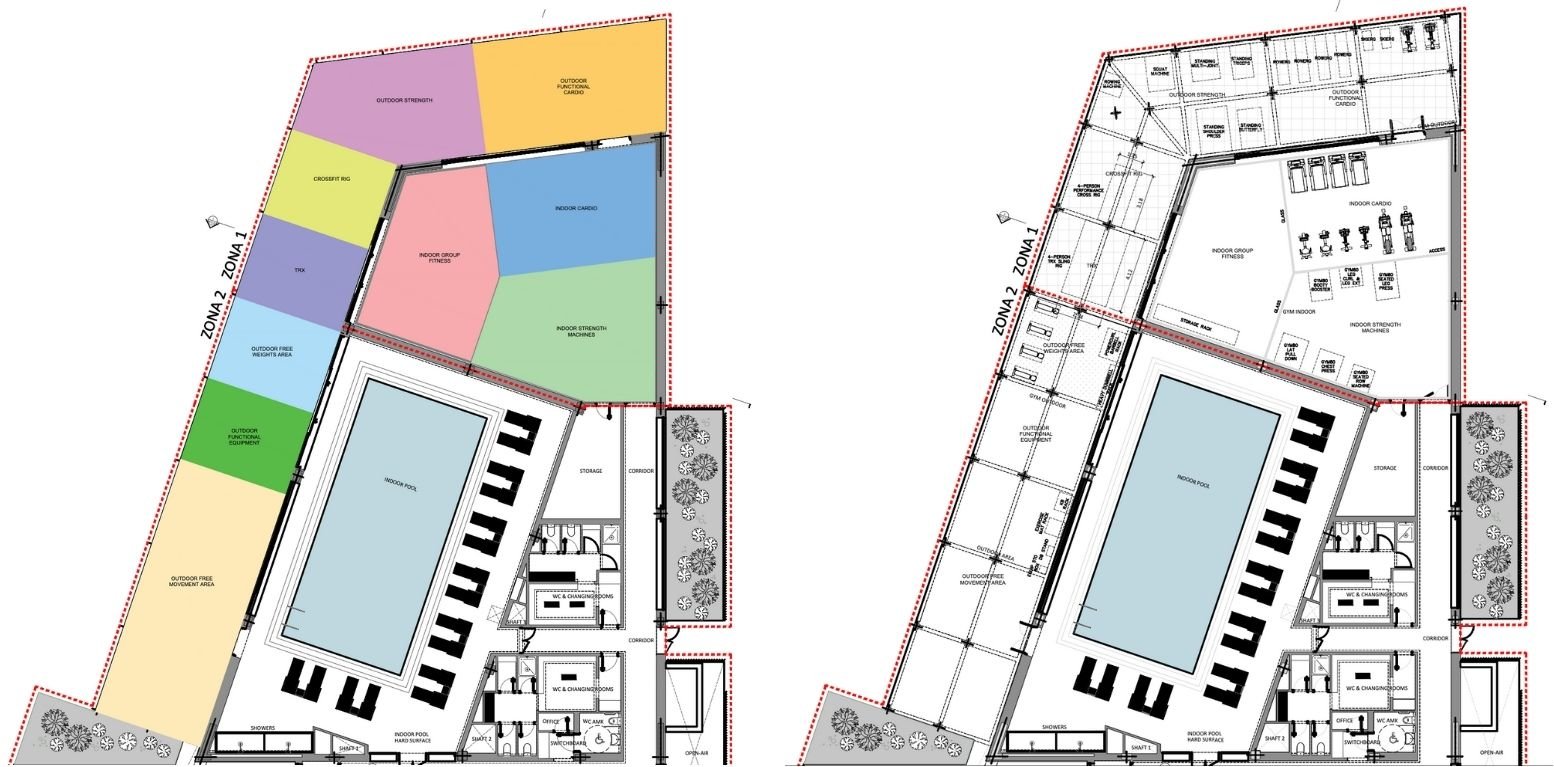
Space planning for IKOS Kissamos resort’s wellness area with indoor gym, outdoor gym and swimming pool
3. Olfactory Integrity: Zoning the "Scent Journey"
The "smell of wellness" is part of the brand. A spa should smell of eucalyptus and essential oils; a gym should smell neutral and fresh. The smell of chlorine or heavy sweat crossing that boundary immediately degrades the guest experience.
The Technical Solution: Air Locks and Independent HVAC
We recommend the use of "Air Locks"—transition corridors or grooming stations between the two zones that feature independent extract fans. By zoning the HVAC systems separately for gyms and spas, we ensure that air is never recirculated between the "wet" and "dry" areas, maintaining the olfactory integrity of each space.
4. Operational ROI: The Shared Guest Journey Core
While the gym and spa must be physically and sensorially separated, for example with markedly different lighting strategies, they should be operationally integrated.
For developers like REFAD, the goal is often to maximize efficiency without compromising luxury. We solve this through:
The Shared Reception: Designing a central "hub" that allows a single staff member to oversee the "Check-in" for the gym and the "Check-out" for the spa.
The Changing Room Core: Utilizing the locker rooms as the natural buffer between the two environments. This allows the guest to transition from the "outside world" into a neutral space before choosing their wellness path.
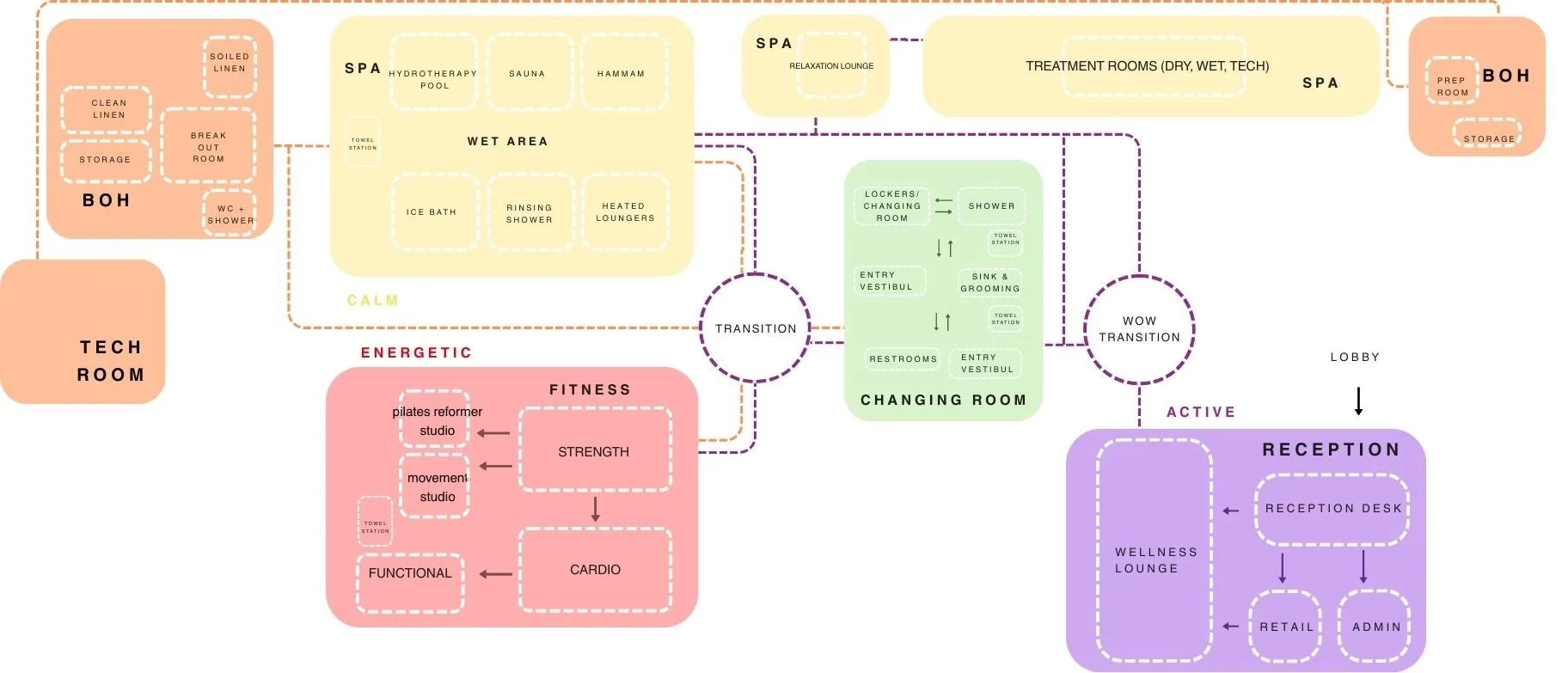
our guest flow diagram for the Refad Place Conrad Hotel wellness club, Saudi Arabia
Conclusion: Success is Found in the "Invisible"
In luxury hotel wellness design, the guest should never notice the engineering. They shouldn't notice the noise, the humidity, or the smell of the neighboring zone.
By solving the Adjacency Problem during the pre-design and concept development phases, Biofit ensures that the facility doesn't just look beautiful on opening day, but performs flawlessly for years to come.
Key Takeaways for Hotel Developers:
Vibration: Use floating floors to decouple gym impact from spa silence.
Climate: Use negative pressure in wet areas to prevent humidity migration.
Operations: Centralize the reception core to reduce staffing overheads.
Standards: Ensure all adjacencies meet the rigorous technical standards of global brands like Hilton.