The Longevity Suite: Why Diagnostics Are Becoming the New Standard in Luxury Wellness Amenities
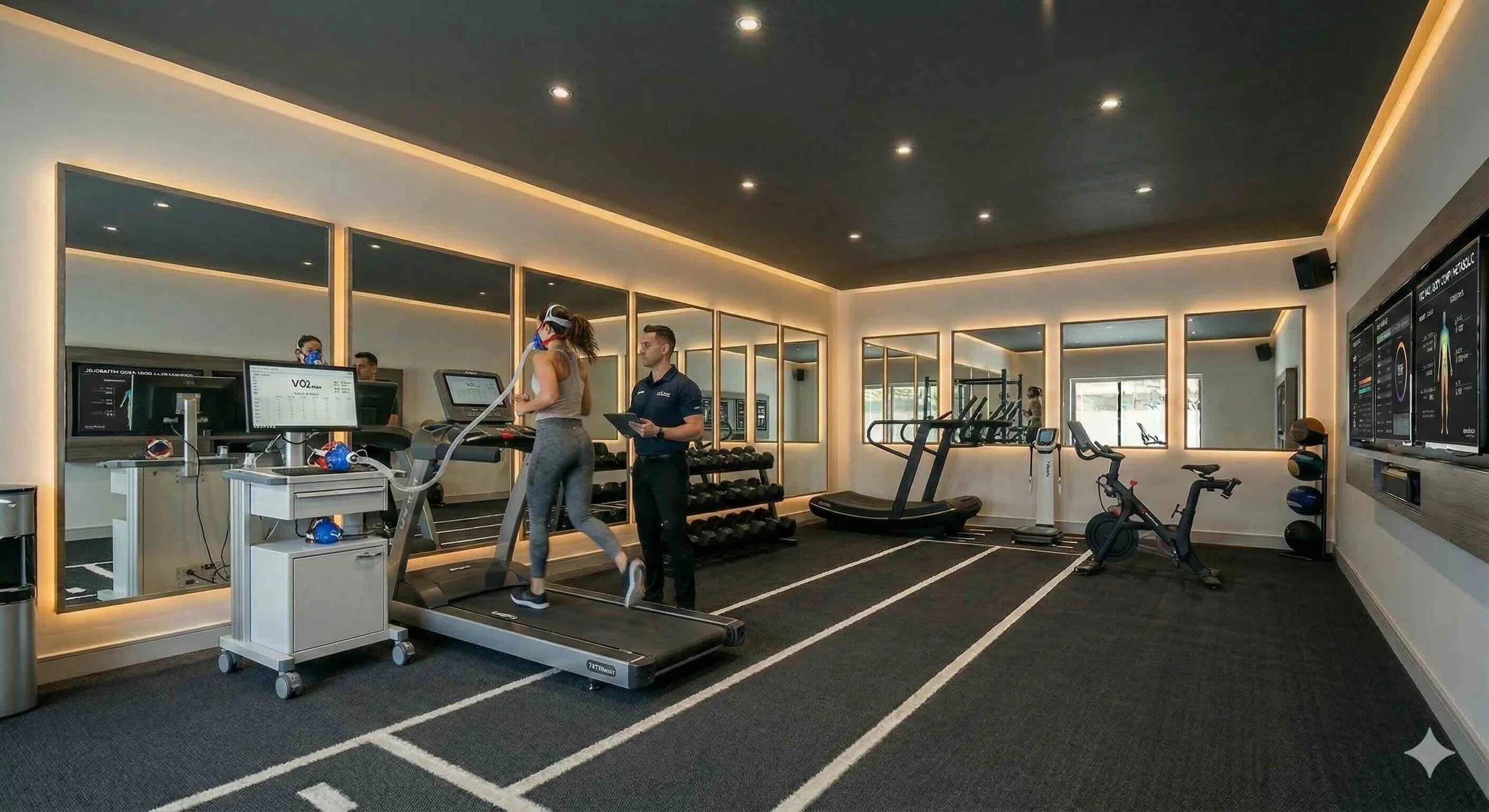
concept visual for a high-end diagnostics room - longevity and healthspan focus
The traditional hotel gym is showing its age. For the developer or hotelier operating at the upper end of the market, fitness as a category has quietly been displaced by something more specific: longevity — the measurable, data-driven optimisation of healthspan rather than the passive provision of exercise equipment.
High-net-worth guests are arriving with Oura rings, continuous glucose monitors, and a working knowledge of VO2 max. They are not looking for a row of treadmills. They are looking for a facility that meets them where they already are — one that can provide clinical-grade diagnostics, personalised programming, and a coherent picture of their biological health. The question for developers is no longer whether to offer this, but how to do it well within a realistic footprint and budget.
At Biofit, we have found that the most effective longevity amenity stack does not require a large space or a full medical team. It requires the right six capabilities, thoughtfully sequenced. Here is our take on what is currently available on the market.
VO2 Max
Resting Metabolic Rate
Body Composition Analysis
Heart Rate Variability
Blood biomarkers
Functional Movement Assessment
1. VO2 Max Assessment — The Benchmark That Matters Most
VO2 max is the strongest single predictor of long-term mortality in the peer-reviewed literature. It measures the body's capacity to utilise oxygen under exertion — and it functions as one of the most reliable proxies for biological age currently available.
Modern wireless gas analysis equipment (VO2 Master and PNOE are the current benchmarks) makes this test accessible outside a clinical setting. For guests who train seriously, a VO2 max result from your facility is genuinely useful data — not a novelty.
2. Resting Metabolic Rate — Personalising the Nutrition Conversation
RMR testing establishes precisely how many calories an individual burns at rest and whether their metabolism is primarily fat- or carbohydrate-dependent. The KORR MetaCheck has become a standard tool for this in performance and longevity contexts.
The practical value for hospitality is significant: a guest with their RMR data can have a genuinely personalised nutrition conversation with your F&B team. That is a meaningful upgrade to the standard hotel dining experience, and one that is difficult to replicate without the underlying data.
3. Body Composition Analysis — Moving Beyond Weight
Body weight tells you very little about health. Visceral fat — the fat deposited around internal organs — is the metabolically active variable that matters, and it is invisible on a standard scale.
The InBody 970 has become the industry reference point for non-invasive body composition analysis. The assessment takes sixty seconds and produces a detailed segmental breakdown that most guests find both immediately comprehensible and genuinely motivating. It is an effective entry point for a broader longevity programme precisely because it makes abstract health data concrete and personal.
4. Heart Rate Variability — Reading the Nervous System
HRV has moved from sports science into mainstream wellness via consumer wearables, but the clinical-grade measurement your facility can offer is meaningfully different from what a guest reads on their watch each morning. It provides a snapshot of autonomic nervous system function — stress load, recovery status, and resilience — that can directly inform how a coach programmes a guest's time with you.
Firstbeat Life and the HRV modules integrated into PNOE are the current tools of choice for this in a hospitality context.
5. Blood Diagnostics — The Data That Lives Upstream
Inflammation markers, hormonal balance, micronutrient status — the most clinically significant longevity data is in the blood, and it is not accessible through any wearable or in-facility device. What is accessible, without an on-site clinical team, is a concierge partnership with a local diagnostic laboratory.
In the Middle East, Al Borg and Valeo both offer the kind of remote partnership model that works well in a hospitality context: your facility coordinates sample collection, results are returned via a digital portal, and your team provides the interpretation layer. It positions the property as the hub of the guest's broader health ecosystem rather than a standalone amenity.
6. Functional Movement Assessment — Longevity in Practice
Living longer is only meaningful if the body continues to function well. Grip strength and balance are two of the most evidence-supported predictors of healthy ageing, and both are assessable quickly and without specialist equipment. The Functional Movement Screen, combined with a digital grip dynamometer, provides a baseline "functional age" that complements the metabolic and body composition data gathered elsewhere in the suite.
These assessments are also among the most visually immediate — guests tend to find the results striking in a way that motivates behaviour change more reliably than numbers on a report.
The Developer Case
The practical appeal of this stack for real estate developers is that it is predominantly capital expenditure rather than ongoing operational cost. Most of these assessments require minimal staffing once the team is trained — a few days of onboarding is typically sufficient. The footprint is under twenty square metres, while the USP relative to a standard spa or fitness offering is substantial.
The more significant shift is conceptual. A longevity diagnostics suite signals something different about a property — that the wellness offer is substantive rather than decorative, and that the facility understands what its guests are actually looking for. In a market where most luxury properties are offering variations on the same spa and gym formula, that distinction is increasingly where the commercial opportunity lies.
Author: Matt Morley