Luxury Gym Design: 10 Interior Details for Premium Wellness Clubs in 2026
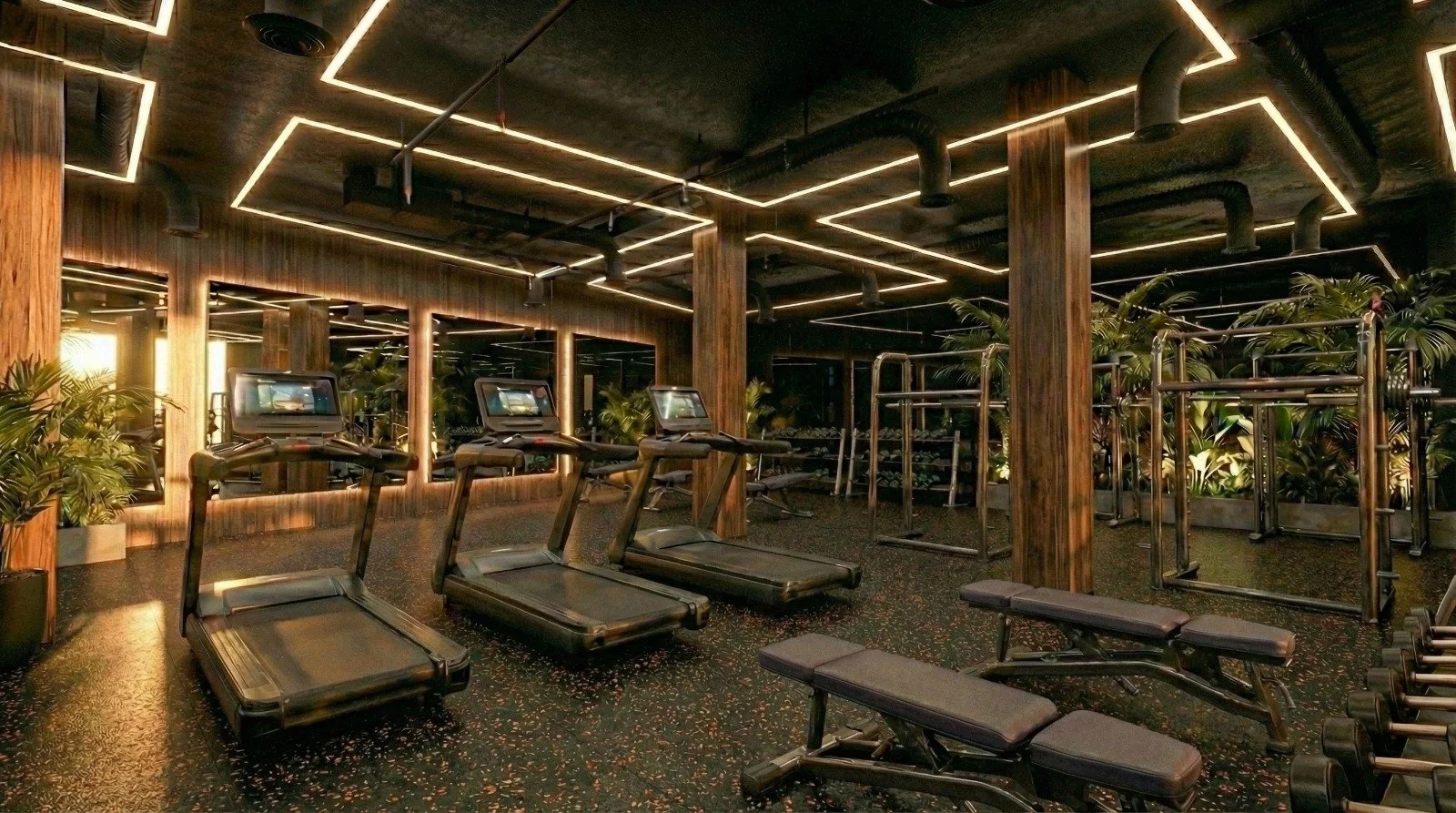
Concept design visual for a wellness club gym area in Marbella, Spain by Biofit
In most gym design projects, the focus naturally falls on layout, equipment selection and capacity planning. These are, of course, critical foundations.
However, what truly differentiates a premium wellness club or hotel gym from a standard commercial facility is something far more subtle: the quality of interior detailing at human scale.
Small decisions—how flooring meets, how equipment zones are defined, where a member places their water bottle—collectively shape the perception of quality, comfort and intention.
Based on recent work designing high-end wellness clubs, here are ten interior design details that significantly elevate the gym experience.
1. Flooring Transitions That Define Zones
Transitions between flooring types—rubber tiles, rolled flooring, turf—should be expressed using flush stainless steel transition profiles, rather than crude joins.
This achieves three things:
improves durability
removes trip hazards
reinforces zoning without adding walls
It is a small detail that immediately signals a considered, premium environment.
2. Wall Base Detailing (Avoid Domestic Skirting)
Domestic-style skirting boards have no place in a high-performance gym.
Instead, use:
flush recessed wall bases, or
rubber coved skirting integrated with flooring systems
This ensures:
clean visual lines
easier maintenance
long-term durability
3. Padded Structural Columns
Columns are inevitable. Poorly handled, they feel like obstacles.
Well handled, they become integrated features.
Cladding columns with high-density impact padding:
improves safety
softens the environment visually
allows colour or zoning integration
4. Side Tables & Personal Surfaces
One of the simplest upgrades:
Provide small surfaces for personal items—water bottles, phones, towels.
This:
reduces clutter
improves comfort
subtly encourages longer dwell time
5. Selective Use of Mirrors
Avoid the “wall-to-wall mirror gym” approach.
Instead:
use mirrors strategically in strength and functional zones
combine with non-mirrored walls for visual balance
introduce backlit mirror panels in key locations
This creates depth without feeling overly commercial.
6. Layered Lighting, Not Just Bright Lighting
Luxury gyms use lighting hierarchy, not uniform brightness:
ambient lighting
task lighting (training zones)
accent lighting (feature areas)
Circadian lighting (in tune with natural light levels)
This allows the space to feel:
energised during workouts
calm during quieter periods
7. Integrated Storage (No Visual Clutter)
The difference between a premium gym and a standard one is often what you don’t see.
built-in storage
concealed racks
minimal loose equipment
The result is a space that feels curated, not chaotic.
8. Technology That Supports, Not Dominates
Screens should be:
limited in number
architecturally integrated
visually quiet
A luxury gym is not a TV showroom.
9. Acoustic Comfort
Noise is one of the most overlooked factors in gym design.
Control is essential between:
functional zones
studios
spa-adjacent areas
Without it, even a beautifully designed space feels uncomfortable.
10. Precision in Every Junction
Ultimately, luxury is about consistency:
aligned equipment layouts
concealed cables
consistent material finishes
clean junctions
tactile, organic textures
The goal is simple:
The gym should feel designed—not assembled.
Conclusion: Designing for the Human Experience
In high-end wellness environments, the success of a project is rarely determined by equipment alone. True luxury is defined by environmental psychology—how a space feels, breathes, and functions at a human scale.
By focusing on these ten precise interior details, you move beyond the "industrial" feel of traditional fitness centers and toward a holistic wellness club aesthetic that prioritizes member retention and physical well-being.
Transform Your Wellness Facility
Whether you are developing a boutique studio, a hotel gym, or a corporate wellness suite, the details make the brand. Our team specializes in creating health-centric interiors that merge high-performance functionality with organic, restorative aesthetics.
Ready to elevate your fitness space?
Looking to transform your facility into a high-end wellness destination? Explore our Gym Design Consultancy services here or reach out to us via email here.
FREQUENTLY ASKED QUESTIONS
-
A luxury gym is defined less by equipment and more by spatial quality, detailing and user experience. Key factors include material consistency, lighting, acoustic comfort, spacing between equipment and the integration of storage and technology.
-
A combination of commercial-grade rubber flooring systems tailored to each zone is best practice. Strength areas, functional zones and cardio spaces should each have appropriate flooring, with flush transition profiles to ensure durability and safety.
-
Luxury gyms typically allow 10–12 m² per user, compared to 6–8 m² in commercial facilities. This improves comfort, circulation and perceived quality.
-
Yes, but they should be used selectively. Overuse creates a dated, commercial feel. Strategic placement, sometimes combined with backlit panels, creates depth while maintaining a refined aesthetic.
-
Commonly overlooked elements include:
flooring transitions
wall base detailing
acoustic control
storage integration
small user comforts (e.g. surfaces for personal items)
These details have a disproportionate impact on user experience.
-
Very important. Without proper acoustic control, noise from functional zones, studios or equipment can negatively affect the experience. This is especially critical in mixed-use wellness environments with adjacent spa areas.
-
In membership-led wellness clubs, yes. Lounge areas increase dwell time and support the concept of a social wellness destination, rather than a purely transactional fitness space.