From Concept to Launch: How We Protect Quality on Gym + Spa Fit-Outs
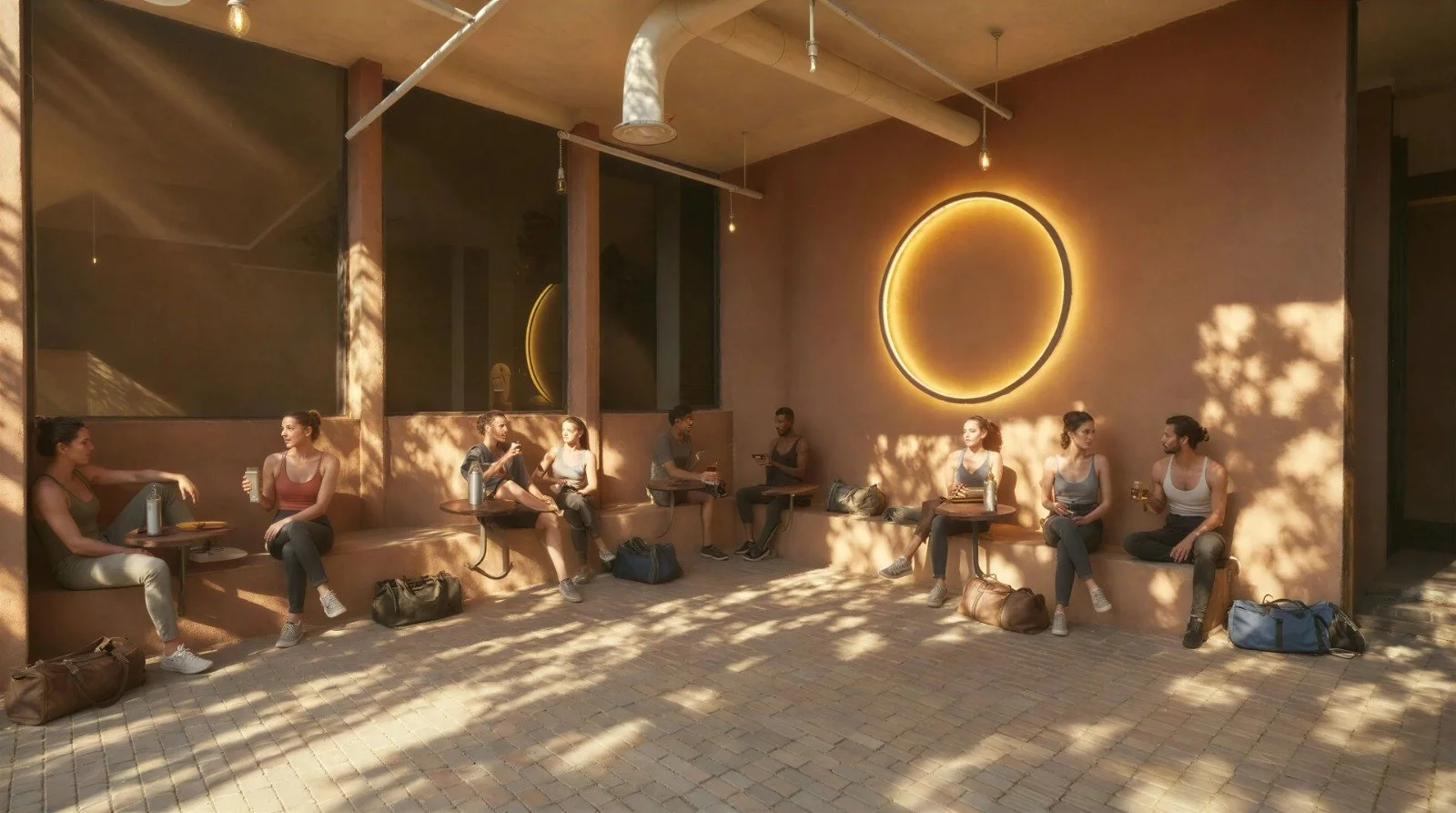
social area for CRCLE Wellness concept design by Biofit
Featured project: CRCLE Wellness Club, Marbella
Most wellness club projects don’t fail at the concept stage. They fail later—when the project moves from “nice visuals” into procurement and construction, and the original intent gets diluted by substitutions, coordination pressure, and contractor defaults.
CRCLE Wellness Club in Marbella is a good example of how to bridge that gap. Biofit led concept and schematic design, specified all the gym and spa equipment, and remains involved through delivery to completion, working alongside the client’s local project manager and general contractor (GC), who manage day-to-day site coordination and shop drawings.
This article explains the approach in practical terms—what we lock early, what we retain control of, and what we deliberately let the GC handle.
The handover gap: where quality is usually lost
In premium gym + spa projects, the risk is rarely a lack of ideas. It’s the missing “middle layer” between concept and build.
Three issues show up repeatedly:
Function gets locked incorrectly
Storage, towel logistics, AV visibility, power density, and circulation are underestimated. The space looks good on paper, then underperforms operationally.Design intent evaporates in procurement
Contractors optimise for programme and cost. Without clear guardrails, substitutions and generic selections quickly flatten the design.Atmosphere gets value-engineered
Lighting, finishes and furniture are often treated as “nice to have,” yet they are exactly what makes a wellness club feel premium and marketable.
CRCLE’s delivery strategy was built to avoid those outcomes.
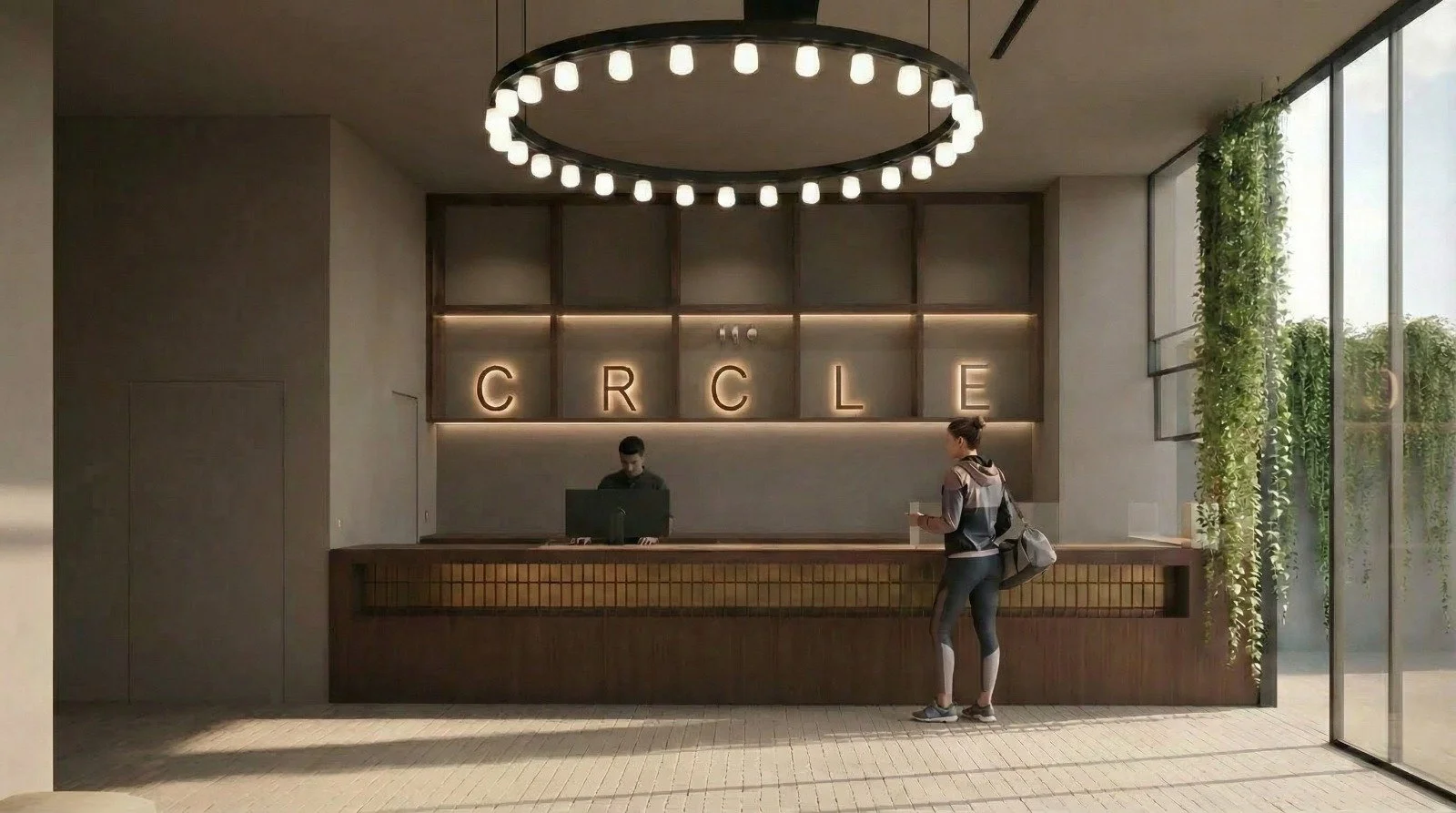
reception and health bar concept design by Biofit
Start with a clear club hierarchy: performance, recovery, social
We structured CRCLE around three member experiences:
1) Performance (the gym floor that actually works)
A premium gym is not just equipment in a room. The floor must read clearly and operate smoothly: strength, cardio and functional training need legible zoning, good sightlines and enough breathing space to avoid the “warehouse squeeze” that makes clubs feel cheap.
2) Recovery (rituals, not rooms)
Recovery spaces become memorable when they feel like a sequence—heat, cold, reset—rather than a collection of standalone rooms. That logic improves both operations and marketing: members understand what to do, and the space feels intentional.
3) Social (dwell-time is a business strategy)
The strongest clubs are not only places to train. They are places to return to. CRCLE’s social layer—indoor and outdoor—has been developed to support community and dwell-time without compromising privacy or flow.
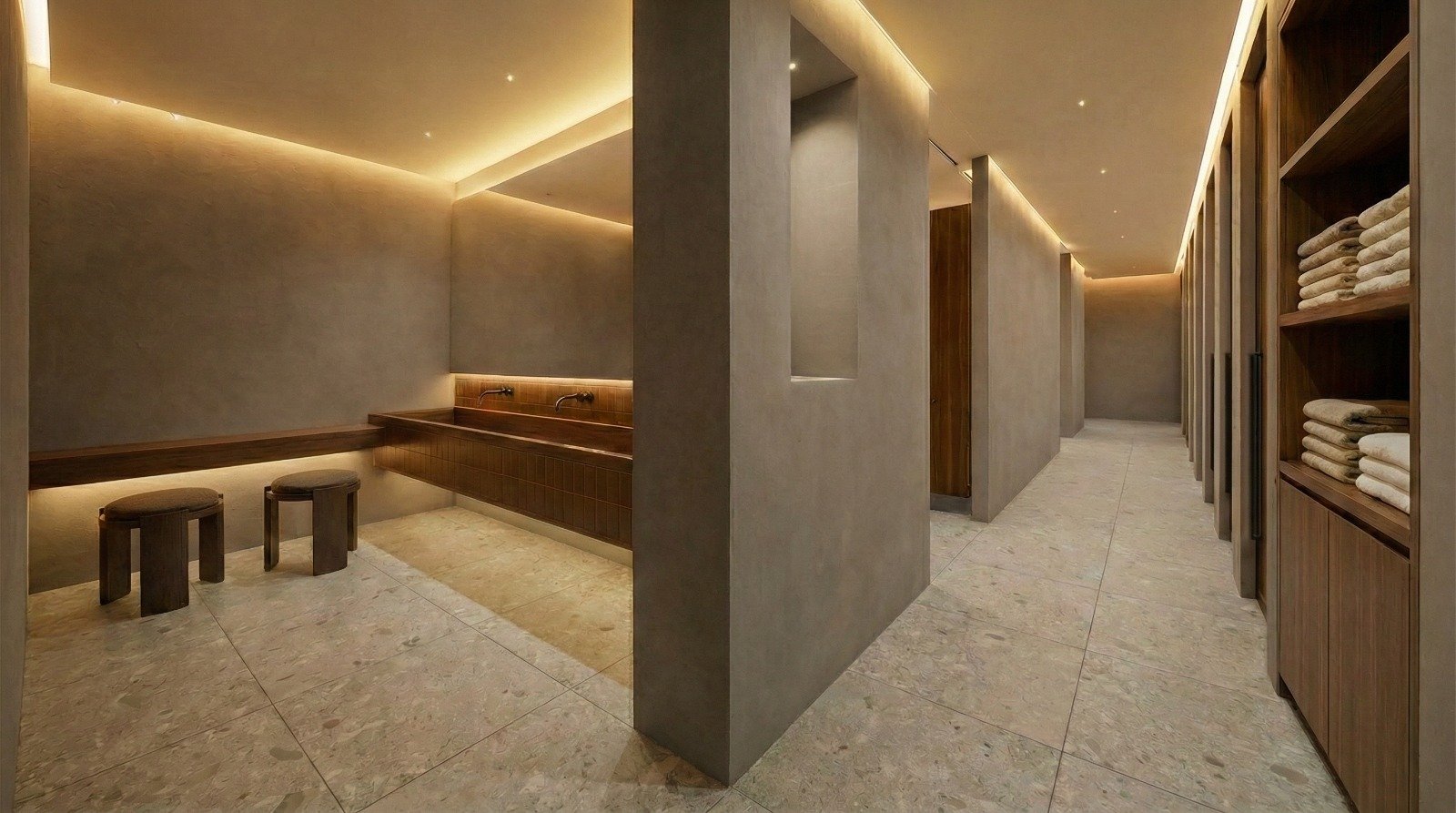
changing room concept design visual by Biofit for CRCLE
The five packages that most affect quality (and why we retain them)
Even with a capable GC, certain packages are disproportionately important. They affect durability, member experience, and the overall “premium” perception.
On CRCLE, Biofit retained control (or strong influence) over these high-impact packages:
1) Gym + spa equipment
Equipment sets the performance standard and drives spatial logic. Poor substitutions can destroy usability, clearances and flow.
2) Specialist flooring
Flooring is performance-critical. It affects safety, acoustics, maintenance and long-term wear. The wrong flooring reads as “cheap” immediately and often fails early.
3) Lockers
Lockers are an operational and brand touchpoint. Bad locker decisions show up as clutter, queueing, and maintenance issues.
4) Decorative lighting
Lighting is the atmosphere engine. If lighting is left to generic site solutions, the space loses its mood, depth and sense of intention.
5) Loose furniture (including social zones)
Furniture is what makes the club feel hospitable. If it becomes an afterthought, the social layer underperforms and the club becomes purely transactional.
This retained procurement strategy is not about micromanagement—it’s a practical way to protect outcome quality while allowing the GC to deliver the construction package efficiently.
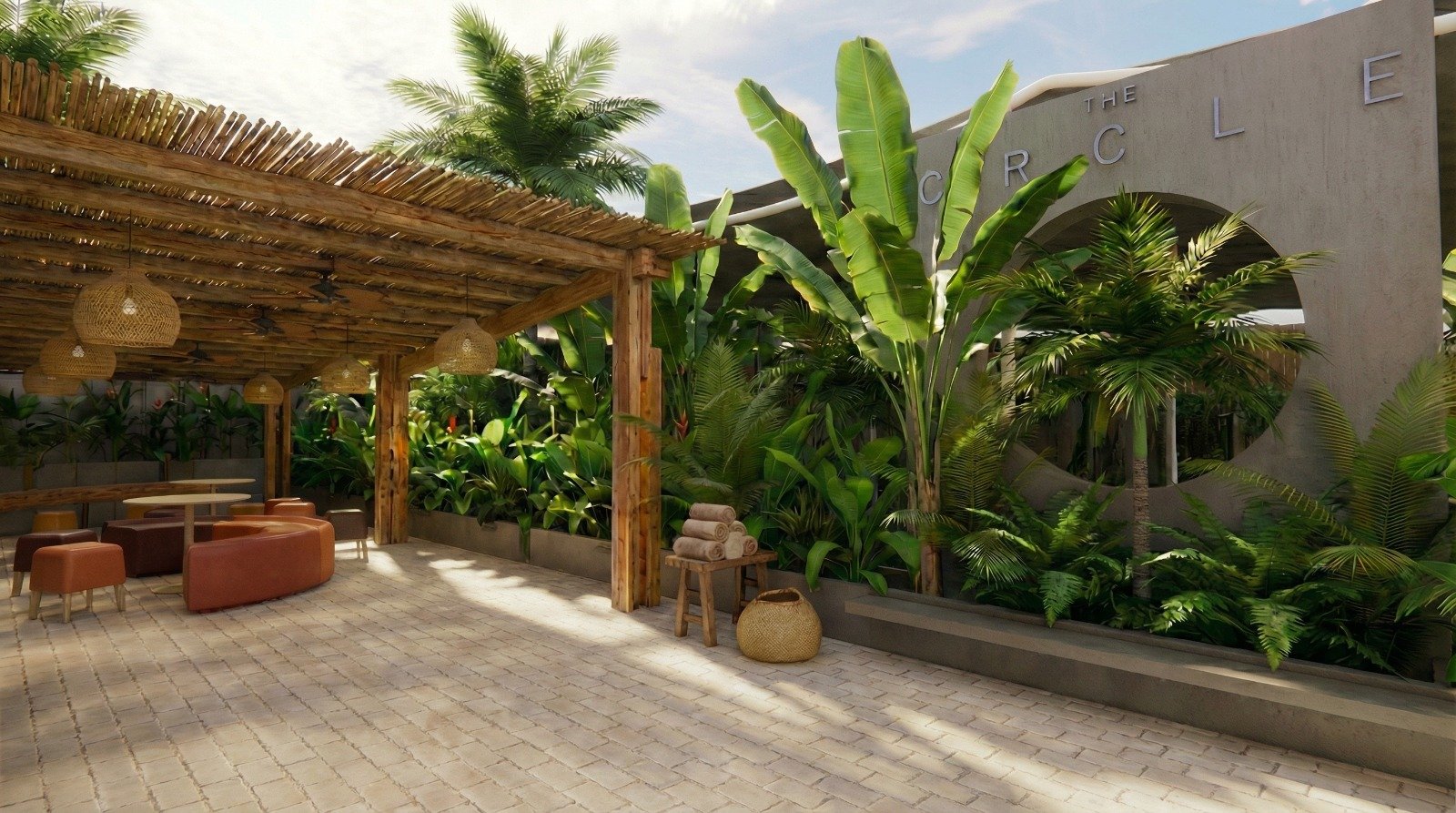
concept design for outdoor social area by Biofit for CRCLE Wellness
What we let the GC handle (and why that can be smart)
A hybrid model works best when responsibilities are clear.
The General Contractor (GC) and local team typically lead:
general fit-out and site coordination
standard MEP coordination
shop drawings for construction elements
certain installation-heavy items best handled locally (for example mirrors, where logistics and site tolerance matter)
The key is not whether the GC is involved—the key is whether the design intent is sufficiently clear and protected, and whether the high-impact packages are controlled.
Why schematic design matters more than most clients think
Schematic design is where the project becomes buildable.
A strong schematic package does three things:
locks the operational logic (zoning, adjacencies, storage, circulation, towel/cleaning realities)
sets “non-negotiables” for procurement and detailing
creates a clear boundary so the local team can progress detailed coordination without improvising the design
If schematic design is vague, the GC will fill gaps with generic decisions. That’s not a criticism; it’s how construction works under time and budget constraints.
Delivery support through completion: where value is actually created
The most valuable consultant work often happens after the drawings are issued.
Delivery support protects the project through:
reviewing key submittals and shop drawings that affect the “feel” of the space
approving retained package selections (lighting, furniture, flooring, lockers, equipment)
clarifying intent when site constraints require adaptation
preventing drift—where the space becomes a collection of “acceptable” decisions rather than one coherent concept
This is how you keep a premium outcome without forcing a fully bespoke design process for every component.
What CRCLE demonstrates (in brief)
A premium wellness club is not achieved by rendering quality—it is achieved by robust schematic design + retained procurement of critical packages + structured delivery support.
If you’re planning a gym + spa project
If you’re delivering a wellness club with a local contractor team and want to protect quality through tender and construction, the most effective approach is to:
lock the operational logic early
define non-negotiables before procurement
retain control of the packages that most affect performance and perceived quality
keep design leadership involved through delivery, even if the GC leads site coordination
If that’s the model you’re aiming for, Biofit can support you from concept through to delivery.