Luxury Spa Design: Key Interior Details That Define High-End Wellness Experiences
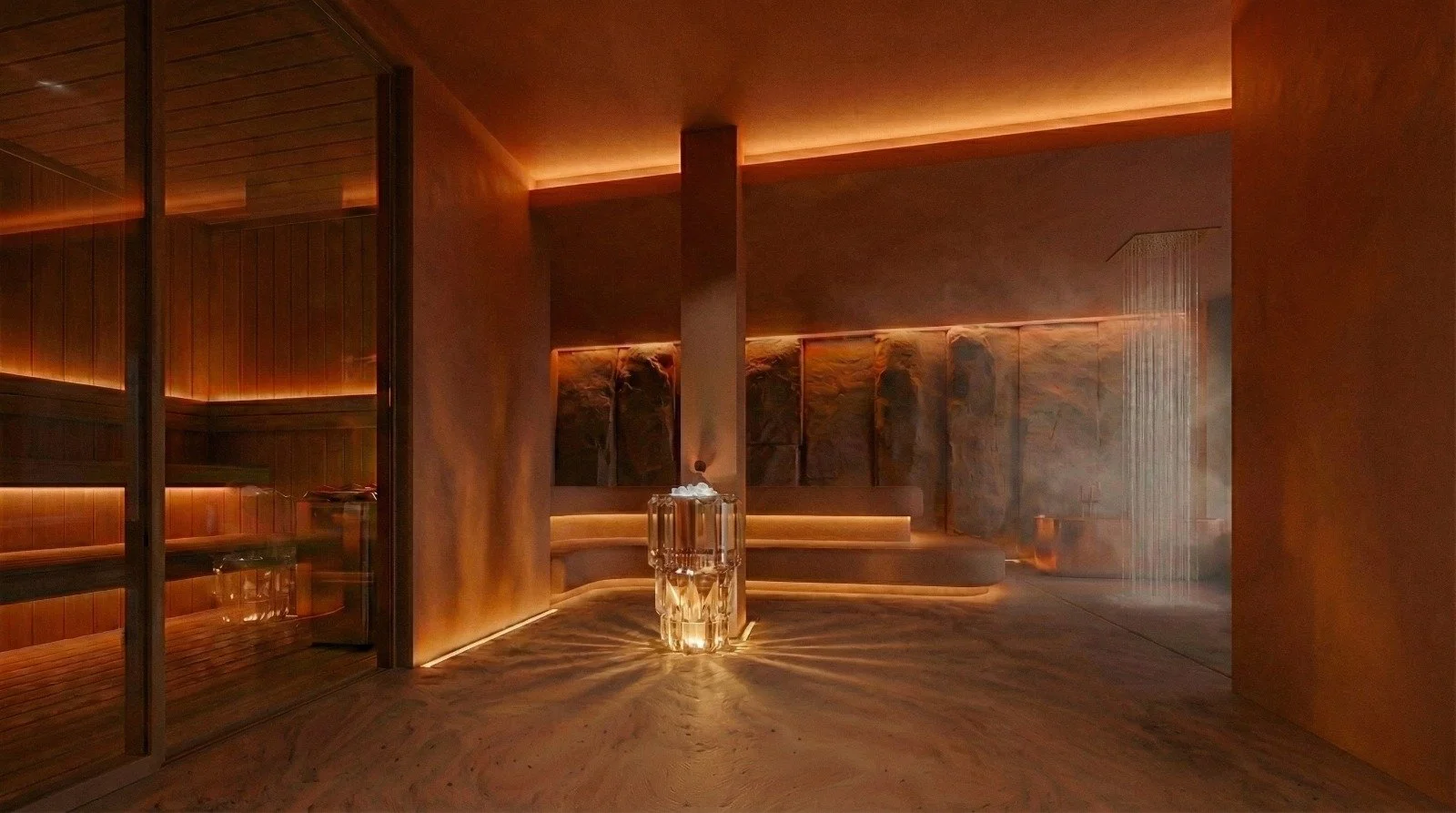
spa concept design by biofit design consultants
Introduction
Designing a luxury spa is not simply about selecting beautiful materials or specifying treatment rooms.
At its best, spa design is about orchestrating a sequence of experiences—from arrival to relaxation, from heat to cold, from activity to stillness.
And as with gym design, the difference between a good spa and a truly exceptional one lies in the quality of its detailing.
Below are the key interior design principles that define a high-end spa environment.
1. Seamless Wet-Area Flooring
Spa flooring must be:
anti-slip
seamless
visually calm
Transitions should be:
flush
discreet
free from domestic detailing
2. Integrated Wall Base & Waterproofing
All junctions must be:
durable
hygienic
easy to clean
This means:
no decorative skirting
no exposed edges
fully integrated wet-area detailing
3. Thermal Experience as a Sequence
A luxury spa is not a collection of rooms.
It is a journey:
heat
cold
rest
The layout must support intuitive movement between:
sauna
steam
plunge
relaxation
4. Privacy & Controlled Sightlines
Privacy is critical.
Avoid:
direct views into changing areas
exposed treatment rooms
Use:
indirect entry
screens
layered thresholds
5. Lighting That Supports Decompression
Lighting should:
be warm and low-glare
support relaxation
avoid harsh overhead conditions
Dimmability is essential.
6. Relaxation Spaces That Feel Intentional
Too often, relaxation areas feel like leftover space.
Instead, they should be:
comfortable
clearly defined
integral to the experience
7. Treatment Rooms That Balance Luxury & Function
Treatment rooms must:
feel calm and private
support operational efficiency
conceal all service elements
The best rooms feel effortless—but are highly engineered.
8. Concealed Operations
A luxury spa is defined by what is hidden:
towel storage
service areas
housekeeping
Operational efficiency must exist without visual intrusion.
9. Acoustic Control
Silence—or near silence—is part of the experience.
Control is needed to prevent:
mechanical noise
voices
external gym noise
10. Material Consistency & Tactility
Luxury spas rely on:
restrained palettes
tactile materials
consistency across all spaces
Avoid over-design. Focus on depth and quality.
Conclusion
A great spa is not just seen—it is felt.
And that feeling comes from:
clarity of journey
quality of materials
precision of detailing
When these elements align, the result is not just a spa—but a true wellness experience.
Review our spa design services here.
See our credentials document online here.
Contact us via email to discuss your spa project here.
FREQUENTLY ASKED QUESTIONS
-
A luxury spa is defined by journey, atmosphere and detail rather than just treatments. The sequencing of spaces (arrival, changing, thermal, treatment, relaxation) and the quality of materials and lighting are critical.
-
Contrast bathing involves alternating between heat (sauna, steam) and cold (plunge pools). It supports:
circulation
recovery
mental reset
It is increasingly central to modern spa design and wellness programming.
-
Spas require anti-slip, waterproof flooring systems with seamless detailing. Materials should be durable, hygienic and comfortable underfoot, with integrated drainage and minimal visible transitions.
-
Privacy is essential. Good spa design avoids direct sightlines into changing areas, treatment rooms and thermal zones through the use of:
screens
indirect entry
layered spatial transitions
-
Lighting supports relaxation and sensory experience. It should be:
warm
low-glare
dimmable
Harsh or overly bright lighting undermines the spa atmosphere.
-
Typical mistakes include:
over-complicated layouts
poor acoustic control
visible operational clutter
under-designed relaxation areas
lack of clear journey sequencing
-
Spas are increasingly incorporating:
recovery services (compression, red light therapy)
wellness technology
diagnostics and consultation
This creates a more holistic, health-focused offering.