How to Choose Management Software for a Gym, Spa or Wellness Club
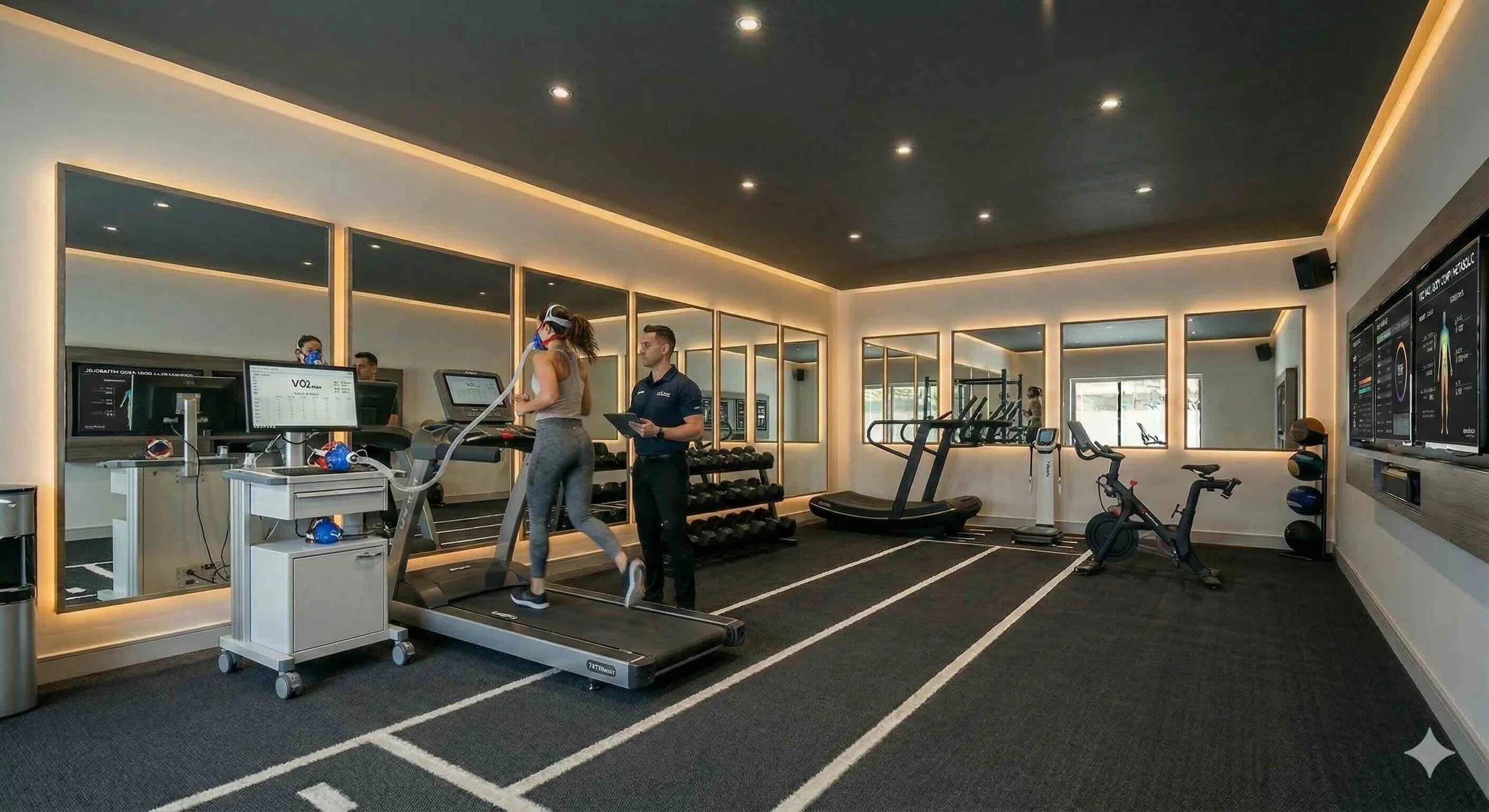
Choosing management software for a gym, spa or wellness club is no longer just an IT decision. It is a commercial, operational and experience-design decision that directly affects staff efficiency, member retention, revenue capture and the overall perception of the brand.
In pre-opening advisory, this matters because the software stack influences far more than booking calendars and payment processing. It shapes how members join, how they move through the club, how trainers prescribe programmes, how diagnostics are recorded, how classes are booked, how treatments are sold, and how management teams track performance across the operation.
For operators launching a new concept, the real question is not simply which software is best. The better question is: which software ecosystem best fits the business model, service mix and customer journey?
Why software selection matters earlier than most operators think
Many operators leave software decisions too late, treating them as an administrative layer to be added shortly before opening. In practice, the software should be considered during concept development and operational planning because it affects membership models, booking logic, access control, staffing workflows, reporting structure and the degree of personalisation the club can offer.
A high-performing wellness business now needs more than a standalone booking system. It needs a connected digital infrastructure that links front desk, sales, memberships, class bookings, spa scheduling, trainer workflows, diagnostics, payments, access control and customer communication.
The main software categories operators need to understand
Not all wellness software platforms are solving the same problem. Broadly speaking, most operators are choosing between five categories.
1. Health club and enterprise gym management platforms
These are best suited to larger gyms, health clubs, multi-site operators and hybrid wellness clubs with membership structures, trainer teams and more complex operating rules.
EGYM is especially relevant where operators want a connected training ecosystem, with management software, trainer tools, a branded member app, hardware connectivity and links to body analysis workflows. Its positioning is strongest where the gym floor experience itself is meant to be digitally guided and measurable.
PerfectGym is a strong contender for mid-sized and enterprise fitness businesses, especially when operators need configurable business rules, multi-site administration, API access and a broad integrations ecosystem. That makes it particularly relevant for chains, larger mixed-use leisure operators and projects where the operator wants to connect third-party systems rather than rely on a closed equipment ecosystem.
Zenoti has historically been associated with spa, salon and wellness businesses, but it also has a fitness-centre offering with memberships, class bookings, POS, access control integration and location-level dashboards. It is particularly relevant for operators building a more service-led wellness business rather than a pure gym model.
2. Studio-oriented platforms
Boutique concepts, yoga and Pilates studios, group training concepts and smaller wellness operators often prioritise scheduling, lead generation, easy booking, consumer discovery and simple client communications.
Mindbody remains one of the most recognisable names in this segment. Its value is not only the core business-management layer, but also the consumer-facing discovery and booking ecosystem around it. For studio-led concepts, this can be commercially useful, especially during launch and early ramp-up.
This does not automatically make Mindbody the right choice for a large wellness club. Where the operation includes complex memberships, wet areas, diagnostics, locker logic, access control or hotel guest charging, operators may need something more robust or more specialised.
3. Spa- and hotel-oriented wellness platforms
Where the business includes treatment rooms, thermal experiences, day spa guests, hotel integration, yield management or ancillary spend beyond fitness, spa-first platforms become more relevant.
Book4Time is particularly strong for hotels, resorts and spa-led operations. It is designed to connect scheduling, payments, memberships, inventory and reporting, while also integrating with wider hospitality systems such as PMS, POS, payment tools and CRM layers. That makes it highly relevant for resorts and mixed-use hospitality projects where the spa is not operating in isolation.
Zenoti also sits comfortably in this discussion because it spans spa, medspa, salon and fitness use cases, which can be useful for integrated wellness concepts where treatments, retail and memberships sit under one umbrella.
4. Connected training and equipment ecosystems
Some operators do not just want management software. They want a connected exercise experience in which training plans, workout data, body composition and trainer interventions all feed into one digital journey.
That is where EGYM and Technogym Mywellness become especially relevant. EGYM links management software, trainer workflows, member app functionality and body analysis integration. Technogym positions Mywellness as a platform integrating apps, smart equipment, wearables and management software to create a more personalised and connected client experience.
5. Open integration layers and API-first approaches
In some projects, the real requirement is not one all-in-one platform but a flexible stack: one system for membership and billing, another for hospitality PMS, another for diagnostics, another for access control, and perhaps another for marketing automation.
In those cases, API depth matters. Platforms such as PerfectGym, Book4Time and Mywellness become more attractive where the operator wants flexibility, custom integration and long-term scalability.
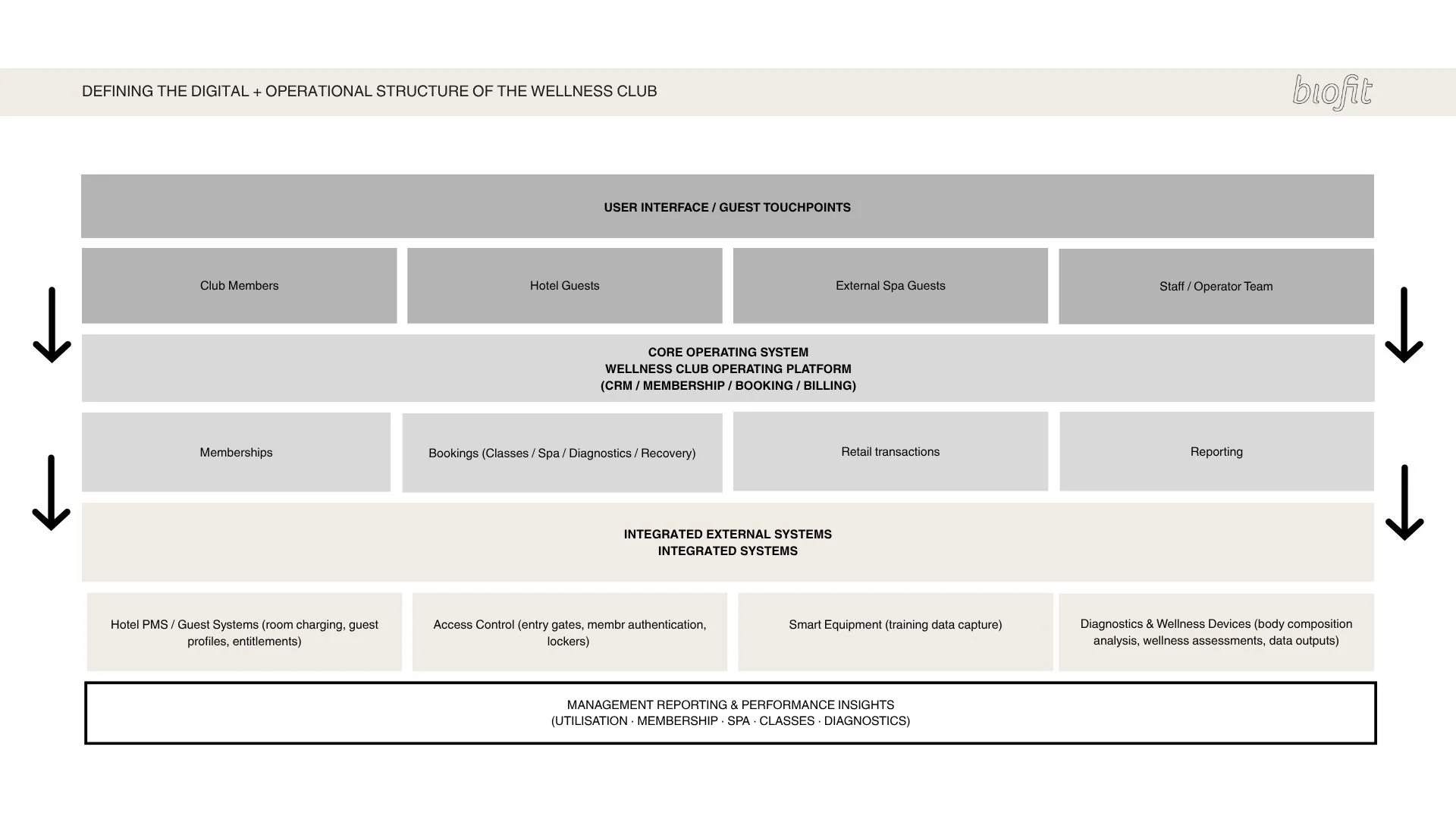
Operational structure of a wellness club, diagram by Biofit gym and spa consultants
The main players Biofit would consider in a typical project
Here is the practical shortlist.
EGYM
Best for operators who want a connected gym-floor experience, guided training journeys, trainer app functionality, branded member app capability and links between software, smart equipment and body analysis. Particularly relevant where exercise prescription and measurable progress are central to the brand promise.
PerfectGym
Best for larger fitness and wellness operators needing configurable membership logic, multi-site management, enterprise administration and API-led integration with other systems. Particularly relevant when the operator wants flexibility rather than committing to one hardware-led ecosystem.
Zenoti
Best for integrated wellness concepts spanning spa, salon, fitness, memberships, booking, POS and customer communication. A sensible option where the business model is service-heavy and operationally hybrid.
Mindbody
Best for studios, class-led businesses and boutique operators that benefit from easy booking, client management, marketing support and consumer discovery. Particularly relevant to yoga, Pilates, boutique group fitness and smaller wellness concepts.
Book4Time
Best for hotel spas, resort wellness operations and hospitality-led businesses where spa software needs to integrate with PMS, POS, payments and the broader guest journey.
Why integration matters more than the headline feature list
Operators often compare software vendors by checking whether each one includes memberships, billing, booking, reporting and CRM tools. That is necessary, but not enough.
The better lens is to ask whether the software can connect the customer journey from first enquiry through to long-term retention.
That means asking questions such as:
Can it integrate with access control and turnstiles?
Can it connect with gym equipment or a connected training ecosystem?
Can trainers pull body composition data into programme design?
Can PT sessions become more data-driven over time?
Can spa booking data sit alongside membership behaviour?
Can the club app show attendance, progress, bookings and challenges in one place?
Can hotel guests charge wellness services to their room?
Can management see performance by member type, trainer, treatment room, class product and ancillary spend?
This is where the distinction becomes important. Some platforms are strong on operations. Others are strong on customer acquisition. Others excel at spa and hospitality workflows. The most effective choice depends on how the software will integrate with the full operational model.
Making personal training more data-driven
This is one of the most commercially interesting shifts in the sector.
Traditionally, personal training relied heavily on trainer observation, manual assessments and subjective progress reviews. Increasingly, software-connected environments allow trainers to work from live or recent data: attendance history, programme compliance, body composition trends, completed workloads, wearable activity and session outputs.
For operators, this matters because data-driven coaching can improve:
onboarding and goal-setting
programme adherence
perceived personalisation
re-assessment workflows
upsell logic for PT and coaching packages
member retention over time
In other words, software is no longer just admin infrastructure. It becomes part of the coaching product.
When the right software stack integrates with diagnostics tools, smart equipment and wearable data, trainers can prescribe more effectively, track progress more clearly and demonstrate value more convincingly to members. That can elevate both the coaching offer and the perceived sophistication of the club.
What Biofit would look for during pre-opening advisory
In practical terms, software selection should be aligned with the concept from the start.
For a health club or corporate wellness facility, the priority may be membership logic, access control, reporting, trainer workflows and connected equipment.
For a boutique studio, the priority may be class bookings, lead generation, client communications and frictionless app-based booking.
For a hotel spa or resort wellness concept, the priority may be treatment scheduling, yield management, room charging, retail, staffing logic and PMS integration.
For a hybrid wellness club, the software may need to manage all of the above: memberships, diagnostics, training plans, spa bookings, retail, classes, treatment rooms, guest passes and member app engagement.
This is why there is rarely one universal answer. The best choice depends on the operating model.
A practical recommendation for owners and operators
Before selecting software, define the business model first.
That means being clear on:
membership structure
day-pass and guest logic
class model
PT and coaching offer
spa and treatment offer
diagnostics and assessment journey
app and digital experience
hotel or residential integration requirements
reporting and KPI expectations
single-site versus multi-site ambitions
Once those are clear, the software shortlist becomes much easier to evaluate.
Final thought
The strongest gym, spa and wellness concepts now operate as connected ecosystems rather than isolated departments. The management software, member app, trainer tools, diagnostics, access control and equipment layer should all work together.
When that happens, the member experience becomes smoother, the coaching becomes more measurable, the commercial model becomes easier to manage, and the operation is better prepared for scale.
That is why software selection deserves a place in early-stage planning, not just pre-opening procurement.
FAQ
What is the best management software for a gym or wellness club?
The best platform depends on the operating model. EGYM and PerfectGym are strong for larger fitness and wellness clubs, Mindbody is well suited to studios, while Zenoti and Book4Time are strong for spa-led and hospitality-oriented concepts.
What software is best for a hotel spa or resort wellness operation?
Book4Time is particularly relevant for hotel and resort spas because it is designed to support spa operations alongside broader hospitality systems. Zenoti can also be relevant for integrated wellness and service-led concepts.
Can gym management software integrate with equipment and diagnostics tools?
Yes. This is increasingly important. Some platforms are designed to connect with smart training equipment, body composition tools, wearables and trainer apps so that coaching and member engagement become more data-driven.
Why does software matter in pre-opening planning?
Because it affects membership design, access control, staffing, booking logic, diagnostics, trainer workflows, reporting and the digital member journey. Leaving software decisions too late can create inefficiencies that are harder to fix after launch.