Wellness amenity strategy for co-living & residential developments
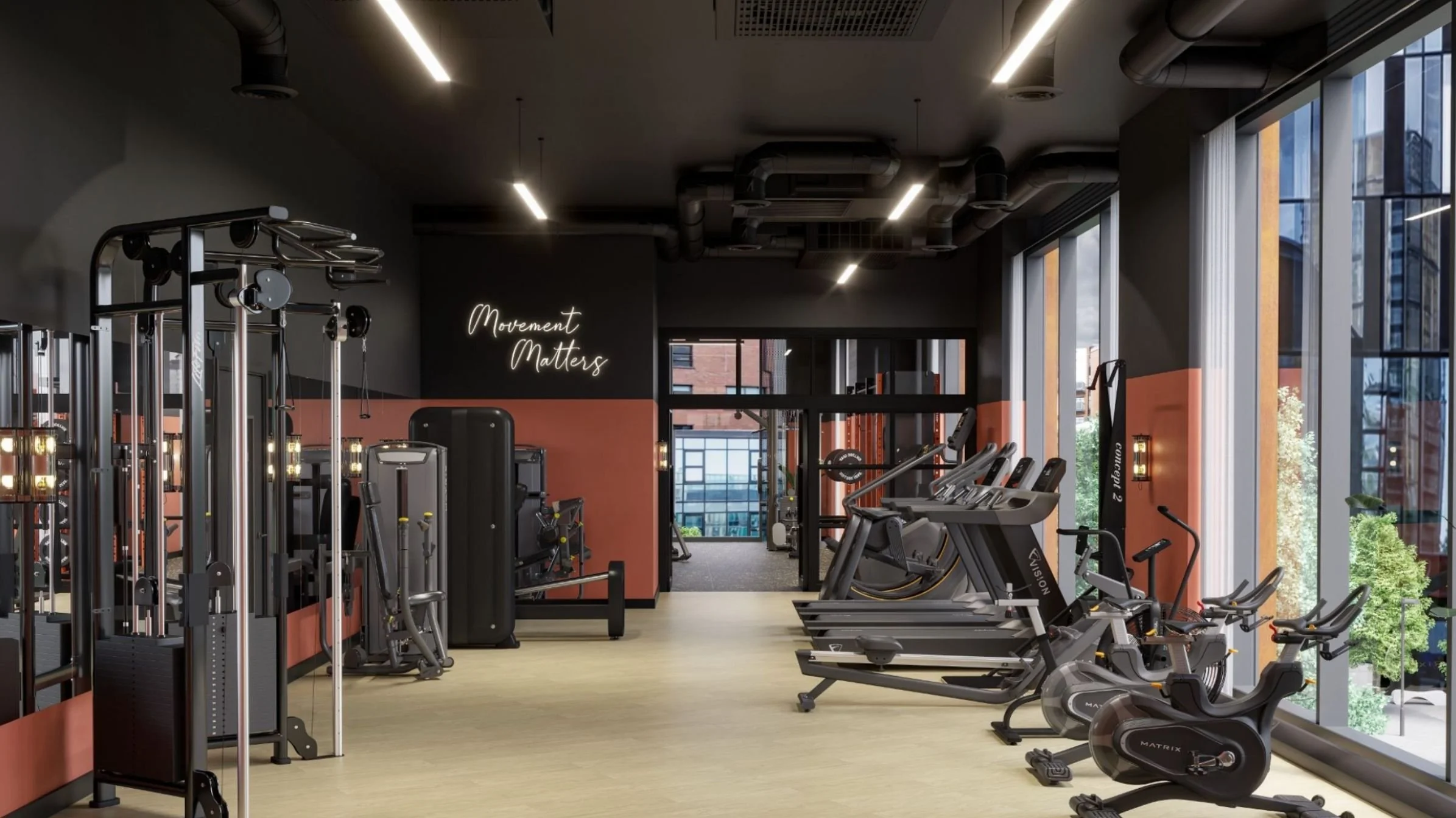
Fusion Students Manchester_concept design_render of gym
A practical framework across PBSA, co-living and multi-family residential
Student living, co-living and multi-family residential are converging around a shared expectation: wellness amenities are no longer a nice-to-have. The challenge is not whether to include wellness—but what to include, how to right-size it, and how to deliver amenities that remain attractive and operationally manageable over time.
This post sets out a practical wellness amenity strategy framework that works across:
Co-living
Multi-family / BTR residential amenities
(and, where relevant, private residential wellness spaces)
Why these categories converge (and where they differ)
The crossover
Across all three typologies, the success drivers are similar:
limited footprints and competing amenity demands
high expectations from residents (and heavy use)
durability and maintenance as real cost drivers
a need for marketable, “sellable” amenity moments
The differences to respect
PBSA: peak usage patterns can be intense; unmanned 24/7 access is common; durability and operational rules are critical.
Co-living: social energy is higher; wellness must balance community and privacy; booking and behavioural norms matter.
Multi-family/BTR: broader age range and varied capabilities; amenities must support daily routine, accessibility and long-term finish resilience.
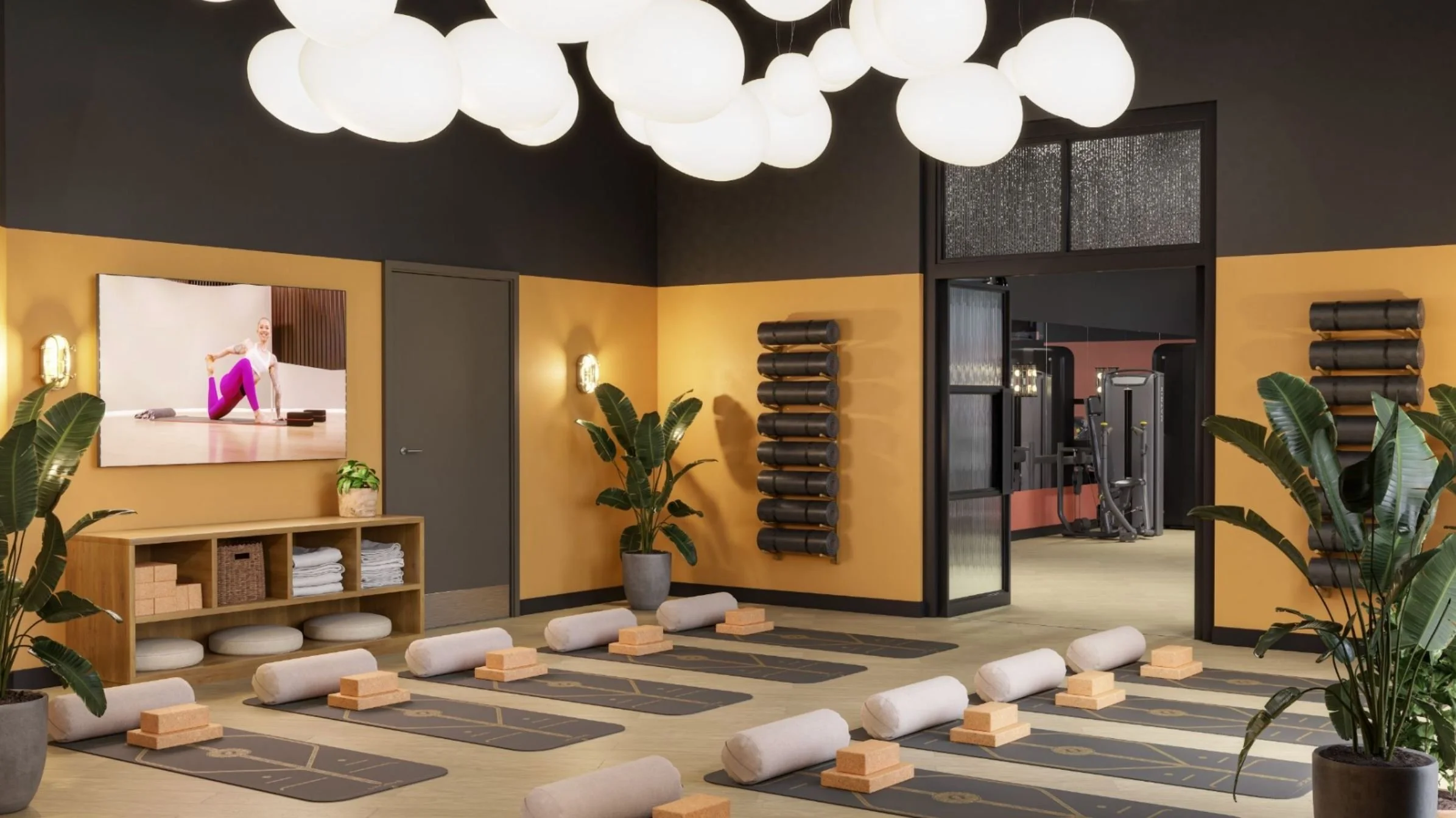
Fusion Students Manchester_concept design_wellness studio render
The Biofit framework: 6 decisions to lock early
1) Define the target user profile (don’t guess)
Start with two or three user archetypes:
“routine exerciser”
“stress relief / mental wellbeing”
“social motivator”
“beginner / intimidated user”
“high-performance user” (only if your proposition truly supports it)
This prevents overbuilding “aspirational” spaces that are underused.
2) Choose the programme mix (then test it against utilisation)
A robust cross-typology baseline typically includes:
Gym core: strength + cardio + functional zone
Flexible studio / multi-use room: mind-body, mobility, small group
Recovery-lite layer: stretching / mobility / calm reset space
Then, only add specialised layers when the brand and operating model justify them:
thermal or spa-inspired features (rarely right in PBSA; more common in premium BTR)
technology-enabled recovery zones (only if you can maintain them and manage behaviour)
3) Plan for peak usage and dwell time (this is where most schemes fail)
If you don’t plan for peak use, you get:
overcrowding
poor circulation
unsafe clearances
rapid wear and “messy” environments
Peak use differs by typology:
PBSA peaks often in evenings/weekends and around exam periods
co-living peaks can align with social schedules and community events
BTR can be more evenly distributed but has wide variability by building profile
Your layout should be designed to perform at peak, not average.
4) Durability is not a finishes choice—it’s a strategy
Durability is a combination of:
correct zoning (so high-impact areas don’t conflict with calm areas)
robust junction detailing (corners, edges, trims, skirtings)
materials that tolerate heavy cleaning
storage and reset logic that prevents clutter and misuse
A “premium” amenity is one that still looks premium after 12–24 months of daily use.
5) Operational rules should be designed in (not written later)
Wellness amenities work when the rules are clear and enforceable:
access control and hours
guest policy
booking logic for studios
cleaning regime and responsibilities
expectations around storage and reset behaviour
Design should support the rules:
sightlines for safety
storage where behaviour occurs
obvious zoning cues that reduce misuse
dedicated reset points (wipes/bins where needed)
6) Decide what must be “marketable”
Marketing value comes from:
one hero moment (e.g., a well-lit studio, a feature wall, an active frontage moment)
coherent brand cues (materials, lighting intent, signage consistency)
spaces that photograph well without constant tidying
The mistake is making every zone a “hero” at the expense of practicality.
What to build first (if budget is limited)
A staged approach often outperforms an overbuilt amenity set:
Stage 1 (baseline that performs)
gym core (strength/cardio/functional)
flexible studio / multi-use
durability-led finishes and storage
Stage 2 (raise the wellness bar)
recovery-lite space
small upgrades to lighting, acoustics, experience cues
Stage 3 (premium differentiators)
technology-enabled recovery / longevity elements (only if operationally realistic)
spa-inspired features (only where service level and maintenance support it)
A practical checklist for developers and operators
Before you freeze layouts, confirm:
What are the top 3 user types you’re designing for?
What is the intended programme mix, and what gets cut first if space tightens?
What is peak utilisation likely to look like (time-of-day and seasonality)?
Where is storage located, and how is kit reset enforced?
Which finishes and details will fail first under your cleaning regime?
What operational rules need to be embedded into the design?
What is the single most marketable hero moment?
How Biofit supports wellness amenity strategy
Biofit supports PBSA, co-living and residential amenities through:
Pre-Design Planning: programme mix, capacity and zoning fundamentals
Concept Development: user journey, experience direction and marketable identity
Equipment & Technical Specification: schedules, clearances, utilities and procurement inputs
Interior Design: durable, maintainable interiors that remain premium over time
Pre-Opening Support:operational rules and readiness planning aligned to design intent
Planning wellness amenities for co-living or residential?
Share plans for review via email here and we’ll recommend the next steps.
FAQ
Are PBSA and residential wellness amenities really that similar?
They share core success drivers—utilisation, durability, operational rules and marketable design—but differ in user profile and peak usage patterns. A strong strategy sets a common baseline and then tailors the details to each typology.
What’s the most common mistake in amenity strategy?
Overbuilding niche wellness features before the fundamentals are right: zoning, circulation, storage, durability and operational rules.
Do wellness amenities need a dedicated “recovery room”?
Not always. A pragmatic recovery-lite layer integrated into the gym and studio offer often performs better, unless the brand positioning and operational model justify a more specialised recovery programme.