How to make gyms visible and marketable—without sacrificing the internal experience
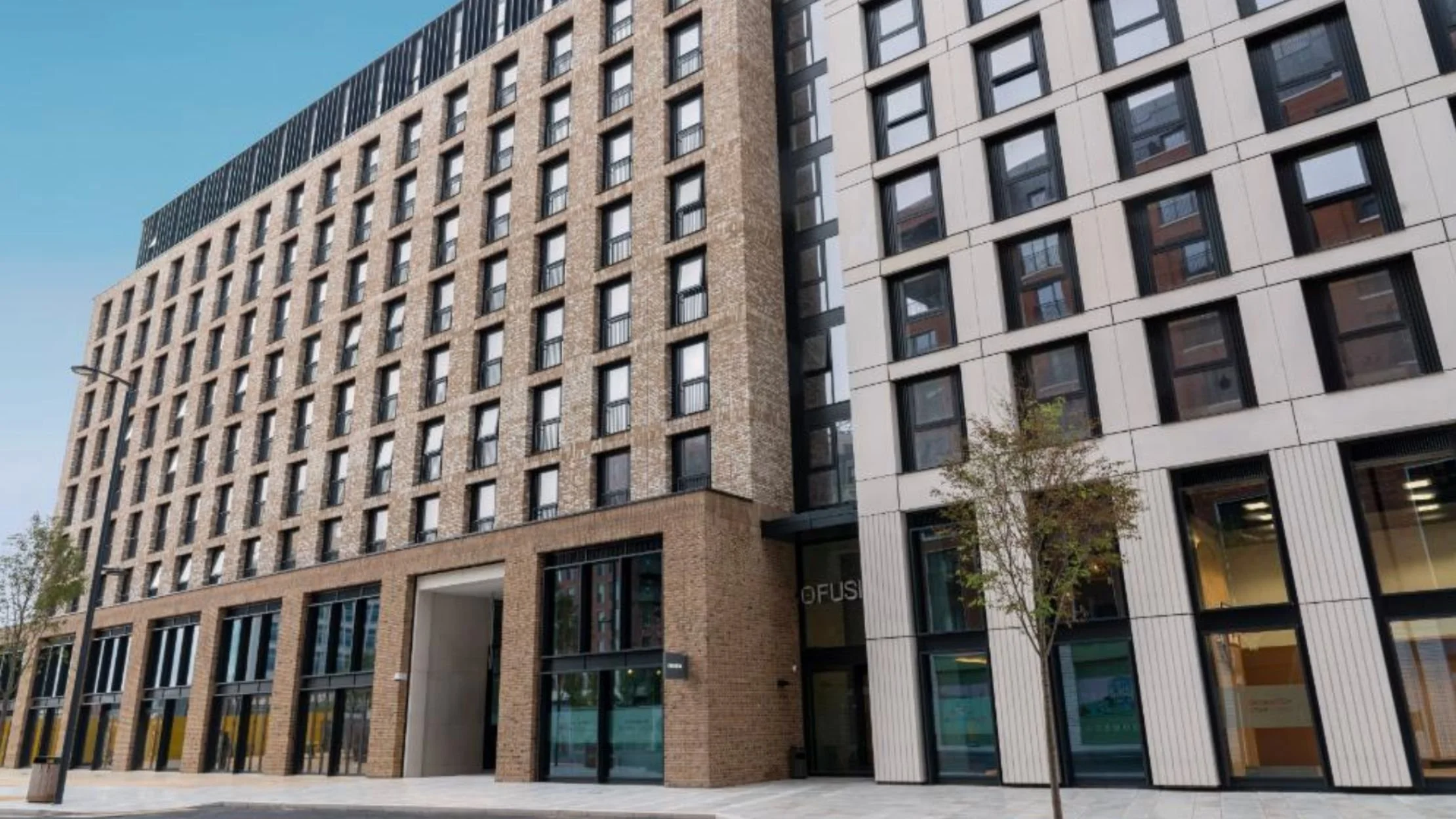
Fusion Students Brent Cross Town (BXT) - wellness facility design by Biofit
In student accommodation, the gym and leisure amenities increasingly sit on the ground floor with active frontage—visible from the street and designed to create energy at the entrance. This can be a major leasing and brand asset, but it can also backfire if you prioritise “window theatre” over user comfort, privacy and durability.
This post explains how to design active frontage that sells the building and also creates a premium training experience for building occupants.
Why PBSA operators push for active frontage
Active frontage serves three practical goals:
Marketing: visible amenities photograph well and support social media, website and brochure content.
Brand perception: a lively frontage signals a modern, amenity-led product.
Wayfinding: amenities become part of the arrival experience rather than hidden “back-of-house” rooms.
The main risk: the view outside is rarely premium
This is the uncomfortable truth. PBSA gyms are often placed at ground level because it is commercially logical and easier to access, but that does not guarantee a “luxury view”.
A well-written brief may well call this out for the wellness design consultants involved so that they know active frontage matters to the client but it should not jeopardise the internal experience.
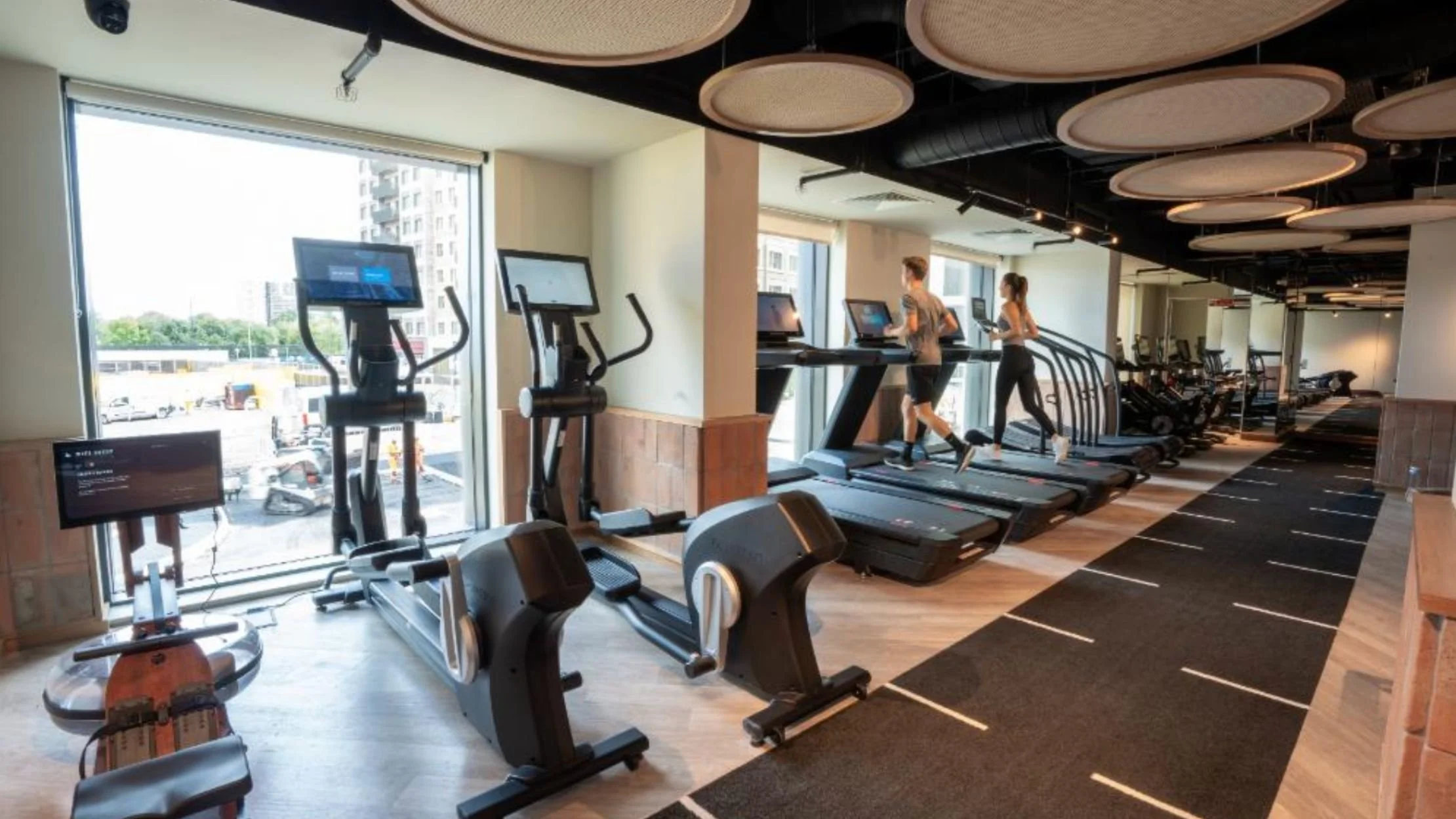
Fusion Students Brent Cross Town (BXT) - first floor gym design by Biofit
A simple rule: “marketable from outside” is not the same as “comfortable inside”
Design the frontage as a layered system, not a single decision.
You are effectively balancing these four components at the same time as wellness amenity designers:
visibility and energy (external)
privacy and comfort (internal)
durability and maintenance (operational)
acoustics and lighting control (experience)

Fusion Students Brent Cross Town (BXT) - ground floor basketball court design by Biofit
Practical strategies that work
1) Put the “right” activities at the window
Not every zone belongs on display.
Good candidates for the glazed edge
Cardio lines (visually legible, predictable movement)
Stretch/mobility edges (calm, low-risk, looks “wellness-led”)
Controlled strength zones with clear circulation (not chaotic free weights)
An indoor basketball court such as the one shown above, for full eye-catching passer-by potential
Less suitable at the glazed edge
Heavy free weights with high impact / risk
High-clutter functional zones (unless you have excellent storage/reset discipline)
Spaces requiring high privacy (e.g., some recovery modalities)

Fusion Students Brent Cross Town (BXT) - Biofit - ground floor wellness studio
2) Use “layered privacy” rather than blocking the windows
Active frontage fails when the space feels like an aquarium inside.
Layered privacy tools
Gradients of film (lower third obscured, upper clear)
Screens that still allow light (ribbed glass, perforated panels, mesh)
Planting as partial filtering (but avoid high-maintenance, high-shed planting)
Joinery edges at the perimeter (benching + storage that also acts as a buffer)
The goal is not to hide activity—it is to reduce the feeling of being watched for those users of student wellness facilities who always need to be given the priority, while respecting requirements around marketing to the general public passing by outside, as appropriate.
3) Design lighting for day and night (and for cameras)
Active frontage needs to work at 8pm in winter when it’s dark outside and the building is selling itself.
Lighting principles
Avoid harsh “office lighting” that flattens the space
Use layered lighting: ambient + feature + task
Ensure the window zone doesn’t become a glare box (control reflections)
On this basis, visual outputs should always include a “night read” (i.e. how does it look after dark?) if active frontage is a key brief driver.
4) Treat the stair and circulation as part of the frontage story
In multi-level amenity zones, the stair can become the hero moment that links floors and creates a visible “active narrative” from outside.
In our Fusion Students Brent Cross Town case study, the brief explicitly aimed for the stair core and surrounding corridors to act as a visual link between spaces and create an immersive active section at the front of the scheme.
That was a design opportunity—but only if we could control wayfinding and thresholds so users don’t feel lost.
5) Protect glazing and finishes (or you’ll regret it)
Street-facing amenities suffer higher wear: fingerprints, impacts, scuffs, condensation issues, cleaning frequency.
Non-negotiables
Window protection where sport is nearby (nets/guards where needed)
Durable wall finishes at the perimeter
Robust junction detailing (skirtings, corners, trims)
Clear maintenance access for cleaning
6) Active frontage should not break operational logic
If the space is unmanned and 24/7, you must avoid creating frontage-driven layouts that are hard to supervise and reset.
A student accommodation wellness facility design brief may well require facilities that are unmanned, used autonomously, and require very minimal onsite management. On that basis, active frontage must therefore reinforce, not undermine:
sightlines
storage discipline
simple rules
safety and security

Fusion Students Brent Cross Town London - functional training gym design by Biofit
Fusion Students example
Both our Fusion Students Birmingham (BRB) and Fusion Students London Brent Cross Town (BXT) are strong examples of a modern PBSA driver: active frontage + marketability, balanced against real operational constraints.
BRB: amenity designed with an active frontage, while explicitly stating that the outlook from the fitness area is not premium and should not jeopardise the internal experience.
Brent Cross Town BXT: leisure spaces are required to activate the frontage and create a lively, inviting aspect at the entrance, with a stair core intended to link and amplify the active zone at the front of the building.
This is the correct framing, as we see it: frontage should be a strategic tool for brand and leasing—not an excuse for poor planning.
Checklist: active frontage for student accommodation wellness facilities
Which wellness zones belong on the glazed edge (and which do not)?
How is privacy layered without killing daylight?
What’s the night-time lighting strategy for street presence?
Where are the durability “impact zones” and what protects them?
Are sightlines and safety improved or compromised?
Does the frontage layout still work for unmanned operation and cleaning?
How Biofit supports student accommodation active frontage design
Biofit supports PBSA projects through:
Concept Development: frontage narrative, zoning logic, and marketable identity
Interior Design: durable finishes, lighting intent and buildable detailing
Equipment & Technical Specification:footprints, clearances, and coordination inputs
Pre-Design Planning:utilisation assumptions and operational fundamentals
Pre-Opening Support:operational rules and readiness planning
Next step: If you’re planning student accommodation wellness amenities, share your plans for review via email here.
FAQ
Do active frontage gyms always improve leasing?
They help when the internal experience remains premium and the frontage is well-lit, well-zoned and marketable. Poorly planned frontage can reduce comfort and usage, which ultimately undermines the amenity value story.
How do you maintain privacy with a street-facing gym?
Layer privacy rather than blocking daylight: partial films, screening elements, planting buffers and perimeter joinery can reduce “aquarium effect” while keeping the space visually active from outside.
What’s the biggest design mistake with active frontage?
Designing for the street view first and user comfort second—leading to awkward circulation, poor zoning, glare, and durability problems.