PBSA Gym Space Standards
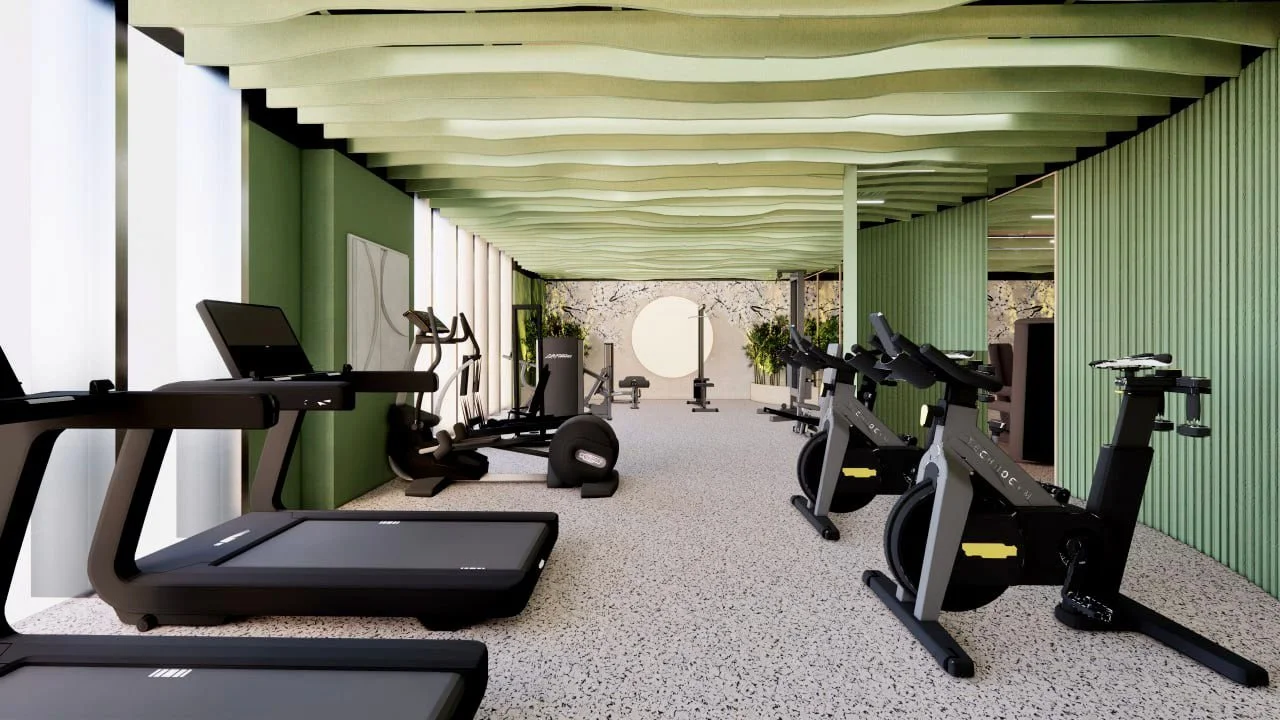
Fusion Students Birmingham UK - gym interior design by Biofit
How to zone strength, cardio and functional training in ~200 m² (without overcrowding)
Most PBSA gyms are not “too small” — they are too dense, poorly zoned, or missing the operational logic that prevents peak-time congestion. The goal is not to cram in more equipment; it is to design a layout that performs under student peak utilisation, heavy daily wear, and minimal supervision.
This article outlines a practical zoning method for compact footprints, using real PBSA scope areas as a reference point.
The reality of PBSA gyms: peak demand + compact footprints
Student gyms tend to spike in the evening and weekends, and usage becomes more intense during certain periods of the academic year. The design response should prioritise:
safe circulation
clear zoning that “reads” immediately
storage that prevents clutter
equipment density that stays comfortable at peak times
When those fundamentals are right, even a relatively compact facility can feel premium and work operationally.
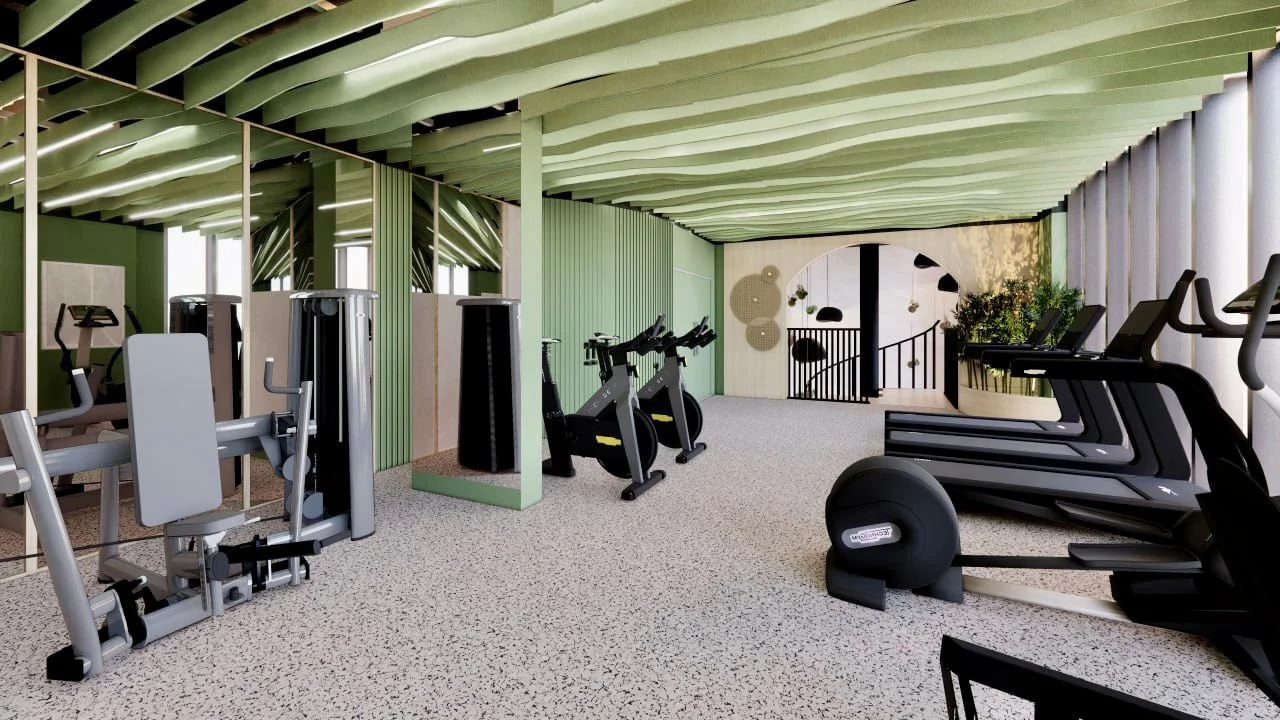
Fusion Students Birmingham concept design visualization by Biofit
Start with the zones (not the equipment list)
A common mistake is to specify equipment first, then “make it fit”. In PBSA, that approach creates:
pinch points
unsafe clearances
inconsistent user flow
clutter (no reset/storage logic)
a space that looks busy on day one and broken by month six
Instead, define a simple zoning logic:
Zone 1: Functional training (high-energy, higher-risk)
Purpose: free movement, higher intensity, multi-user training.
Design requirements:
more open space per user
clear sightlines
robust flooring + wall protection
strong storage and reset logic
Zone 2: Strength (structured, predictable footprints)
Purpose: controlled training, repeatable user positions.
Design requirements:
consistent equipment spacing and access
clear routes between stations
local storage for accessories (clips, bands, mats)
Zone 3: Cardio (high turnover + acoustic/vibration considerations)
Purpose: predictable machines, high turnover at peak times.
Design requirements:
align machines to avoid “cross traffic”
allow safe entry/exit and cleaning access
consider acoustic/vibration impacts (particularly above/adjacent to bedrooms)
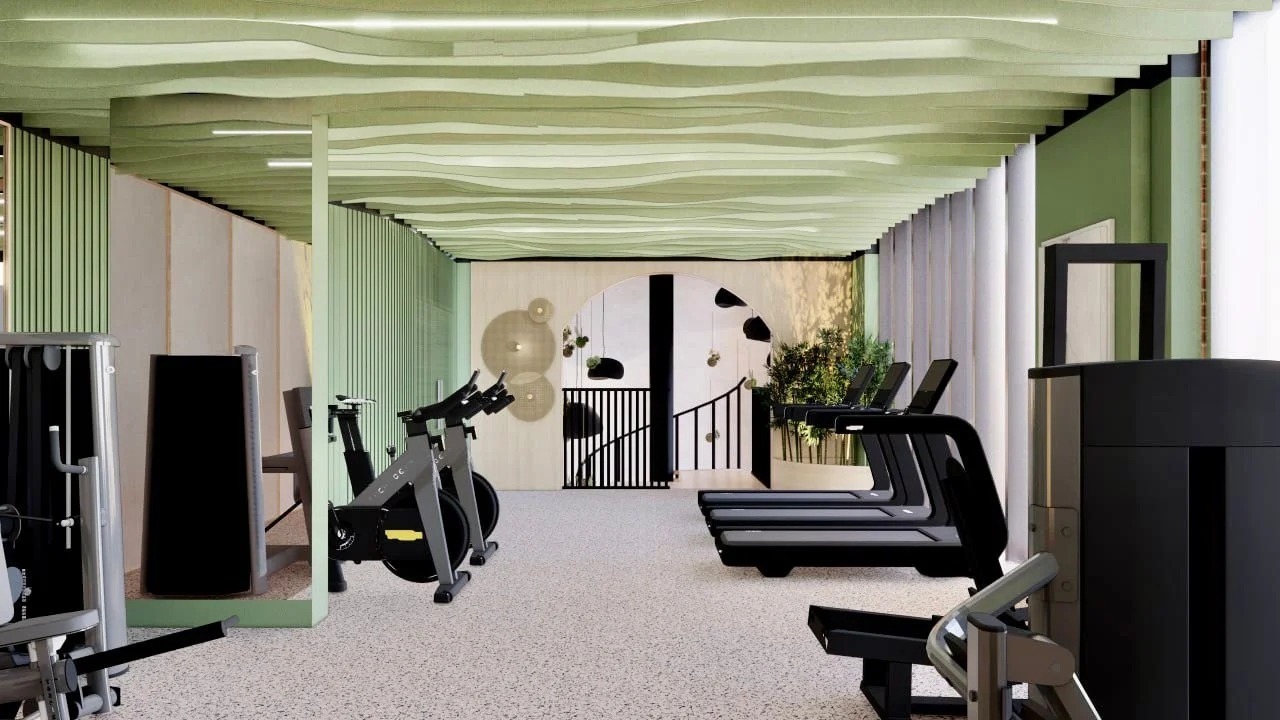
Fusion Students Birmingham concept design visualization by Biofit gym consultants
The “200 m² logic”: avoid overcrowding by design
When budgets are tight, teams often add equipment to signal value. In PBSA, value is delivered by:
space that feels easy to use
equipment that is available when students need it
a facility that stays clean, safe, and visually premium over time
Practical rules of thumb (non-numeric, but effective):
Keep one primary circulation route that does not cut through active training zones.
Avoid forcing users to pass through functional space to reach cardio or exits.
Put storage where behaviour occurs (one movement away from use).
Use visual zoning cues (flooring transitions, lighting, wall features) rather than signage-heavy “rules everywhere”.
Split across floors? Treat the stair as part of the experience
Many PBSA schemes split amenities across ground/mezzanine levels. That can work well, but only if:
the vertical connection is intuitive
wayfinding is built into the layout
the “energy shift” between floors is deliberate (e.g., functional + sport below, strength/cardio above)
If the stair is visually prominent, it can become a marketing asset — but it must not create confusion about where the gym begins and how zones connect.
Fusion Students example
Fusion’s Bristol Road Birmingham (BRB) leisure scope defines three distinct fitness areas totalling 206 m²:
Functional Training: 58.5 m²
Cardio: 81.5 m²
Basketball Court: 66 m²
The brief also notes that fitness spaces can be split across two amenity floors and highlights the importance of flow between a high-energy functional zone and a calmer adjacent concept zone.
This is a typical PBSA condition: compact, multi-zone scope where the success of the gym depends more on zoning and circulation than on adding more kit.
Common planning mistakes (and how to avoid them)
Mistake 1: Too much equipment, not enough usable space
Fix: define functional open space first; then add equipment to suit, not to fill.
Mistake 2: No storage strategy
Fix: storage is part of zoning; include it in every area.
Mistake 3: Cardio placed where it causes cross-traffic
Fix: align cardio along a clean edge; keep entry/exit and cleaning access obvious.
Mistake 4: No allowance for “pause” space
Students stop to rest, use phones, chat, or stretch. If you don’t plan for this, it happens in circulation routes.
Fix: provide small “pause zones” at edges, not in the middle of flow lines.
Checklist: what to confirm before you freeze the layout
What are the expected peak usage windows and who are the primary users?
Are zones obvious at first glance (without staff guidance)?
Do users ever need to cross through active zones to circulate?
Is there storage within each zone and a reset point near entry?
Are sightlines strong enough for safety in an unmanned setting?
Are cardio/vibration implications understood (especially in mixed-use buildings)?
How Biofit supports student accommodation gym planning
Biofit supports student living / PBSA gyms through:
Pre-Design Planning: programme mix, zoning logic, utilisation assumptions
Concept Development: student journey, design direction, marketable identity
Equipment & Technical Specification:schedules, clearances, utilities coordination
Interior Design:durable, maintainable interiors for high daily use
Pre-Opening Support:operational rules and readiness planning
FAQ
How big should a student accommodation / PBSA gym be?
Size depends on resident count, positioning and expected usage patterns. The priority is not raw area; it is zoning, circulation, storage, and equipment density that remains comfortable at peak times.
Should functional training be separated from cardio and strength?
In many PBSA schemes, yes. Functional training benefits from more open space and clearer safety zones, while cardio and strength perform better with structured layouts and predictable footprints.
Can a compact student accommodation / PBSA gym still feel premium?
Yes. Premium perception comes from clarity, comfort, durability, lighting, and a well-resolved layout—not from sheer volume of equipment.
Next step: Share your plans for review via email here and we’ll recommend the right scope.