Wellness Club Procurement Strategy: What to Retain Control Over and What to Leave to the Fit-Out Contractor
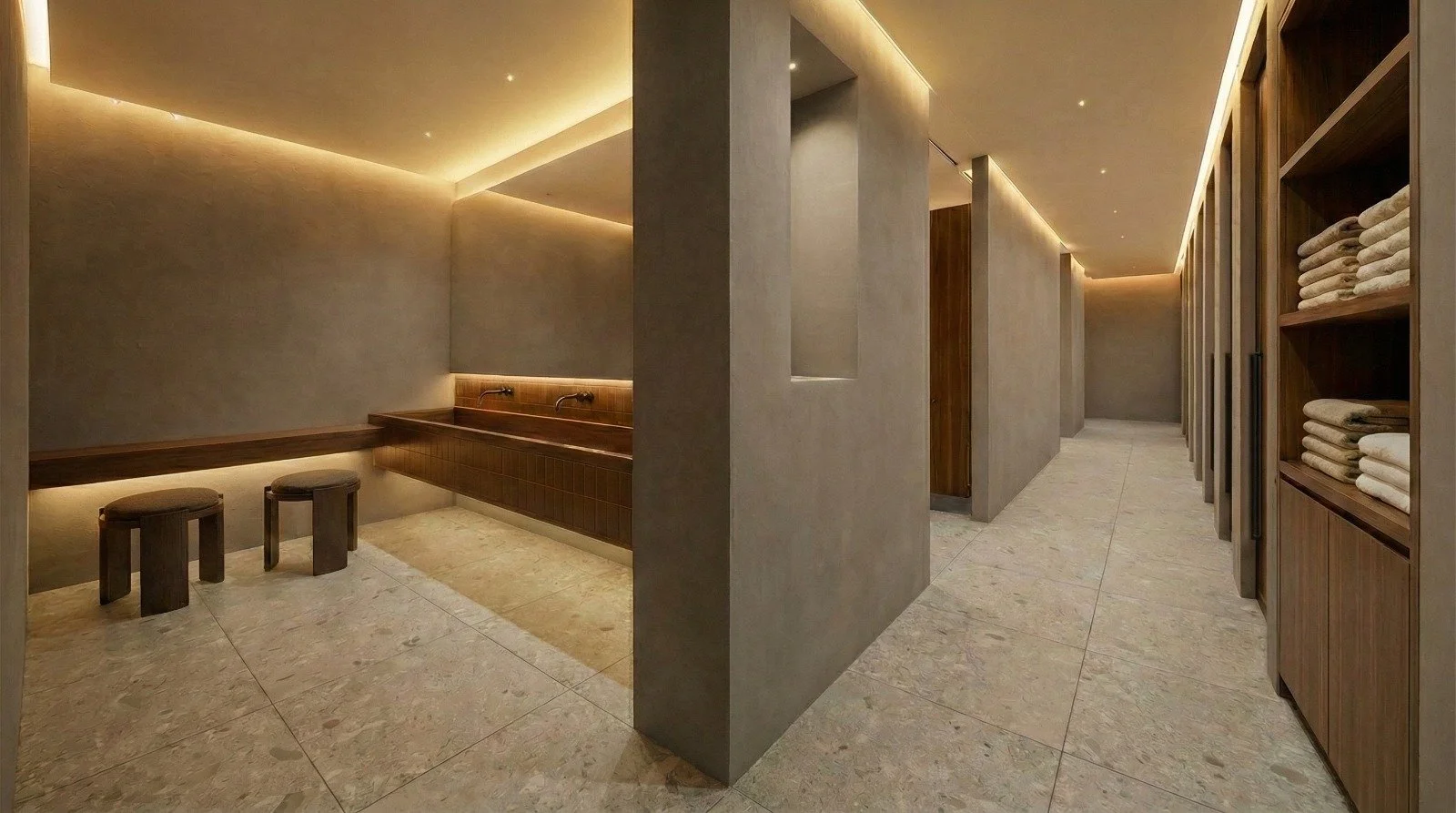
changing room design for a social wellness club in Marbella, Spain by Biofit
When a wellness club project moves from schematic design into detailed design, one question quickly becomes critical: which elements should remain under the design consultant’s control, and which should be handed to the fit-out contractor?
This matters more than many clients realise. If too much is handed over, design intent can be diluted, specialist items can be value-engineered, and the final result may fall short of the original concept. But if the consultant tries to control too much, responsibilities become blurred and procurement can become unnecessarily complicated.
In premium gyms, wellness clubs and spa-integrated fitness spaces, the best approach is usually to define a clear boundary between design-led procurement packages and contractor-led fit-out packages.
At Biofit, we generally recommend that the consultant retains control over the specialist, design-sensitive and margin-relevant product packages that genuinely shape the guest experience, while the fit-out contractor retains effective responsibility for everything else, from site-led construction, local installation and contractor-integrated works.
Why procurement strategy matters in wellness club design
A wellness club is not a standard commercial interior. It combines hospitality, fitness, spa, changing, movement and recovery functions, often within a single member journey.
That means many of the most important elements are not just building materials. They are curated products and specialist systems that influence:
first impressions
brand positioning
durability and maintenance
operational performance
sensory comfort
perceived quality
Without a clear procurement strategy, these packages can easily be treated as generic fit-out items rather than the specialist components they really are.
What the design team should usually retain control over
In our experience, the consultant should normally retain control over packages that are:
specialist by nature
central to the concept and guest experience
vulnerable to value engineering
commercially attractive from a margin perspective
easier to manage via nominated suppliers than through general contractor sourcing
In a wellness club, that often includes the following.
1. Gym equipment
This is one of the clearest retained packages.
Gym equipment directly affects the club’s training offer, user experience and commercial positioning. The consultant should normally retain control over:
cardio equipment
strength equipment
functional training equipment
studio equipment
selected recovery-related fitness equipment
This package requires operational knowledge, supplier comparison and close coordination with layouts and circulation. It should not be diluted through general contractor substitution.
2. Spa and wellness equipment
The same principle applies to spa, thermal and wellness equipment.
This may include:
treatment room equipment
sauna and steam components
hydrotherapy features
specialist wellness hardware
recovery technologies
thermal suite items
These are specialist systems with technical interfaces and supplier-specific requirements. They are not standard fit-out items.
3. Specialist flooring
Flooring is one of the most important categories to retain control over in a wellness club.
This is especially true for:
gym flooring
movement studio flooring
spa and wet-area flooring
outdoor gym surfacing
reception flooring where design-led
selected corridor and changing-room flooring where part of the guest experience
Flooring affects performance, safety, acoustics, durability and visual consistency. It is also one of the easiest areas for contractors to downgrade if alternatives are not tightly controlled.
4. Decorative lighting
Decorative and feature lighting is another package the design team will often want to retain.
This may include:
feature pendants
wall lights
decorative wellness lighting
selected treatment-room fittings
ambient guest-facing fixtures
The fit-out contractor can still retain responsibility for technical lighting infrastructure, emergency lighting and installation, but the visible fittings that define atmosphere and brand perception should usually remain under design control.
5. Lockers
Where lockers are a standard or semi-standard off-the-shelf product, they can be a very effective retained package.
They are commercially worthwhile, relatively easy to manage, and highly visible in changing areas. Retaining control helps protect the quality of:
locker format and sizing
material and finish
lock systems
associated benching where relevant
the overall feel of the changing-room experience
6. Furniture and loose FF&E
Loose furniture is often one of the cleanest packages for the consultant to retain.
This may include:
reception furniture
lounge seating
café furniture
waiting-area furniture
outdoor furniture
selected loose guest-facing pieces
These items are central to the hospitality layer of the project and can often be managed with relatively low technical risk compared to more integrated building elements.
7. Selected bathroom fixtures and accessories
In some projects, it also makes sense to retain control over the visible, design-led bathroom fixture layer.
This can include:
taps and mixers
feature basins
exposed shower fittings in spa areas
robe hooks, towel rails and curated accessory sets
selected dispensers where part of the design language
Concealed plumbing, waterproofing, drainage and other hidden technical systems should generally remain with the local contractor and MEP team. The key principle is to retain the visible curated layer, not the concealed liability.
What the fit-out contractor should usually control
The fit-out contractor should normally retain responsibility for the site-led, construction-integrated packages, including:
demolition and builders’ work
partitions and wall build-ups
ceilings and bulkheads
waterproofing
tiling installation
painting and standard wall finishes
general joinery
mirrors
doors and standard ironmongery
concealed plumbing and drainage
electrical infrastructure
HVAC and mechanical systems
fire-rated elements
site logistics, delivery coordination and installation sequencing
These packages are closely tied to local labour, sequencing, site conditions and contractor liability. Over-fragmenting them usually creates more risk than value.
A useful rule: retain products, not construction
A practical rule of thumb is this:
retain control over curated products and specialist packages; leave construction-led works and site-integrated delivery with the fit-out contractor.
That tends to create the clearest and most efficient split.
Specialist add-ons that may sit outside the main fit-out scope
Some packages do not sit neatly within either retained procurement or the contractor’s base scope.
Two common examples are:
Signage and branded graphics
This often requires separate graphic design input, artwork development, messaging hierarchy and specialist fabrication coordination.
Landscaping and planting
This may require a landscape consultant or specialist planting designer, particularly for outdoor wellness areas, terraces, entrance sequences or biophilic styling packages.
These are often best treated as optional specialist design packages rather than assumed within the main interior fit-out scope.
How to avoid confusion during handover
By the time the project reaches detailed design, the team should have agreed:
which packages are retained by the consultant
which packages are contractor-led
who procures each retained item
who coordinates delivery and installation
who approves substitutions
which specialist add-ons sit outside the core scope
This does not need to be complicated. A simple procurement matrix is often enough to create clarity.
The importance of controlling substitutions
One of the most important protections for the design consultant is to establish that retained packages are not open to substitution without written approval.
This is particularly important for:
flooring
decorative lighting
lockers
furniture
visible bathroom fixtures
specialist wellness equipment
Without that control, design-led procurement can quickly be undermined by value engineering decisions that weaken quality and consistency.
A practical procurement framework for wellness clubs
For most premium wellness club projects, a sensible structure is:
Retained by the design consultant
gym equipment
spa and wellness equipment
specialist flooring
decorative lighting
lockers
furniture and loose FF&E
selected visible bathroom fixtures and accessories
Retained by the fit-out contractor
all general construction and fit-out works
partitions, ceilings, waterproofing and tiling
general joinery
mirrors
MEP and concealed plumbing
technical lighting infrastructure
site logistics and installation coordination
Optional specialist design packages
signage and branded graphics
landscaping and planting
This gives the consultant control over the categories that matter most to concept, brand and user experience, while allowing the contractor to lead the local build efficiently.
Procurement strategy is part of design strategy
In wellness design, procurement is not just a commercial exercise. It is part of the design process.
The quality of the final club depends not only on layouts and moodboards, but also on who controls the product packages that shape the space in reality.
A well-defined procurement strategy helps protect design intent, reduce ambiguity, improve coordination and deliver a better result for both operator and guest.
For wellness clubs aiming to create a premium experience, this clarity is not optional. It is part of delivering the project properly.
Planning a wellness club, gym or spa-integrated fitness space?
Biofit advises developers, operators and design teams on the planning and design of gyms, wellness clubs, movement studios and spa-integrated fitness environments. From concept development and layout planning through to equipment strategy, specification and design coordination, we help create spaces that are commercially credible, operationally effective and exceptional to use.